



Google doesn’t hand out free ads, but it does offer small businesses free ways to be found.
How to advertise on Google for free means using Google’s no-cost tools to show up in Search and Maps without paying per click: a Business Profile, reviews, a search-friendly website, free product listings, YouTube, and, for nonprofits, the Ad Grant. Paid Google Ads is separate.
Here are 7 legit ways, what isn’t free, and a 90-day plan.
How we built this guide: it draws on Google’s Business Profile help pages, Google’s Ad Grants FAQ, WordStream by LocaliQ’s 2026 Search Advertising Benchmarks, and BrightLocal’s 2026 review survey. Google’s tools and ad policies change often, so verify steps in your account before you rely on them. Costs are shown with their source and date.
What does it mean to advertise on Google for free?
Advertising on Google for free means earning visibility through Google’s organic and no-cost surfaces, such as Maps, local results, and the Shopping tab, instead of paying for ad clicks. It costs time, not media spend. Paid Google Ads, by contrast, charges you when someone clicks or becomes a lead.
The distinction matters. Free methods can bring steady customers, but you can’t buy a position. Google says that local results are based mainly on relevance, distance, and prominence, and that there’s no way to request or pay for a better local ranking. Paid ads, on the other hand, give you control over when you appear, for a price.
| Type | How you pay | Control over placement |
|---|---|---|
| Free (organic) | Your time and effort | None. You earn visibility. |
| Paid Google Ads | Per click or per lead | High. You choose keywords, budget, and ad copy. |
| Ad Grant (nonprofits) | Free in-kind Search ads | High within program rules, for eligible nonprofits only. |
Free also isn’t effortless. Expect to spend several hours setting up, then a little time each week on reviews, photos, and your website.
The step-by-step framework
Work in this order, because each step makes the next one count for more:
- Foundation: a verified, accurate Business Profile and a website that matches it.
- Proof: real reviews, real photos, and replies that show you pay attention.
- Content: service pages, posts, and videos that answer what customers search for.
- Measurement: free reports that show which actions bring calls, directions, and visits.
- Retention: follow-ups that turn first visits into repeat customers.
The seven ways below map onto this framework. Do ways 1 and 2 first, since they cost nothing and apply to almost every local business.
7 legit ways to advertise on Google for free
1. Claim and optimize your Google Business Profile
Free
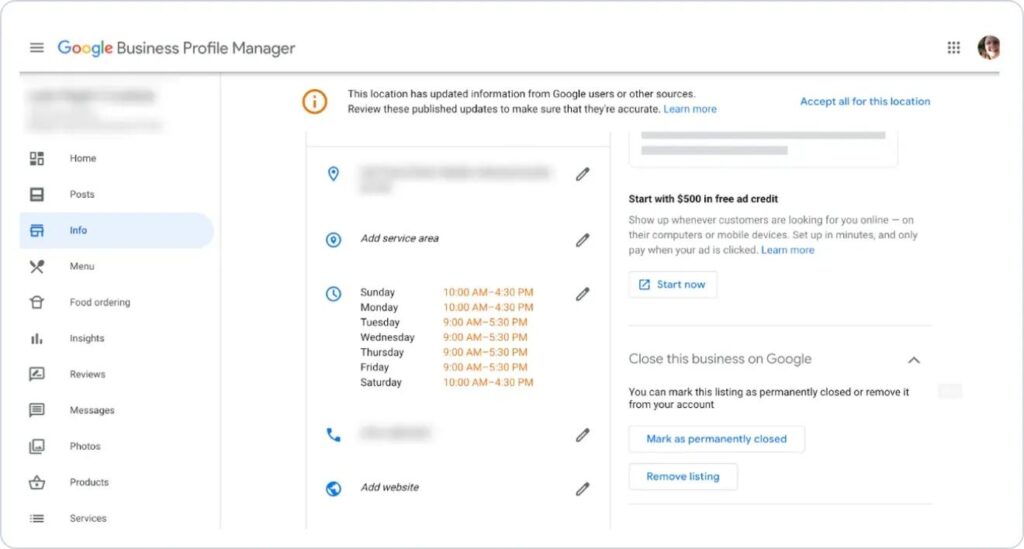
How: Verify your profile, choose the most specific primary category, add accurate hours, services, photos, and a description with no links or promotions. Use your real business name with no extra keywords, per Google’s guidelines. Start with our guide to google business verification.
Limits: Rankings depend on relevance, distance, and prominence, so a perfect profile doesn’t guarantee the top spot.
- ☐ Primary category chosen, and only the fewest extra categories you truly need.
- ☐ Hours accurate, with special hours for holidays.
- ☐ Phone number and website match your site exactly.
- ☐ Services or products listed, with attributes such as parking or accessibility.
- ☐ At least three real photos each of exterior, interior, and your work.
2. Earn Google reviews
Free
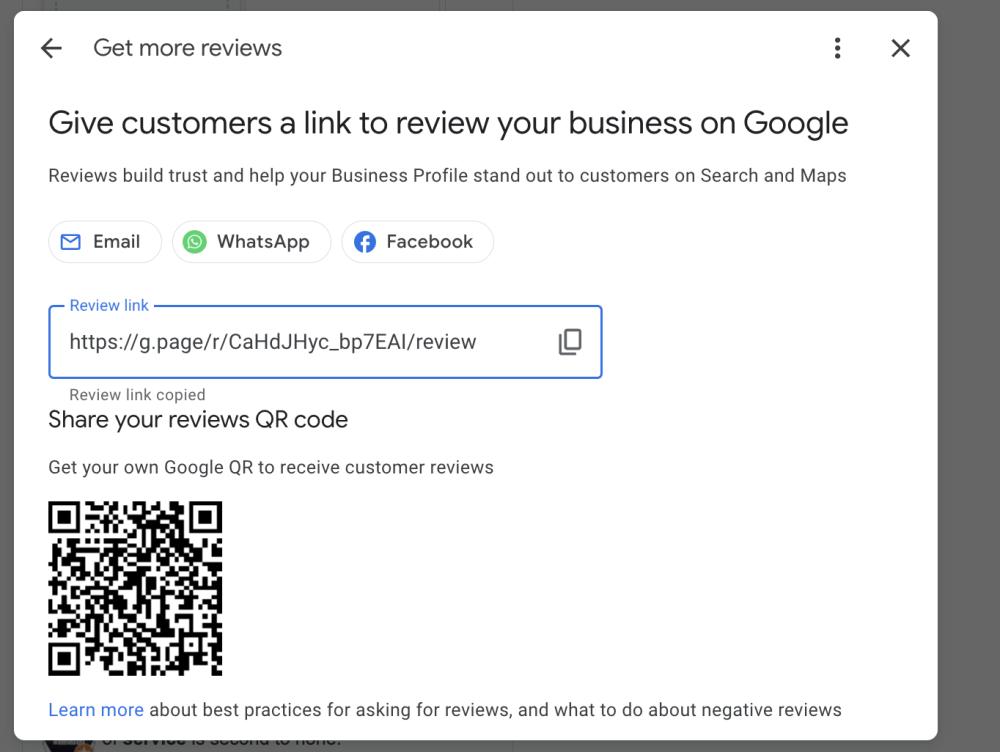
How: Ask every customer for an honest review with a direct link or QR code, and reply to each one. BrightLocal’s 2026 survey found 47% of consumers won’t use a business with fewer than 20 reviews. See google reviews for business for the full playbook.
Limits: Reviews must be real. Never buy them, offer gifts, or screen customers. That breaks Google’s policy and the FTC’s 2024 rule.
A simple, compliant ask for every customer: “Thanks for visiting! If you have a minute, we’d appreciate an honest review on Google: [link].” It makes no mention of stars or rewards. Our how to ask customers for reviews guide has more scripts.
3. Use profile features: posts, offers, photos, messages, and booking
Free
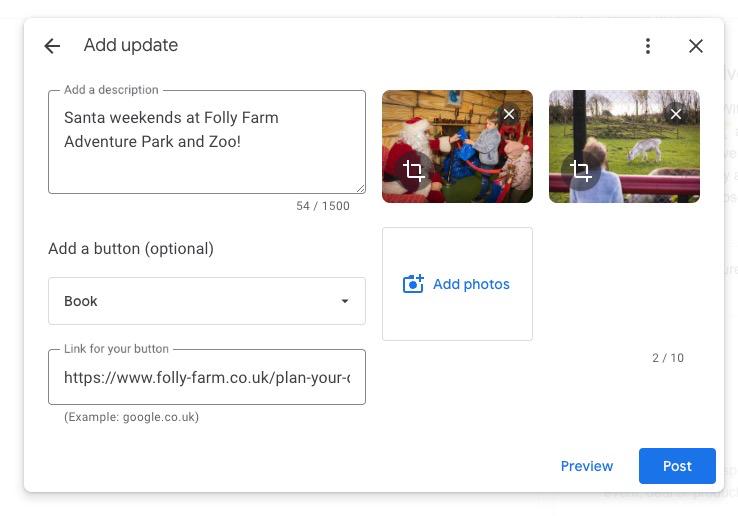
How: Add fresh photos and share updates and offers, within Google’s content policies. Turn on messaging and a booking link where available, then check calls, directions, and clicks in your Performance report.
Limits: Google doesn’t state that posts affect ranking, and some features depend on your business type and region.
4. Make your website findable in organic search
Free
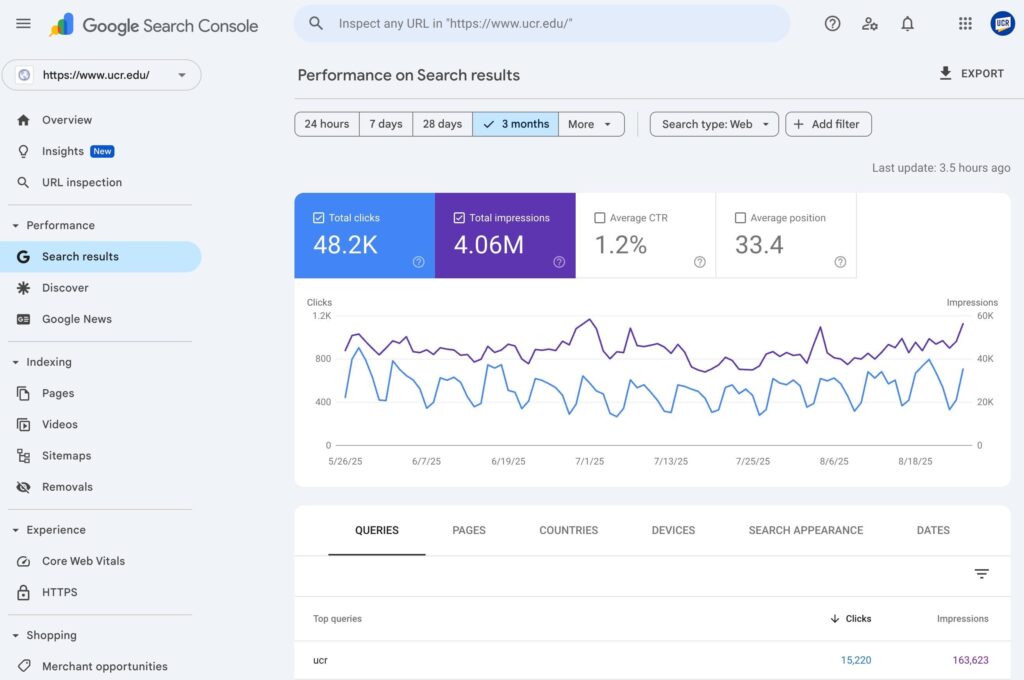
How: Give each service its own page, use clear titles, add your name, address, and phone, and keep pages fast on mobile. Verify your site in Google Search Console, which is free, to see the queries and pages that bring visitors. For the full approach, see local SEO for small businesses.
Limits: SEO takes months, and Google doesn’t publish how much any one change helps.
- ☐ One page per main service, with a clear title and a short description of what you do.
- ☐ Your name, address, and phone on every location page, matching your profile.
- ☐ A fast, mobile-friendly page with a call button and a booking or contact link.
- ☐ Real photos and customer reviews on service pages.
5. List your products in Google Merchant Center
Free
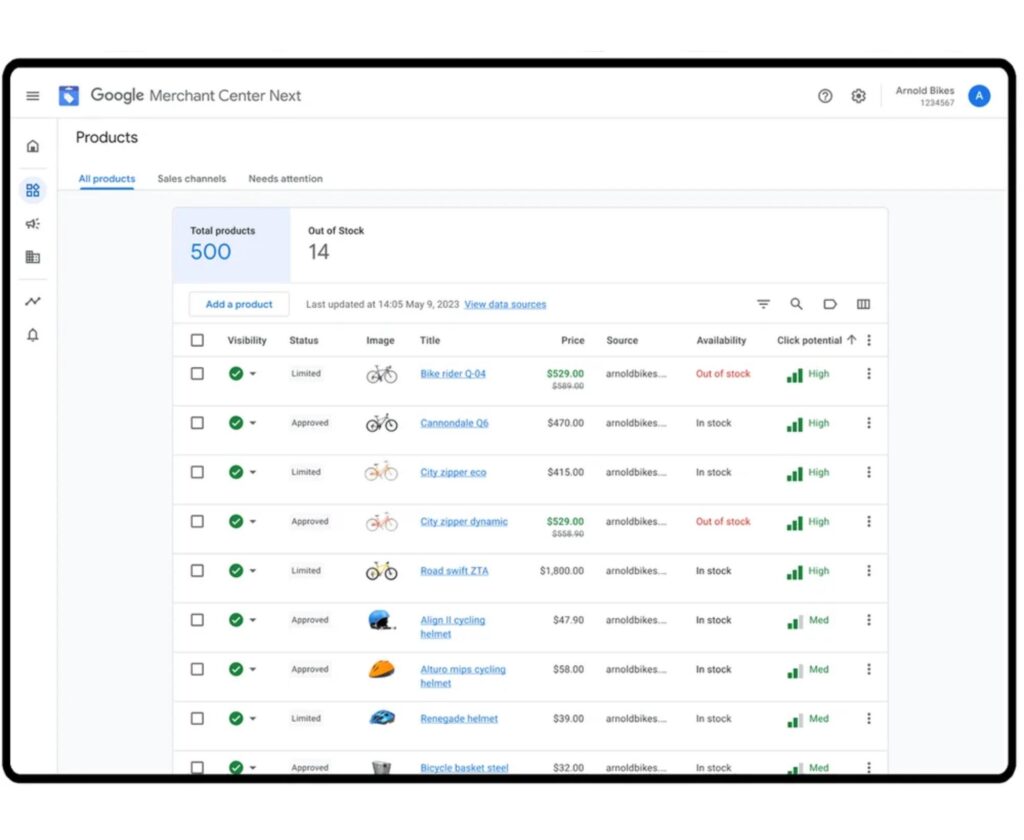
How: If you sell products online, create a Merchant Center account, add your product data, and turn on free listings. Per Google’s free listings playbook, listings can appear on the Shopping tab, Google Search, and Images. Enhanced listings need extra product data.
Limits: Your products must meet Google’s data and website requirements, and you’ll need an online store.
Product data typically includes a title, description, link, image, price, and availability, plus brand or product identifiers where they apply. Check Google’s product data specification for your category, since missing or mismatched details such as shipping are common reasons products get disapproved.
6. Publish helpful videos on YouTube
Free
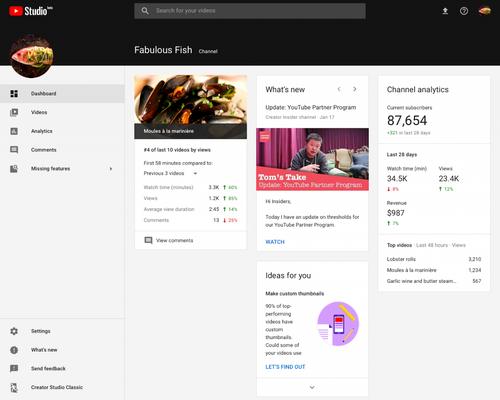
How: Post short how-to and behind-the-scenes videos, with clear titles and descriptions that include your service and city. Link to your website and booking page.
Limits: Video takes time to produce, and results build slowly.
- A short tour of your shop or studio.
- Answers to the three questions customers ask most.
- A behind-the-scenes look at how you make or deliver your service.
7. Apply for the Google Ad Grant (nonprofits only)
Nonprofits only
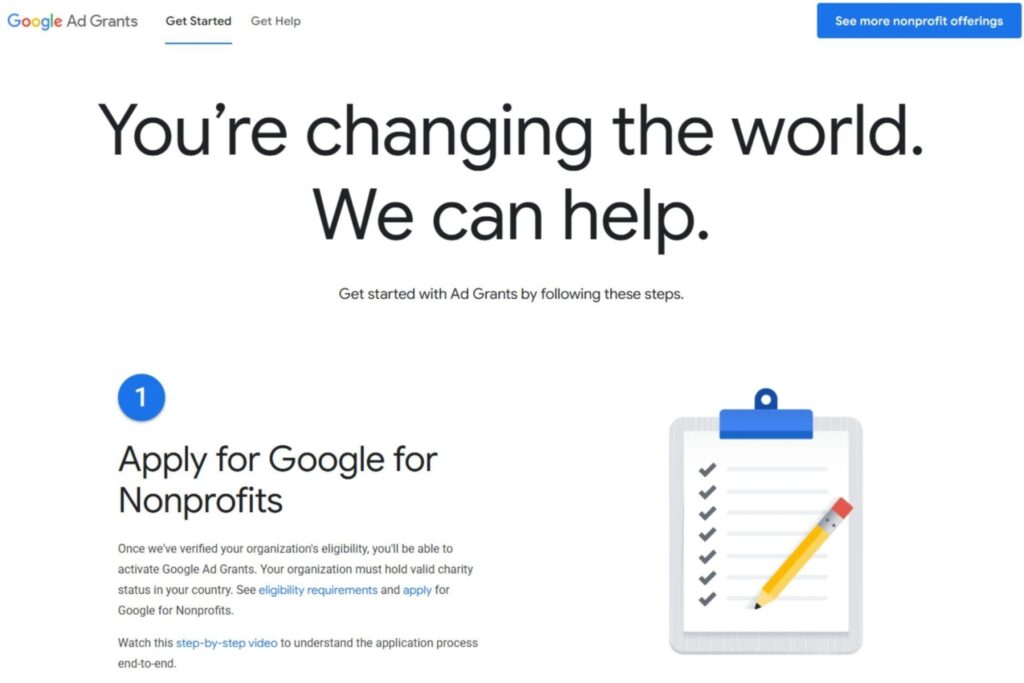
How: Qualifying nonprofits can receive up to $10,000 USD per month of in-kind Search advertising, shown as text ads on Google.com, according to Google’s Ad Grants FAQ. Apply through Google for Nonprofits.
Limits: It’s only for eligible nonprofits, with program requirements to follow, and it doesn’t apply to for-profit businesses.
The 7 ways at a glance
| Way | Effort | Best for |
|---|---|---|
| 1. Business Profile | Low to medium | Any business with a local presence |
| 2. Reviews | Ongoing, low per week | Any business serving customers |
| 3. Profile features | Low | Businesses with offers, bookings, or messages |
| 4. Organic website | Medium to high | Businesses that want long-term search traffic |
| 5. Merchant Center | Medium | Online stores and product sellers |
| 6. YouTube | Medium to high | Businesses that can show their work on video |
| 7. Ad Grant | Medium | Eligible nonprofits only |
Free tools, paid options, and budget
| Tool or channel | Cost | What it does |
|---|---|---|
| Google Business Profile | Free | Local presence on Search and Maps |
| Google Search Console | Free | Shows which searches and pages bring website visitors |
| Google Merchant Center | Free | Free product listings for online sellers |
| YouTube | Free to post | Video visibility, with your time as the cost |
| Google Ad Grant | Free for eligible nonprofits | Up to $10,000 per month in Search ads |
| Google Ads (Search) | Pay per click | Paid placement above and among results |
What isn’t free: Google Ads
Paid search is the main thing that isn’t free. WordStream by LocaliQ’s 2026 Search Advertising Benchmarks, reported by Search Engine Journal (updated June 16, 2026), covers Google and Microsoft Ads campaigns from April 2025 to March 2026:
| Measure (all industries) | 2026 average |
|---|---|
| Click-through rate | 6.64% |
| Cost per click | $5.42 |
| Conversion rate | 8.18% |
| Cost per lead | $66.69 |
Industry matters a lot. Attorneys and legal services had the highest average cost per click ($9.87) and cost per lead ($131.63). Restaurants and food had one of the lowest costs per lead, at $30.57. Benchmarks are averages, not scorecards, and the full WordStream report has the details.
As arithmetic, not a forecast: at the all-industry $66.69 cost per lead, a $1,000 budget buys about 15 leads, and a lead isn’t yet a customer.
Free ways to measure results
- Business Profile Performance: calls, directions, website clicks, messages, and bookings.
- Google Search Console: the queries and pages that bring website visitors.
- Google Analytics: what visitors do on your site once they arrive.
- Your own log: note how new customers say they found you.
When free isn’t enough: signs it’s time to test paid ads
Free methods build slowly, and you can’t buy a position with them. Consider a small paid test when:
- Your profile, reviews, and website are solid, but demand outpaces your visibility.
- You need customers during a specific season or launch.
- You can track calls, bookings, or sales, so you can judge cost per lead.
- A customer is worth more than the cost per lead you can expect.
Start small, track every lead, and keep your free foundation running. Paid ads work better when your profile and website are already strong.
Turn free visibility into repeat customers
Getting found is half the job. Retention turns one visit into many, and it costs far less than finding new customers. A simple system includes:
- Repeat visits: a loyalty or referral reward for guests who return or bring a friend.
- Email and SMS: follow-ups sent only to customers who opted in.
- Win-back messages: a note to customers who haven’t visited in a while.
- Customer lifetime value: average spend per visit × visits per year × years as a customer. Hypothetical math: $20 × 6 visits × 3 years is $360.
Common mistakes when advertising on Google for free
- Expecting free to mean fast. Free visibility builds over months.
- Stuffing keywords into your business name. It breaks Google’s guidelines and can lead to suspension.
- Buying reviews or offering gifts for them. Both break Google’s policy and FTC rules.
- Skipping verification. An unverified profile limits what you can do.
- Ignoring Search Console and Performance data. You can’t improve what you don’t track.
- Paying for “guaranteed #1 on Google.” Google says no one can buy a better local ranking.
- Inconsistent name, address, and phone across your site and listings.
- Posting once and stopping. Photos, reviews, and website updates need steady attention.
- Trusting “free Google ad credit” emails from strangers. Check offers only inside your own Google Ads account.
Verify before you rely on this. Google changes menus, features, and ad policies often. Check each step in your own account and Google’s current help pages before you publish or act.
A 30-60-90 day plan to advertise on Google for free
| Days | Focus | Tasks |
|---|---|---|
| 1 to 30 | Foundation | Verify your Business Profile, fix name, address, phone, category, and hours, add photos, start review requests |
| 31 to 60 | Website and proof | Improve your top service pages, verify Search Console, reply to every review, add a booking link |
| 61 to 90 | Reach and retention | Add Merchant Center or YouTube if relevant, start a loyalty or win-back message, and decide whether to test paid ads |
How to advertise on Google for free: FAQ
Can you advertise on Google for free?
Not with paid ads, which charge per click or lead. But you can get free visibility on Google Search and Maps through a Business Profile, reviews, a search-friendly website, free product listings, and YouTube.
Is Google Business Profile free?
Yes. Creating and managing a Business Profile costs nothing, and it’s the fastest free way to appear on Google Maps and in local search.
How do I get my business on Google Maps for free?
Create and verify a Business Profile with your real name, address, category, and hours. See our guide to google business verification for the steps.
Does Google give free ad credit?
Google has offered promotional credits at times, but terms vary, so check the offer inside your Google Ads account before relying on it. Treat any “free credit” email from a third party with caution.
Are Google Ads free for nonprofits?
Qualifying nonprofits can apply for the Google Ad Grant, which provides up to $10,000 per month of in-kind Search advertising. Eligibility rules apply, so check Google for Nonprofits.
How long does free Google visibility take to work?
Google doesn’t publish timelines, and no one can guarantee a result. Fixing your profile can help soon, but reviews, links, and website content build over months.
How do I advertise on Google for free as a restaurant?
Verify your Business Profile, add your menu, photos, and hours, ask every guest for an honest review, and reply to each one. Restaurants also benefit from consistent listings on other map apps.
Is Google Ads ever really free?
Standard Google Ads always charges per click or per lead. The Ad Grant for qualifying nonprofits is the main program that provides free in-kind advertising, and it has eligibility rules.
How do I list products on Google for free?
Create a free Google Merchant Center account, add your product data, and turn on free listings. Your products can then appear in the Shopping tab and other Google surfaces once approved.
Want free visibility and follow-ups handled for you?
Our team can help set up your profile, reviews, and customer follow-ups through our all-in-one marketing platform. We make no ranking promises, only a clear plan and reporting.
Sources (checked October 22, 2026): Google: local ranking; Google Ad Grants FAQ; Google: free listings playbook; Google: Performance; Search Engine Journal: WordStream 2026 Google Ads benchmarks (Jun 16, 2026); BrightLocal Local Consumer Review Survey 2026. Benchmarks are averages. Google’s tools and policies change.