



A parent searching “pediatrician near me” on her phone sees three practices in the map results and calls one of them. Local SEO for doctors is the work of making your practice show up there when nearby patients look for care. It combines a complete Google Business Profile, accurate listings, location-specific web pages, and honest reviews, all handled without exposing patient information. Here is the five-step plan, plus the compliance traps to avoid.
Why Local SEO Matters for Doctors and Healthcare Practices
Patients often search “near me” or by city, and Google answers with a map pack: a short list of nearby practices. Ranking there puts your phone number, reviews, and directions in front of people ready to book. Local SEO for doctors is how you earn that spot without paying per click.
Google says local results are mainly based on relevance, distance, and prominence. Relevance is how well your profile matches the search. Distance is how far you are from the searcher. Prominence reflects how well known you are, including reviews and links from other websites (Google Business Profile Help). You can’t change distance, but you can improve the other two.
Healthcare adds two twists. Patients choose a provider based on trust, and privacy rules limit what you can say in public. A restaurant can celebrate a happy customer’s story, as our guide to local seo for restaurants shows, and a nail salon can post client photos, as in local seo for nail salons. A practice cannot. For the basics that apply to every business, start with our pillar guide to local seo for small businesses.
How to Improve Local SEO for Doctors in 5 Steps
Step 1: Claim and Optimize Your Google Business Profile
Claim and verify your profile, pick the most specific primary category, list your services, set accurate hours, add real photos, and link to a booking page. Keep every detail identical to your website. Google can suspend profiles that misrepresent a business, so accuracy beats keyword tricks.
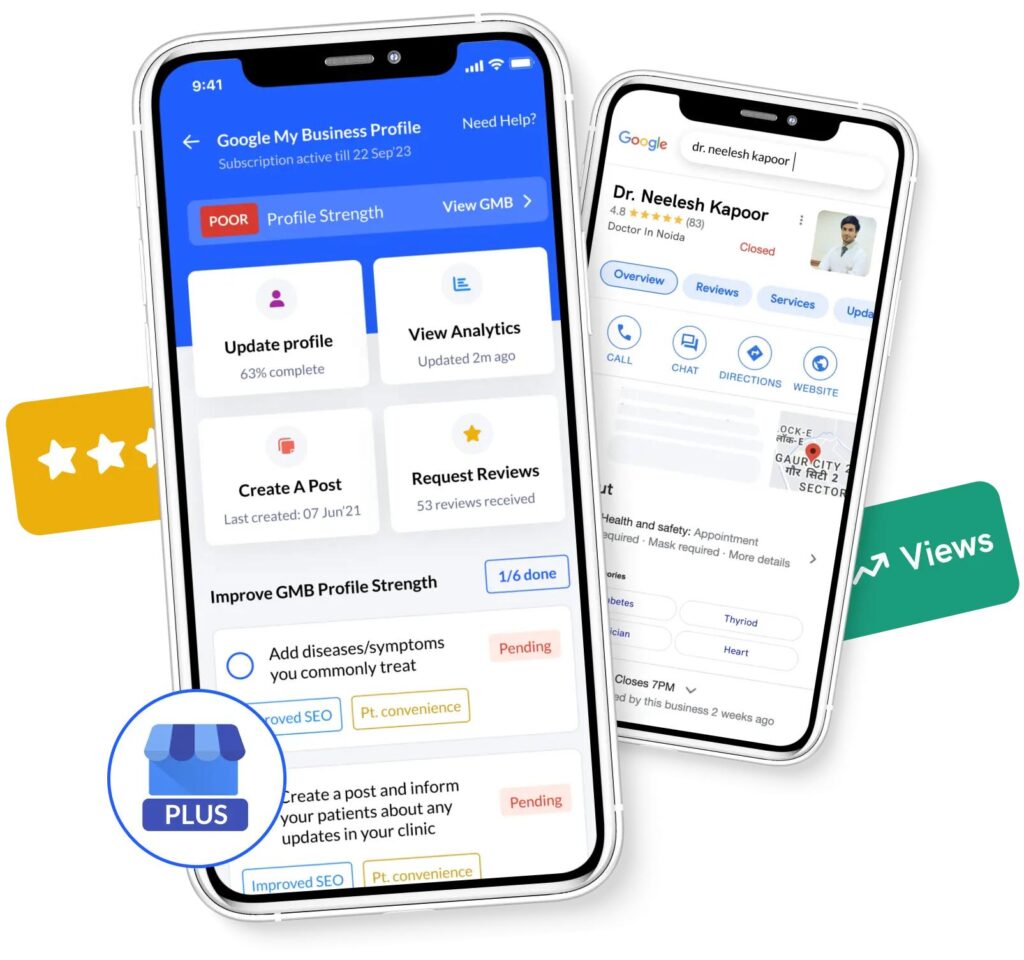
- Decide who gets a profile. Per Google’s guidelines, individual practitioners such as doctors may have their own profile if they are public-facing and reachable at the verified location during stated hours. A practitioner shouldn’t have several profiles to cover specialties, and when several practitioners share a location, the practice keeps a separate profile. Dental offices face the same questions, covered in local seo for dentists.
- Choose a specific primary category. “Pediatrician” tells Google more than “Doctor.” Add secondary categories only if they are real services.
- Use your real-world name. No added keywords, city names, or words like “best.”
- List services in plain English. Describe what you offer, not what you will cure.
- Keep hours exact, including holidays, and note an after-hours line.
- Upload real photos: exterior, entrance, waiting room, and staff who consented. Never post patients.
- Add links and attributes. Point the website link to your location page and the appointment link to your booking page. Choose any attributes Google offers for your category, such as accessibility.
Step 2: Local Keywords, Service Pages, and Location Pages
Local SEO for doctors starts on your own site. Build one page per service and one per location, each aimed at a clear phrase such as “pediatrician in Plano.” Fill each with real details: address, hours, providers, insurance, and a booking button. Avoid thin pages that only swap the city name.
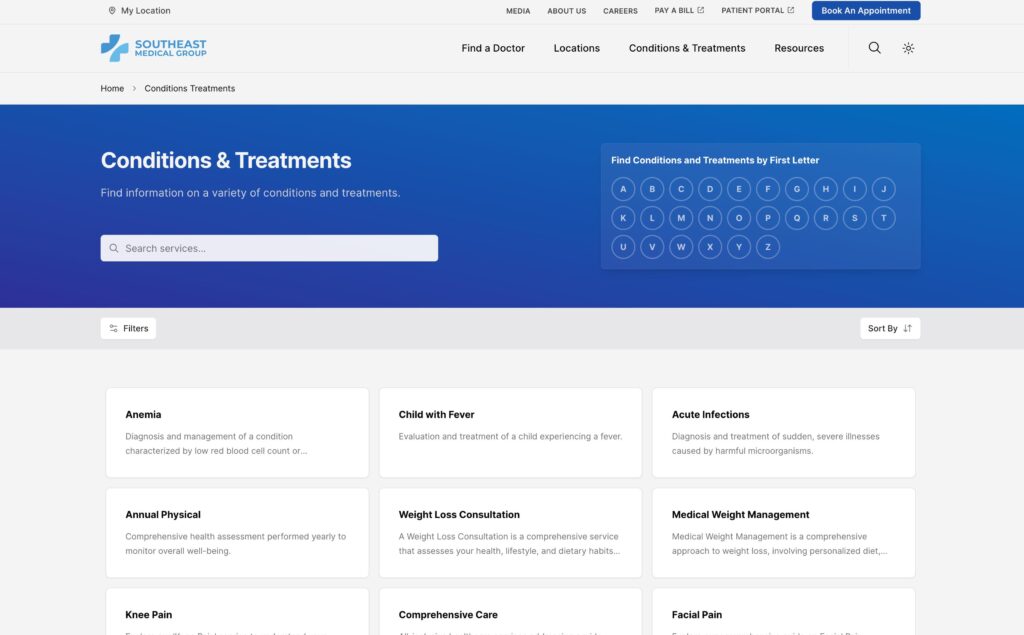
Use this on-page checklist for every service and location page:
- Service and city in the title tag and H1.
- A unique intro in plain language, checked by a clinician for accuracy.
- Name, address, and phone matching your Google profile, plus an embedded map.
- Provider names, credentials, and bio links. On health information, add who reviewed it.
- Accepted insurance, languages, and accessibility details, only where true.
- A click-to-call button and a booking link above the fold.
- LocalBusiness schema, or a more specific type such as MedicalClinic or Physician, with no patient data in it.
- Mobile speed checked in Search Console’s Core Web Vitals report or PageSpeed Insights.
Step 3: Citations and NAP Consistency
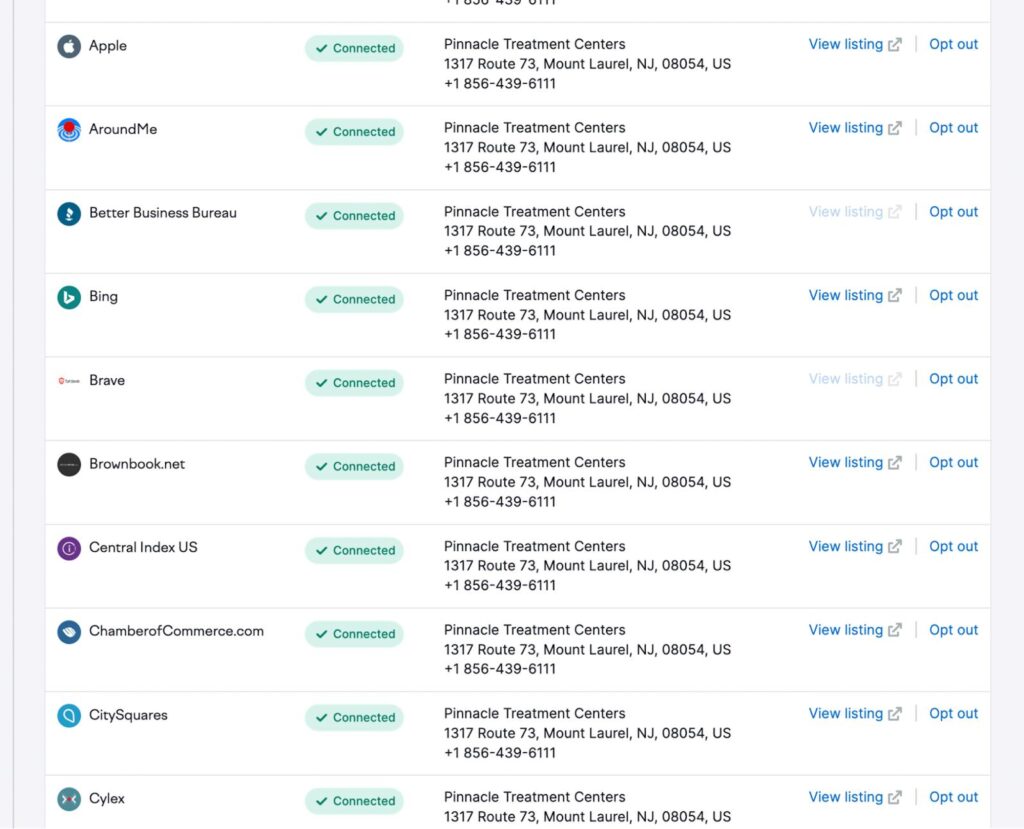
In local SEO for doctors, a citation is any online mention of your practice’s name, address, and phone number (NAP). Keep them identical everywhere, starting with the major directories and the sources patients actually use. Mismatched details confuse patients and make your listings harder to match.
| Type | Examples |
|---|---|
| General | Google Business Profile, Apple Business Connect, Bing Places, Facebook, Yelp |
| Health directories | Healthgrades, Zocdoc, Vitals, WebMD (check which ones your patients use) |
| Official and professional | NPI registry record, state medical board profile, hospital affiliation pages, specialty society finders |
| Local | Chamber of commerce and local business directories |
Pick one format for your address and phone (for example, “Suite 200” everywhere), then audit each listing and fix duplicates. Update every listing when a provider leaves, joins, or moves. Old doctor listings with stale addresses are a common source of inconsistency.
Step 4: Review Strategy for Doctors and Healthcare Practices
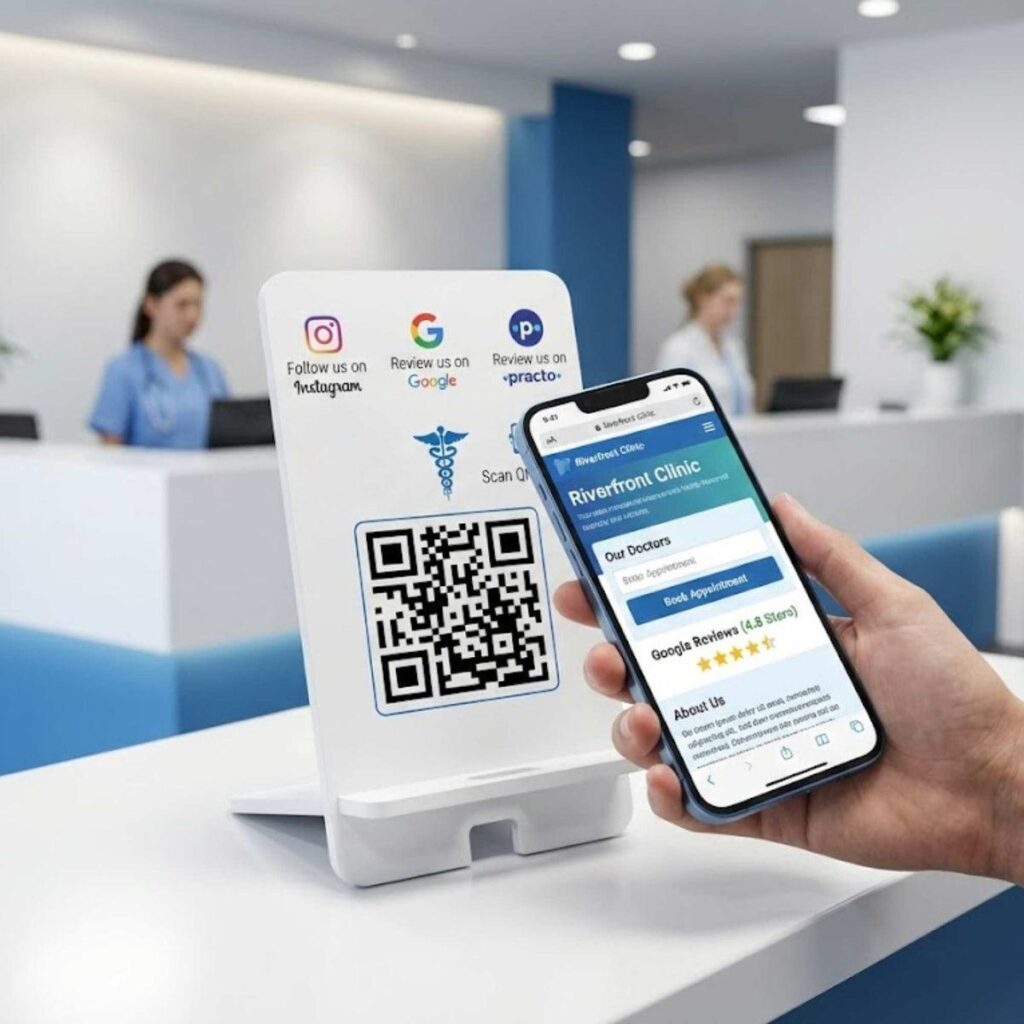
Ask every patient the same way, reply to every review without confirming anyone is a patient, and never offer rewards for reviews. Google says more reviews and positive ratings can help local ranking, but HIPAA and Google’s rules limit how you ask and how you answer.
Asking:
- Send your Google review link to all patients, not only happy ones. Don’t screen them first.
- Offer no discounts, gifts, or entries. Google’s policies and the FTC’s 2024 rule on fake reviews both target these tactics.
- Get consent before texting, and keep the message generic, without naming a treatment.
Sample ask: “Thanks for choosing [Practice]. If you have a moment, we’d value an honest review: [link].”
Replying: Federal regulators have fined practices for revealing patient details in review replies. HHS’s Office for Civil Rights settled with a Texas dental practice for $10,000, a California dental practice for $23,000, and a New Jersey psychiatric practice for $30,000. Even confirming that someone is a patient can be a disclosure. Use scripts like these:
- Positive review: “Thank you for your kind words. We appreciate everyone who shares feedback about our team.”
- Negative review: “We take feedback seriously and want to hear more. Please call our office at [number] so we can talk with you directly.”
- Review that shares health details: Use the negative-review reply. Don’t repeat or respond to the details.
If a review looks fake or violates Google’s policies, flag it instead of arguing in public.
Step 5: Local Links and PR

Earn links from local groups that already know you: sponsorships, professional associations, hospital affiliations, and local news. Google lists links from other websites as a prominence signal, so a handful of relevant local links is a better goal than a pile of random ones.
- Sponsor a youth team, health fair, or school event, and ask for a link on the sponsor page.
- Join your specialty association and state society, and complete the member directory profile.
- Ask your affiliated hospital or university to link to your provider page.
- Pitch local reporters as an expert source on general health topics. Share education, never patient stories.
Links are the slowest part of local SEO for doctors, and paid link schemes put your site at risk.
Track Results: Calls, Directions, Map Rank, and Search Console
Review five signals each month: calls, direction requests, and website clicks from your profile, local rank positions, and Search Console queries. Booked patients matter most. Rankings are a diagnostic. Compare month over month, not day to day.
| Metric | Where to find it | What to watch |
|---|---|---|
| Calls, directions, website clicks | Google Business Profile performance | Trend across several months |
| New patients by source | Front desk and scheduling system | Count “found you on Google” |
| Map rank | Rank tracker with a geo-grid | Rank varies by searcher location, so check several points |
| Queries and pages | Search Console | Impressions and clicks for service-plus-city searches |
| Page speed | Core Web Vitals report | Mobile pages flagged as poor |
Nobody can promise a ranking in local SEO for doctors, so judge the work by these trends. If you use call tracking, check whether recordings could capture patient details, and keep analytics tags off logged-in patient portals.
Common Mistakes and Profile Suspensions
Most local SEO for doctors problems come from a few avoidable errors:
- Stuffing keywords into the name or using a virtual office address. Google requires a real location customers can visit, so telehealth-only practices usually don’t qualify.
- Leaving duplicates after a move or when a doctor leaves.
- Creating several profiles for one practitioner’s specialties.
- Gating, buying, or rewarding reviews.
- Replying with patient details, even to defend yourself.
- Making medical claims. Words like “cure,” “guaranteed,” or “best doctor” invite complaints. States also regulate physician advertising, including testimonials and specialty claims, so check with your state medical board and counsel.
If Google suspends your profile, fix the cause first, then use Google’s reinstatement request. Don’t create a new profile, because that can create a duplicate.
FAQ: Local SEO for Doctors
What is local SEO for doctors?
It is the practice of improving how your medical practice appears in Google Maps and local search results. It covers your Google Business Profile, website location pages, listings, and reviews.
How long does local SEO take to work for a medical practice?
Google doesn’t publish a timeline, and results depend on competition and your starting point. Track monthly trends and give changes a few months before you judge them.
Should each doctor have their own Google Business Profile?
Only individual practitioners who are public-facing and reachable at the verified location during stated hours may have one, and each should have a single profile. The practice keeps its own profile too. Confirm against Google’s current guidelines.
Can doctors reply to Google reviews?
Yes, but HIPAA bars you from revealing patient information. Don’t confirm the person is a patient, repeat details, or mention treatment. Invite them to call your office instead.
Do reviews help a medical practice rank on Google Maps?
Google says more reviews and positive ratings can improve local ranking. They are one factor among several, so don’t expect reviews alone to carry a weak profile.
Important: This article is general information, not legal, medical, or compliance advice. Google’s guidelines and screens change. We checked the sources below on November 11, 2026. Confirm current rules with Google and your compliance counsel before you publish or reply to reviews.
Sources: Google Business Profile Help: local ranking · Google guidelines for representing your business · TechTarget on OCR dental settlement · TechTarget on OCR psychiatric practice settlement