


Customer retention does not happen simply because customers are satisfied with their first purchase. Businesses need to give people good reasons to return, stay engaged, and choose them again instead of a competitor. In this guide, Customer Retention Strategies covers 15 practical ways to increase repeat business, strengthen customer loyalty, and bring inactive customers back.
What Makes Customers Come Back?
Customers are more likely to return when they have a clear reason to choose the business again. A positive first experience matters, but ongoing value and customer loyalty give people a stronger reason to make another purchase.
The next purchase should also feel easy. Removing friction helps customers return without having to repeat unnecessary steps, search for information again, or reconsider the entire buying process.
Timing matters as well. Reaching customers at the right time keeps the business relevant without overwhelming them with messages. The goal is to stay connected when another purchase or interaction is naturally more likely.
Customer Retention Strategies That Increase Repeat Purchases
Simplify the Second Purchase
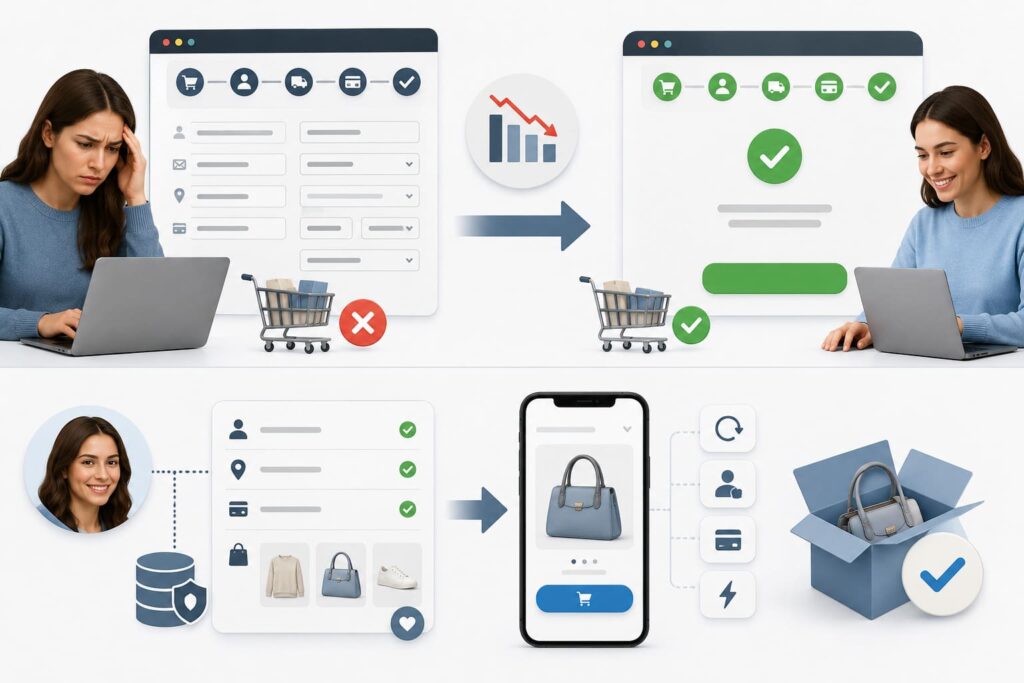
The second purchase should require less effort because the business already knows the customer. Saving relevant information, preferences, purchase history, or previous selections can remove unnecessary steps from the next transaction.
Baymard has tracked checkout usability for more than 14 years and reports a global average cart abandonment rate of 70.19%. Its research also identifies complicated checkout processes as a common source of abandonment, showing why reducing friction matters.
For repeat customers, that can mean offering reorder buttons, saved information, faster checkout, and fewer steps instead of making them start the purchasing process again. The goal is simple: returning customers should be able to buy with less effort than they needed the first time.
Follow Up After Purchase
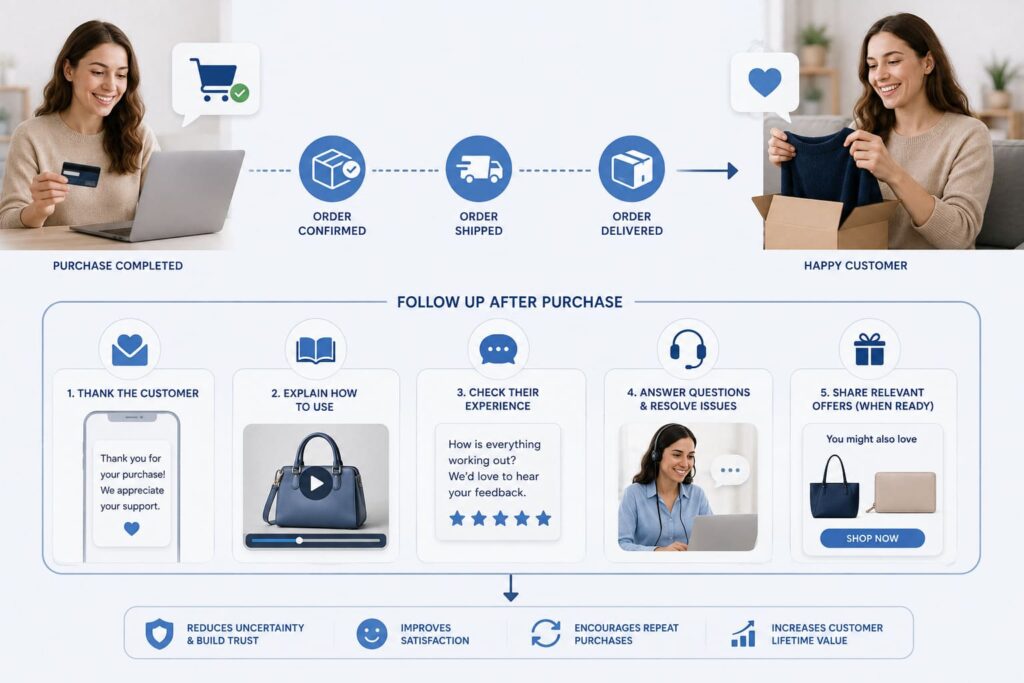
Post-purchase communication should help customers get value from what they already bought before encouraging another purchase. This can reduce uncertainty after the transaction and strengthen satisfaction.
Research published in Computers in Human Behavior found that post-purchase communication can help reduce cognitive dissonance and improve e-satisfaction after a purchase.
A simple follow-up can include:
- Thank the customer for their purchase.
- Explain how to use the product or service.
- Check their experience and satisfaction.
- Answer questions or resolve issues.
Once the customer has received support and value from the first purchase, cross-sells or promotional offers are more appropriate.
Send Timely Reminders
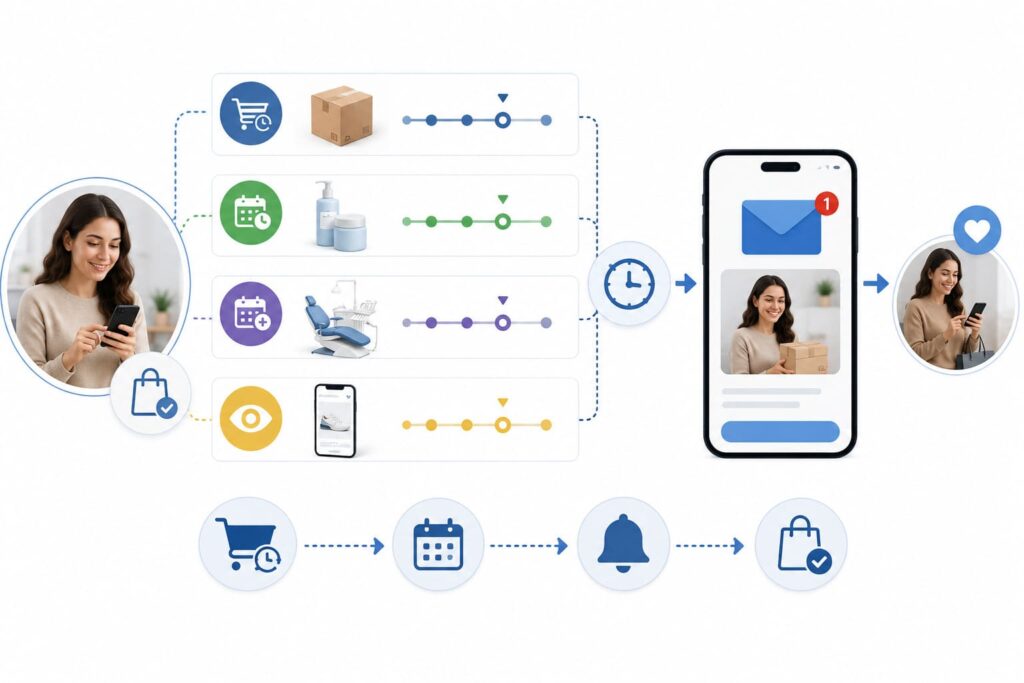
Retention messages work better when they arrive around the time a customer may actually need to buy again. Instead of sending every customer the same email on a fixed schedule, use available customer signals to estimate the next purchase window.
Consider signals such as:
- Purchase history – when the customer typically buys again.
- Usage cycle – how long the product or service usually lasts.
- Appointment interval – when a customer is likely due for another appointment.
- Browsing behavior – recent interest in a product or service can indicate renewed intent.
A timely reminder can bring customers back without making every message feel like a generic promotion.
Recommend the Next Purchase
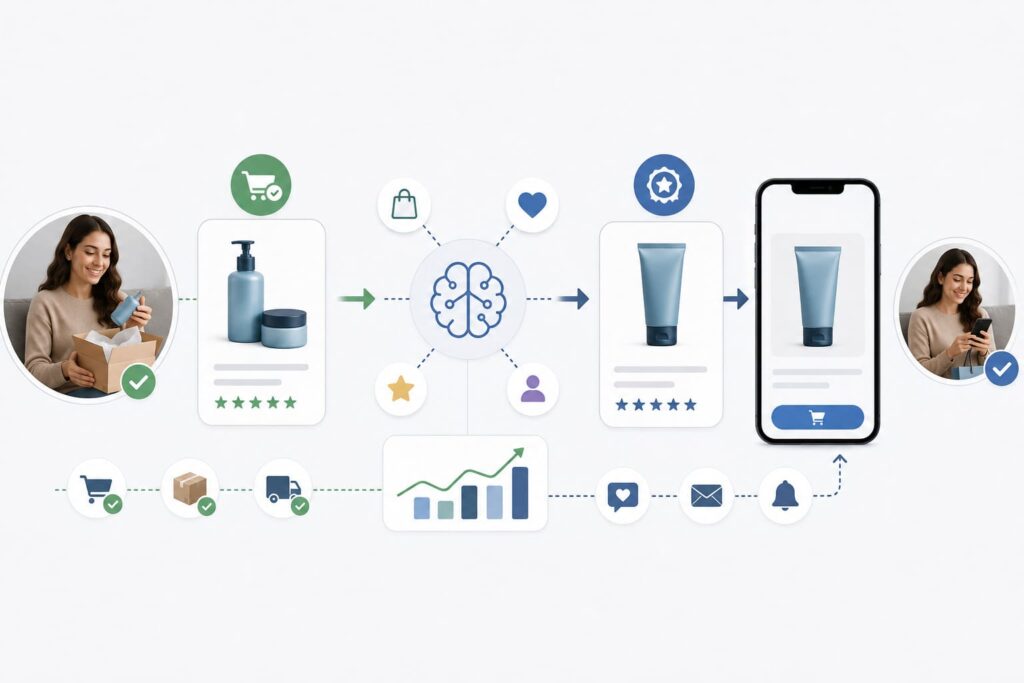
A customer’s previous purchase can provide a useful signal for what they may need next. Instead of sending the same offer to the entire database, connect the next recommendation to what the customer already bought.
For example:
Product A purchased → Recommendation B
This type of behavioral personalization makes retention messages more relevant because the recommendation is based on an actual customer action rather than a generic promotion. It can also create a more natural path from one purchase to the next.
Give Loyal Customers Early Access
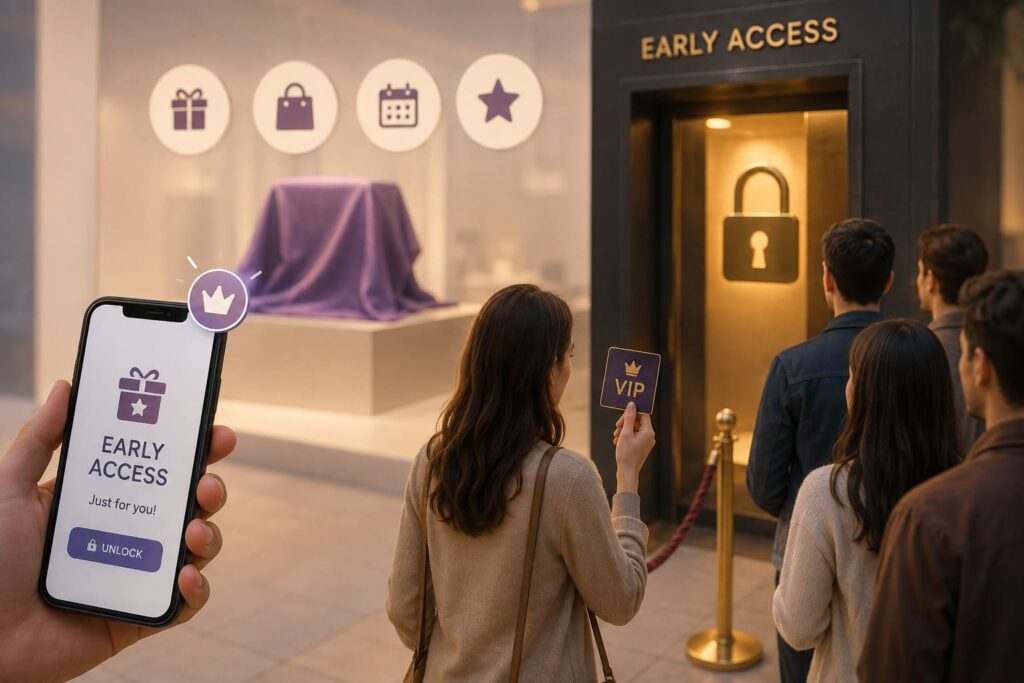
Early access gives existing customers a reason to stay engaged and makes their loyalty feel recognized. Instead of waiting for a public launch, returning customers can receive access before everyone else.
- Early access to new products, services, or promotions.
- New product previews before the public announcement.
- Priority booking for popular appointments or limited availability.
- Limited releases reserved for existing customers first.
This approach can strengthen customer loyalty without relying on constant discounts.
Reward Repeat Behavior
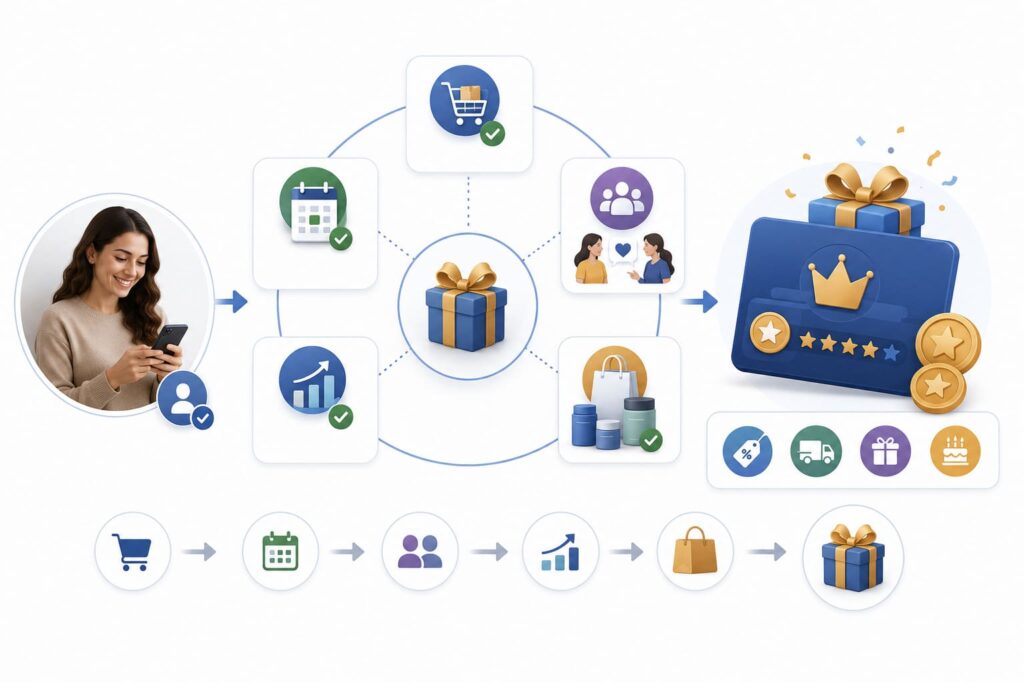
A loyalty program can be more effective when rewards are tied to the customer behavior the business wants to encourage, rather than simply giving points for every purchase.
Research published in the Journal of Consumer Research, based on 8 studies involving 5,025 participants, found that customers tend to persist more when rewards are connected to completing specific goal-related actions.
Design rewards around behaviors such as:
- Second purchase
- Repeat booking
- Referral
- Higher purchase frequency
- Package or bundle purchases
This makes the loyalty program support a specific retention goal instead of becoming another generic points system.
Start Win-Back Campaigns
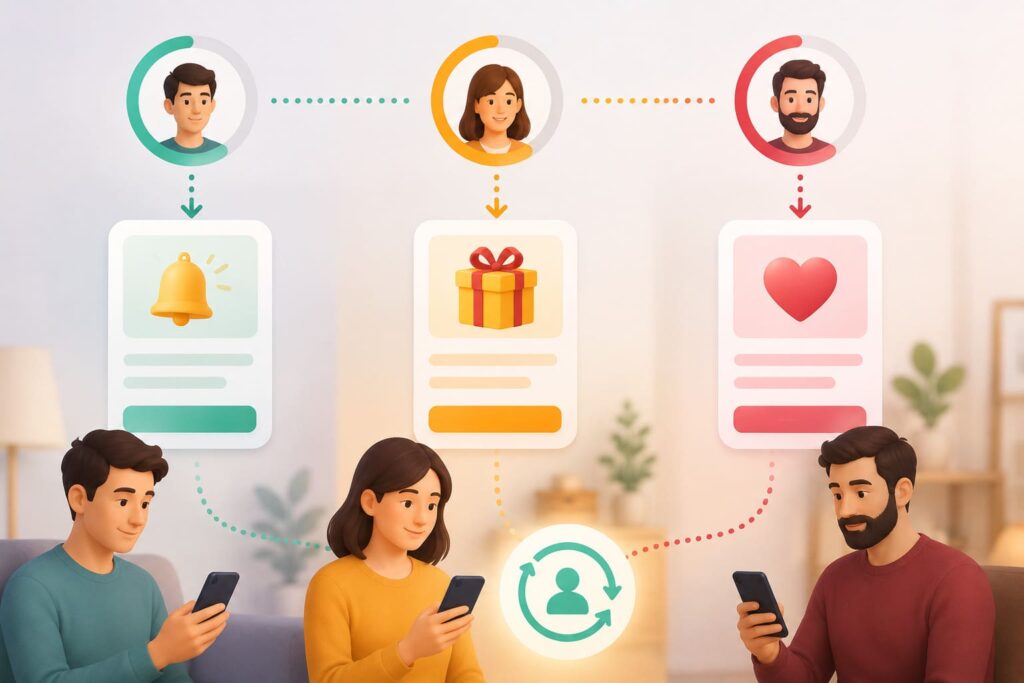
Do not wait until customers have been inactive for too long. Segment them based on how long they have been away, then adjust the message to their level of inactivity.
- Recently inactive: Send a simple reminder or relevant update.
- Longer inactive: Give them a stronger reason to return.
- High-value inactive: Use a more personalized message instead of a generic discount.
This makes customer reactivation more relevant and helps businesses avoid sending the same win-back offer to their entire database.
Give Inactive Customers a Reason to Return
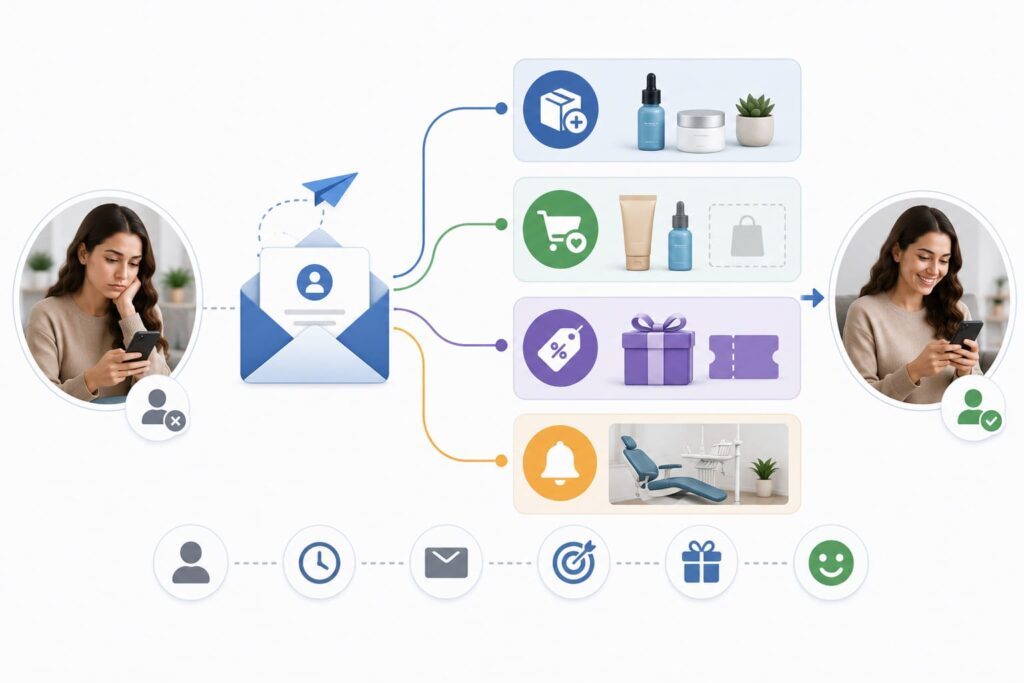
A generic “We miss you!” message gives inactive customers little reason to come back. The message should point to something new or relevant to their previous relationship with the business.
- New product – introduce something that was unavailable during their last purchase.
- Personalized recommendation – suggest an option based on their previous activity.
- Returning-customer offer – give them a relevant incentive to restart.
- New service – highlight an added service that may fit their needs.
Recurly reports that 52% of users who cancel subscriptions do so because they are not using the service enough, while around three-quarters of customers who pause a subscription return. This suggests that reactivation can benefit from giving customers a relevant way to return rather than relying only on discounts.
Ask for Feedback
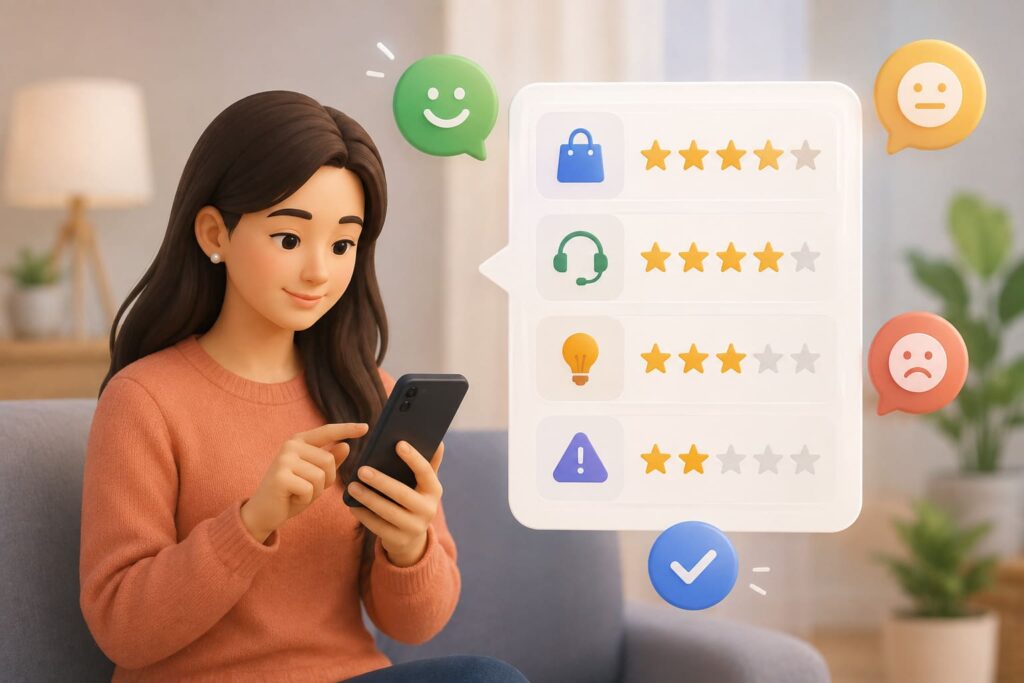
Customer feedback can reveal dissatisfaction before it turns into churn. A simple check-in gives customers a chance to point out problems while there is still an opportunity to address them.
Ask about:
- Product or service quality
- Customer experience
- What could be improved
- Problems they have not reported yet
Treat negative feedback as a retention signal, not simply a review request. Resolving a complaint quickly can give an unhappy customer a reason to stay instead of looking for another provider.
Turn Complaints Into Retention Opportunities
A complaint does not always mean a customer is ready to leave. A fast and effective response can turn a negative experience into an opportunity to rebuild trust.
Use a simple process:
Complaint → fast response → resolution → follow-up
The goal is to resolve the original issue, check that the customer is satisfied with the outcome, and keep the relationship from ending with an unresolved problem.
Personalize Customer Offers
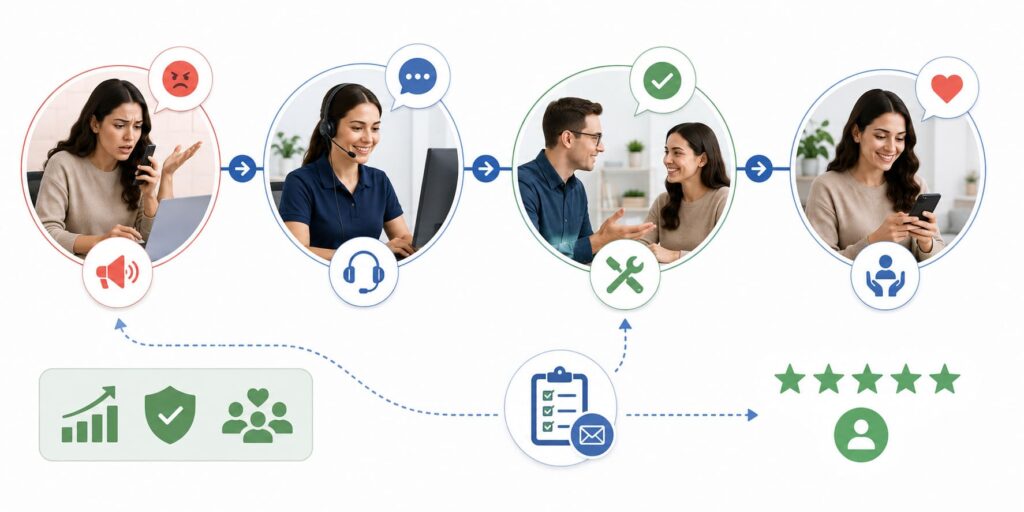
Different customers have different reasons for buying again, so one offer rarely works equally well across the entire database. Segment customers based on their relationship with the business and adjust the offer accordingly.
- New customers: Encourage the second purchase or next appointment.
- Repeat customers: Reward continued loyalty with relevant benefits.
- High-value customers: Provide offers or access that reflect their higher engagement.
- Inactive customers: Give them a specific reason to return.
The goal is to make each offer feel relevant to the customer’s current stage rather than sending the same promotion to everyone.
Celebrate Customer Milestones
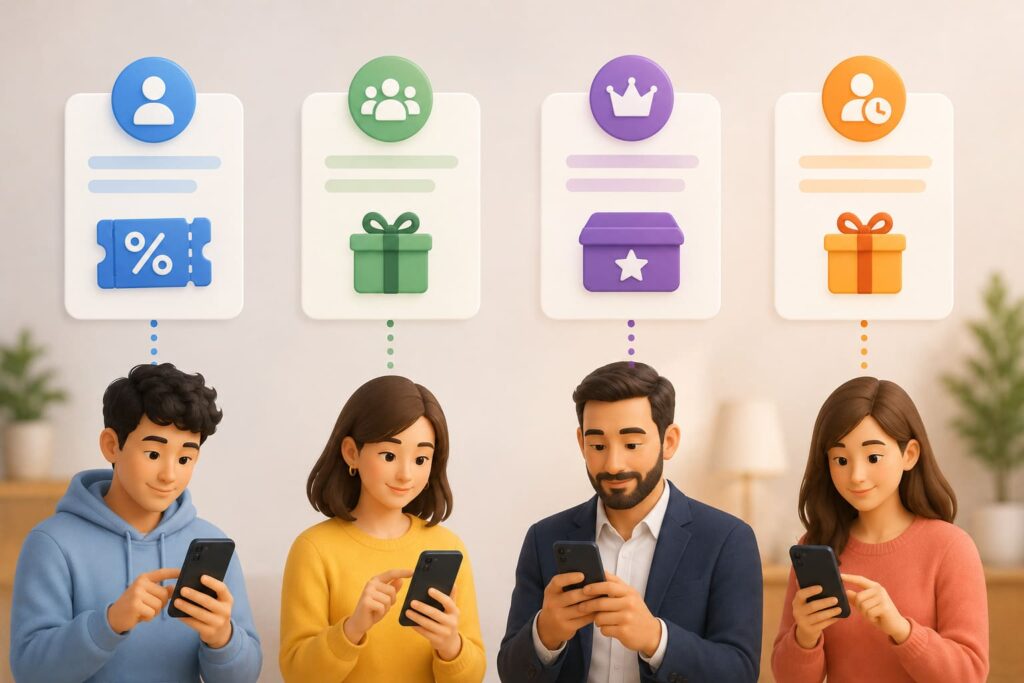
Customer milestones create natural moments to reconnect without relying on constant promotional messages. They can also make the relationship feel more personal because the message is tied to the customer’s history with the business.
- First purchase anniversary – recognize the customer’s first year with the business.
- 5th order – acknowledge repeat purchasing and reward continued engagement.
- Birthday – offer a relevant benefit around the customer’s birthday.
- Membership milestone – recognize progress within a loyalty or membership program.
The milestone itself becomes the reason to reach out, giving customers another reason to interact with the business.
Offer Subscriptions
Subscription or replenishment options make sense when customers naturally need the same product or service again. Instead of relying on customers to remember when to reorder or rebook, the business can build the repeat purchase into the customer experience.
This model can work particularly well for products with predictable usage cycles or services that customers regularly schedule. Offer a flexible option that lets customers adjust, skip, pause, or cancel when their needs change.
The goal is to make repeat business more predictable for both the customer and the business.
Build a Reason to Stay
Customers may return when the overall experience gives them a clear reason to choose the same business instead of trying another option. Retention is not always about offering a lower price.
That reason can come from:
- Better convenience – make the experience easier or faster.
- Personalized service – remember relevant preferences and past interactions.
- Exclusive benefits – give returning customers something they cannot get as a first-time buyer.
- Easier reordering – reduce the effort required to purchase again.
A strong retention strategy gives customers a reason to remember the business when they are ready to buy again.
Track Customers at Risk of Churning
Do not wait until a customer has completely disappeared before taking action. Changes in customer behavior can signal that someone is becoming less likely to buy again.
Watch for:
- Lower purchase frequency
- Reduced engagement
- Repeated support complaints
- Longer time since the last purchase
When several signals appear together, move the customer into an appropriate retention or re-engagement campaign. This allows the business to respond while there is still an opportunity to retain the customer.
Learn more: Define Customer Relationship Management (CRM)
FAQs
What Is the Most Effective Retention Strategy?
There is no single strategy that works for every business. The most effective approach is usually one that gives customers a clear reason to return while making the next purchase easier.
How Can Small Businesses Retain Customers?
Focus on the experience customers already have with your business. Personalized communication, relevant follow-ups, loyalty rewards, and responsive customer service can help small businesses encourage repeat business without competing only on price.
When Should You Start a Win-Back Campaign?
Start before customers become completely inactive. A noticeable drop in purchase frequency, engagement, or time since the last purchase can indicate that a customer may be at risk of churning.
How Can Personalization Improve Customer Retention?
Personalization makes retention messages more relevant by using customer information such as previous purchases, preferences, or activity. Customers are more likely to respond when the offer or recommendation fits their relationship with the business.
What Are the Most Important Customer Retention Metrics?
Track customer retention rate, repeat purchase rate, churn rate, and customer lifetime value. Looking at these metrics together gives a clearer picture of whether customers are staying, returning, and generating long-term value.
Final Thoughts
Strong Customer Retention Strategies help businesses get more value from the customers they already have while building a more consistent base of repeat buyers. When retention becomes part of the broader marketing plan, businesses can focus on both keeping existing customers and reaching new ones.
If you are also looking for new ways to attract customers, Good Review Service can help with marketing strategies designed to bring more potential customers to your business.