

G
G
G

How to Get to Top of Google Search: 10 Strategic Ways

In the evolving digital landscape of 2026, mastering how to get to top of google search requires a sophisticated blend of AI-driven optimization and high-authority brand signals. This comprehensive guide by Good Review Service explores the ten essential pillars of modern SEO, ranging from technical site performance to the critical influence of E-E-A-T. By implementing these expert-vetted strategies on how to get to top of google search and leveraging the reputation-building power of Good Review Service, your website can dominate the search results and secure a sustainable competitive advantage.

The Core Fundamentals

Understanding how to get your website to the top of google begins with a fundamental shift from keyword stuffing to user-centricity. In 2026, Google’s algorithms are more intuitive than ever, prioritizing websites that offer genuine value.

Deciphering Modern Search Intent

The cornerstone of how to get your website to the top of google is aligning your content with search intent. Google categorizes queries into informational, navigational, transactional, and commercial investigation. If your page provides a solution when the user is looking for a product, you will never reach the top. You must analyze the current top-ranking pages to understand what Google considers “relevant” for your target keywords.

The Critical Role of E-E-A-T in AI Search

Google’s Search Quality Rater Guidelines emphasize Experience, Expertise, Authoritativeness, and Trustworthiness (E-E-A-T). For those wondering how to get your website to the top of google, establishing this authority is mandatory. This is achieved through verifiable author bios, high-quality citations, and a clean digital reputation. Google uses AI to verify if the information provided is backed by recognized experts in the field.

Why Top Rankings are Essential for Revenue Conversion

Securing the top spot isn’t just about vanity; it is about the bottom line. The first organic result on Google maintains a click-through rate (CTR) of approximately 39.8%, which is significantly higher than even the second position. Understanding how to get your website to the top of google is essentially the most effective way to lower your customer acquisition costs (CAC) and drive scalable revenue.

10 How to Bring Your Website to the Top of Google

To effectively learn how to bring your website to the top of google, you must follow a structured, data-driven approach that addresses both on-page and off-page factors.

1. Perform Advanced Keyword Research

Traditional keyword research-finding one high-volume keyword and stuffing it into your article-is completely dead. If you want to master how to bring your website to the top of Google in 2026, you must adapt to Google’s AI-driven algorithm. The modern standard focuses on building “Topical Authority” through Topic Clusters and Semantic Entities, targeting users at the exact moment they have their credit cards ready.

Here is exactly how to execute modern keyword research:

Actionable Steps:

  • Step 1: Build a “Topic Cluster” Architecture
    Instead of writing random blog posts, structure your content into a Hub-and-Spoke model.

    • The Pillar (Hub): Create one massive, ultimate guide on a broad topic (e.g., “The Ultimate Guide to Digital Marketing”).

    • The Clusters (Spokes): Create 5-10 smaller, highly specific articles targeting long-tail keywords (e.g., “Best digital marketing tools for plumbers,” “How to set up a Facebook Ad budget”).

    • The Secret Sauce: Ensure all cluster pages link back to the main Pillar page. This proves to Google that you hold complete topical authority in this niche.

  • Step 2: Filter for “High Transactional Intent”
    Stop wasting time on keywords that only bring informational traffic (e.g., “What is a running shoe?”). Focus on high-intent keywords that signal the user is ready to buy.

    • Use keyword research tools and filter your searches using transactional modifiers such as: “Buy,” “Pricing,” “vs,” “Review,” “Best [Product] for [Specific Audience],” or “Near me.”

    • Example: Ranking #1 for “Best CRM software for real estate agents 2026” will make you infinitely more money than ranking #1 for “What is a CRM?”

  • Step 3: Extract Semantic Entities using AI
    Google doesn’t just read words anymore; it understands concepts (entities). To prove your content is comprehensive, you must include related terms naturally.

    • Open ChatGPT or Claude and use this prompt: “Act as a senior SEO strategist. I am writing an article about [Your Topic]. Provide a list of the top 20 Semantic Entities, LSI keywords, and related concepts that Google’s NLP (Natural Language Processing) algorithm would expect to see in a highly authoritative article on this subject.”

    • Sprinkle these generated terms naturally throughout your headers and paragraphs.

Recommended Tools:

  • Ahrefs / Semrush: For finding keyword difficulty, search volume, and checking competitors’ topic clusters.

  • AnswerThePublic: To find specific long-tail questions your audience is typing into Google.

  • ChatGPT Plus / Claude 3.5: For extracting semantic entities and brainstorming cluster topics.

  • AlsoAsked.com: To scrape Google’s “People Also Ask” boxes and structure your H2/H3 tags.

Perform Advanced Keyword Research

2. Create Unique, AI-Resistant Content

In 2026, the internet is drowning in cheap, AI-generated fluff. Google’s algorithms are now aggressively trained to penalize generic, mass-produced text. If you want to know how to bring your website to the top of Google, the secret is “Information Gain”—providing unique value that an AI bot simply cannot scrape from existing articles. You must prove your E-E-A-T (Experience, Expertise, Authoritativeness, and Trustworthiness).

Here is exactly how to humanize your content and make it rank-worthy:

Actionable Steps:

  • Step 1: Inject First-Hand Experience (Case Studies)
    Never write a theoretical article if you can write a practical one. Instead of writing “How to Run Facebook Ads,” write “How We Scaled a Client’s Facebook Ads to 500% ROI in 30 Days.” Use the words “I” and “We.” Show screenshots of your actual backend dashboards, email threads, or before-and-after results.

  • Step 2: Publish Original Data & Statistics
    AI can only summarize existing data; it cannot create new data. Run a poll on your LinkedIn, email your subscriber list with a short survey, or analyze your own customer sales data. Publish articles like “We Analyzed 1,000 B2B Emails: Here is What Works.” Other websites will naturally link to your original data, earning you high-quality backlinks.

  • Step 3: Source Subject Matter Expert (SME) Quotes
    Don’t just share your own opinion. Reach out to industry experts and ask for a 2-sentence quote on the topic you are writing about. This instantly elevates the authority of your page and encourages the expert to share your article with their audience once it goes live.

  • Step 4: Add Custom Visuals
    Google’s image recognition is incredibly smart. Stop using generic stock photos of “businessmen shaking hands.” Create custom infographics, flowcharts, or whiteboard sketches that visually explain the concepts in your text.

Recommended Tools:

  • Connectively (formerly HARO) / Qwoted: To connect with journalists and industry experts for unique quotes.

  • Google Forms / Typeform: To run surveys and gather original data.

  • Canva / Figma: To design custom, original graphics and infographics.

3. Optimize Core Web Vitals and Technical UX

You can have the best content in the world, but if your site takes 5 seconds to load, users will bounce back to the search results instantly (called “Pogo-sticking”). This sends a massive negative signal to Google. Mastering technical SEO and Core Web Vitals is a non-negotiable step in how to bring your website to the top of Google.

(Note: Google recently replaced FID with INP – Interaction to Next Paint. You must optimize for modern metrics).

Here is how to bulletproof your website’s technical foundation:

Actionable Steps:

  • Step 1: Crush the “Big 3” Google Metrics
    Run your website through Google PageSpeed Insights and fix these specific issues:

    • LCP (Largest Contentful Paint – Goal: Under 2.5s): This measures how fast the biggest element on your screen loads. Action: Compress your massive top banner/hero images and convert them to modern formats like WebP or AVIF.

    • INP (Interaction to Next Paint – Goal: Under 200ms): This measures how quickly your site responds when a user clicks a button. Action: Defer non-essential JavaScript. Don’t load massive third-party tracking scripts until after the main page is interactive.

    • CLS (Cumulative Layout Shift – Goal: Under 0.1): This measures visual stability (when text jumps around as ads or images load). Action: Always specify the exact width and height dimensions in your image and video HTML code so the browser leaves an empty box for them while loading.

  • Step 2: Implement Aggressive Caching & a CDN
    Use a Content Delivery Network (CDN) to store copies of your website on servers all around the world. If a user in London visits your US-based website, the CDN will serve the site from a London server, cutting load times in half.

  • Step 3: Conduct a “Mobile-First” UX Audit
    Google uses Mobile-First Indexing, meaning it only cares about what your mobile site looks like. Take out your phone and test your own website. Are the buttons too close together for a thumb to tap easily? Do annoying email pop-ups cover the entire screen and lack a clear “X” button? Fix these UX friction points immediately.

Recommended Tools:

  • Google PageSpeed Insights / GTmetrix: To identify exact speed bottlenecks and Core Web Vitals scores.

  • Cloudflare: The industry standard CDN for instantly speeding up global load times and securing your site.

  • WP Rocket / NitroPack: The best all-in-one speed optimization plugins if you are using WordPress (for caching, image compression, and code minification). TinyPNG (for manual image compression).

4. Ensure Superior Site Performance Across Devices

Because Google uses “Mobile-First Indexing,” it looks at the mobile version of your site to determine your rankings—your desktop site is entirely secondary. If you want to master how to bring your website to the top of Google, you must move beyond just “loading fast” (covered in Core Web Vitals) and focus on mobile user interface (UI) and accessibility.

Actionable Steps:

  • Step 1: Design for the “Fat Finger” Rule
    Mobile users navigate with their thumbs. Ensure all clickable elements (buttons, links, form fields) are at least 48×48 pixels in size and have enough padding between them so users don’t accidentally click the wrong link.

  • Step 2: Eliminate Intrusive Interstitials (Pop-ups)
    Google actively penalizes sites that use massive pop-ups blocking the main content on mobile screens. If you must use email capture forms, use “slide-ins” or small banners at the bottom of the screen instead of full-screen takeovers.

  • Step 3: Optimize Typography for Small Screens
    Nobody wants to zoom in to read your blog. Set your base font size to at least 16px. Break up massive blocks of text into short, 2-3 sentence paragraphs. Use bullet points and bold text to make skimming easy.

Recommended Tools:

  • Google Search Console (Mobile Usability Report): To find exact pages where text is too small or elements are too close together.

  • BrowserStack: To test how your website looks and functions across hundreds of different mobile devices and browsers.

  • Hotjar / Microsoft Clarity: To watch screen recordings of mobile users and see exactly where they get frustrated and leave.

5. Execute Hyper-Local SEO Strategies

If you run a brick-and-mortar business or serve a specific geographic area (like a plumber, dentist, or lawyer), you don’t need to compete globally. Hyper-local SEO is the ultimate shortcut for how to bring your website to the top of Google in your specific city.

Actionable Steps:

  • Step 1: Hyper-Optimize Your Google Business Profile (GBP)
    Claim your GBP and fill out every single field. Add your services, products, and a Q&A section. Most importantly, upload real, high-quality photos of your storefront, team, and past work weekly. Google treats an active GBP like a mini social media feed.

  • Step 2: Build Consistent Local Citations (NAP)
    Your Business Name, Address, and Phone number (NAP) must be 100% identical across the entire internet (Yelp, YellowPages, Apple Maps, local chambers of commerce). If it’s “Street” on your website, don’t use “St.” on Yelp.

  • Step 3: Create City-Specific Landing Pages
    Don’t just have one “Locations” page. If you serve three cities, create three separate, deeply detailed pages: Domain.com/plumber-in-dallasDomain.com/plumber-in-fort-worth, etc. Include local client testimonials and embedded Google Maps on each page.

Recommended Tools:

  • BrightLocal / Whitespark: To audit your local citations and track local rankings down to the specific zip code.

  • PlePer Local SEO Tools: A Chrome extension to reverse-engineer competitors’ Google Business Profile categories.

Execute Hyper-Local SEO Strategies

6. Build High-Authority and Ethical Backlinks

Backlinks (other websites linking to yours) remain one of Google’s top three ranking factors. They act as “votes of confidence.” However, buying 1,000 spammy links for $5 will get you penalized. In 2026, ethical, high-PR link-building is a mandatory pillar of how to bring your website to the top of Google.

Actionable Steps:

  • Step 1: Execute Digital PR (Data Pitching)
    Journalists are always desperate for fresh statistics. Conduct a survey in your industry, write a report, and pitch it to journalists at Forbes, TechCrunch, or niche magazines. When they cite your data, they give you a highly coveted, authoritative backlink.

  • Step 2: Reclaim Unlinked Brand Mentions
    Use brand monitoring tools to find websites that have mentioned your company name but forgot to link to your website. Send a polite email thanking them for the mention and asking if they could turn your brand name into a clickable link.

  • Step 3: The “Skyscraper” Technique
    Find an article in your niche that has hundreds of backlinks but is outdated or poorly written. Write a version that is 10x better, more up-to-date, and visually appealing. Then, email all the websites linking to the old article and suggest they link to your superior, newer version.

Recommended Tools:

  • Connectively (formerly HARO) / Qwoted: To connect with journalists looking for expert quotes in exchange for backlinks.

  • Ahrefs / Semrush (Backlink Checker): To analyze your competitors’ backlinks and steal their link-building opportunities.

  • Hunter.io / BuzzStream: To find the email addresses of editors and manage your outreach campaigns.

7. Master Technical SEO and Internal Linking Architecture

Google’s bots need to be able to “crawl” your site easily to index it. If your site structure is a messy labyrinth, Google will give up. A clean technical foundation and a strategic internal linking web are critical to how to bring your website to the top of Google.

Actionable Steps:

  • Step 1: Establish a SILO Internal Linking Structure
    Every time you publish a new blog post, find 3 older, related posts on your site and link from them to the new post. Use exact-match “Anchor Text” (the clickable blue words). If the new post is about “Vegan Dog Food,” make sure the clickable text in the old article says exactly “vegan dog food.”

  • Step 2: Fix Indexing Errors and “Orphan Pages”
    Regularly check Google Search Console for “Page Indexing Issues” (like 404 broken links or 500 server errors). Also, find and fix “Orphan Pages”—pages on your site that have absolutely zero internal links pointing to them.

  • Step 3: Optimize Your URL Architecture
    Keep URLs short, clean, and keyword-rich.

    • Bad: domain.com/blog/p=123?date=2026-article-about-seo

    • Good: domain.com/seo-tips

Recommended Tools:

  • Screaming Frog SEO Spider: A technical tool that crawls your entire website like Googlebot to find broken links and structural errors.

  • Link Whisper: A brilliant WordPress plugin that uses AI to suggest highly relevant internal links as you write.

8. Boost Engagement via Strategic Social Signals

While Google claims social media shares are not a direct ranking factor, the secondary effects are undeniable. Viral content leads to more people searching for your brand name on Google (Navigational Search), which signals to Google that you are a highly trusted, popular entity.

Actionable Steps:

  • Step 1: Repurpose SEO Content into Micro-Content
    Don’t just publish an article and pray. Turn your 2,000-word SEO blog post into a YouTube video, a 60-second TikTok/Reel, a LinkedIn carousel, and an X (Twitter) thread. Drive that social traffic directly to your blog.

  • Step 2: Embed Multimedia to Increase “Dwell Time”
    Embed your YouTube videos directly into your blog posts. If a user stops scrolling to watch a 3-minute video on your page, their “Time on Page” skyrockets. High dwell time proves to Google that your content is highly engaging, boosting your rank.

  • Step 3: Encourage “Branded Searches”
    Run social media campaigns that require users to search for you. Instead of putting a direct link in your Instagram bio, say: “Google ‘[Your Brand Name] SEO Guide’ to get the free template!” This trains Google’s algorithm to associate your brand with high demand.

 Recommended Tools:

  • Repurpose.io: To automatically distribute your video content across all social platforms.

  • Sprout Social / Hootsuite: For scheduling social media posts and tracking engagement metrics.

Boost Engagement via Strategic Social Signals

9. Data-Driven Analysis and Real-Time Adjustments

SEO is not a “set it and forget it” game. Rankings fluctuate daily. Relying on real-time data allows you to pivot and optimize underperforming content—an essential habit for maintaining how to bring your website to the top of Google.

Actionable Steps:

  • Step 1: Fight “Content Decay”
    Articles slowly lose their rankings over time as competitors publish newer stuff. Every 6 months, find posts that have dropped from Page 1 to Page 2. Update the publish date, add 300 words of new information, update the statistics, and request Google to re-index it.

  • Step 2: Optimize Underperforming CTRs (Click-Through Rates)
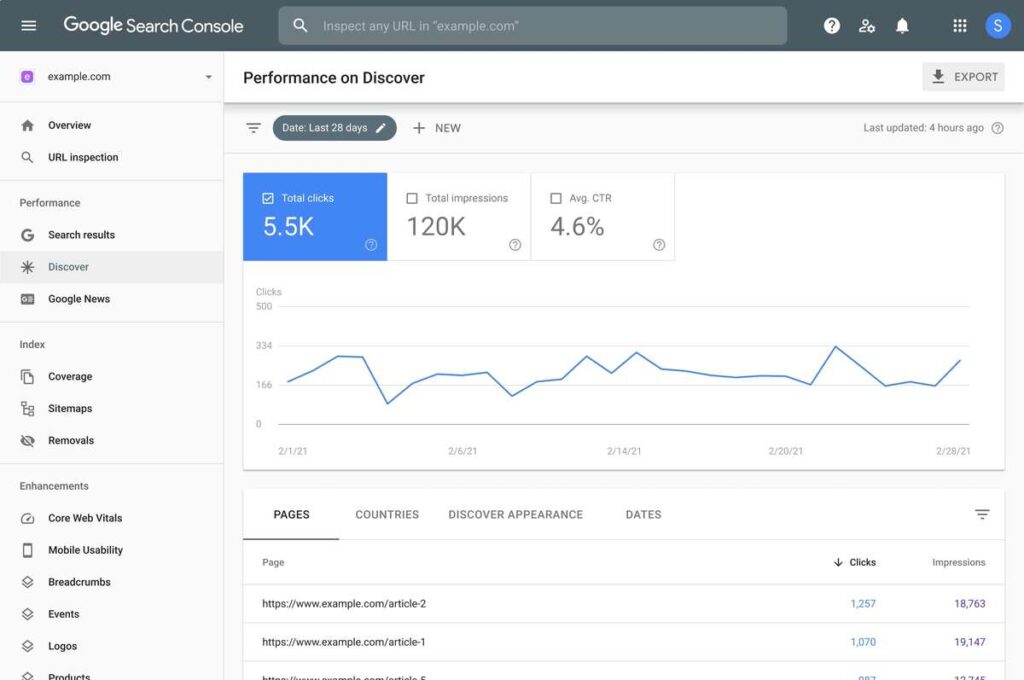
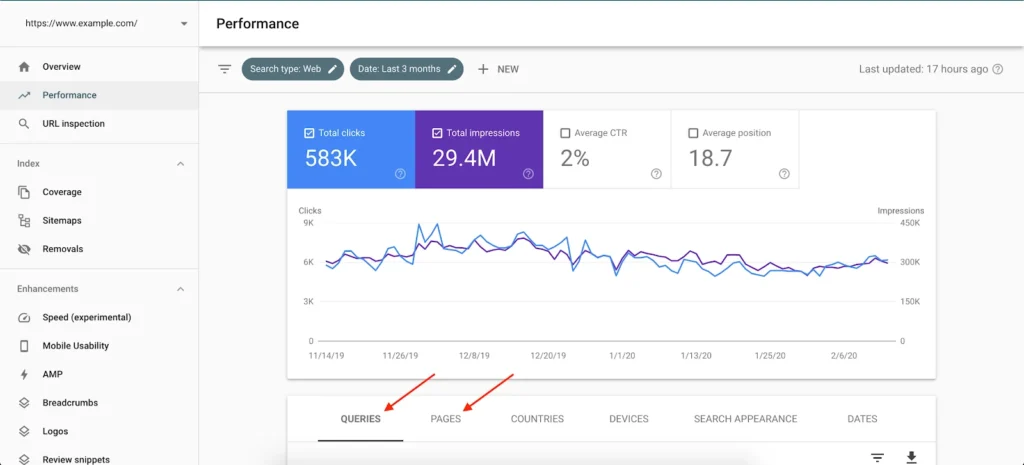
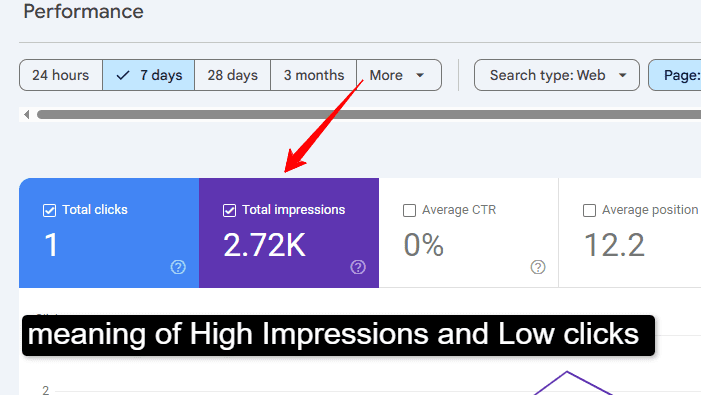
    Look at Google Search Console. If you rank #3 for a keyword but your CTR is only 2%, your title is boring. Rewrite your Title Tag and Meta Description to be more clickable (use numbers, power words, or brackets like [2026 Updated]).

  • Step 3: Track Conversions, Not Just Traffic
    Traffic is useless if it doesn’t make money. Set up custom events in GA4 to track exactly which blog posts are generating email sign-ups, booked calls, or product sales. Double down your efforts on those specific topics.

Recommended Tools:

  • Google Search Console: The holy grail for seeing exactly what keywords you rank for and your CTR.

  • Google Analytics 4 (GA4): For tracking user behavior, dwell time, and conversion tracking.

  • Animalz Revive: A free tool that connects to your analytics and tells you exactly which articles are suffering from traffic decay.

10. Competitor Gap Analysis and Market Positioning

To beat the #1 result, you need to understand exactly why Google prefers them over you. By running a competitor gap analysis, you take the guesswork out of how to bring your website to the top of Google.

Actionable Steps:

  • Step 1: Conduct a Content Gap Analysis
    Use SEO tools to compare your website directly against your top 3 competitors. The tool will generate a list of high-volume keywords that they are ranking for, but you haven’t even written about yet. Steal their keyword strategy.

  • Step 2: Reverse-Engineer the SERP Intent
    Type your target keyword into Google and analyze the top 5 results. Are they all “Listicles” (e.g., Top 10 Ways…)? Are they all step-by-step guides? Are they all e-commerce product pages? You must match the exact “Search Intent” that Google is currently rewarding.

  • Step 3: Execute the “10x Content” Strategy
    Look at the #1 ranking article. If they have 1,000 words, write 2,000. If they have stock photos, use custom infographics. If they just give text, offer a free downloadable Excel template. Identify their weaknesses and over-deliver.

Recommended Tools:

  • Ahrefs (Content Gap Tool) / Semrush (Keyword Gap): To find the exact keywords your competitors are hoarding.

  • Surfer SEO / Clearscope: AI tools that scan the top 10 Google results and tell you exactly how many words, headings, and specific phrases you need to include in your article to beat them.

Advanced Tactics: How to Get Your Site to the Top of Google for Competitive Terms

For high-competition niches, standard SEO isn’t enough. You need advanced technical and authority signals to learn how to get your site to the top of google.

Implementing Advanced Schema Markup and HTML Tags

Schema markup (Structured Data) helps search engines understand the context of your content. By implementing Product, Review, and FAQ schema, you increase your chances of appearing in Rich Snippets. This visual dominance is a key part of how to get your site to the top of google.

Maximizing Mobile-First Indexing Efficiency

Ensure your images are compressed and your code is minified for mobile users. Google’s “Mobile-First” approach means your rankings are determined by your mobile performance. To truly master how to get your site to the top of google, your mobile UX must be flawless.

Authority Building and Entity Trust with Good Review Service

In 2026, Google views your brand as an Entity. The reviews and sentiment associated with your brand name across the web are massive ranking signals. Good Review Service helps you manage this sentiment at scale. By curating positive, verified reviews, Good Review Service boosts your entity’s trust score, which is a direct catalyst for how to get your site to the top of google.

Frequently Asked Questions

Timeframe for First-Page Search Results

For a new site, learning how to get your web page on top of google can take 3 to 6 months. For established sites with high authority, new content can rank within days or weeks depending on the competition.

Optimal Content Update Frequency

To stay relevant, you should update your core content at least every 6 months. Google loves “freshness,” and updating your data points is a proven tactic for how to get your web page on top of google.

Impact of Internal Linking on Top Rankings

Internal linking helps distribute authority. It allows you to guide the Googlebot to your most important landing pages. For those focused on how to get your web page on top of google, a strong internal link structure is the most underrated technical strategy.

Conclusion

Final Verdict on Sustainable Ranking Growth

Achieving the top spot is only half the battle; staying there requires constant vigilance. Mastering how to get to top of google search is a commitment to quality, speed, and authority. By focusing on the user and providing the best possible answer to their query, you align your goals with Google’s.

Stay Ahead with Good Review Service Integration

Trust is the final frontier of SEO. While technical tactics get you noticed, it is your reputation that keeps you at the top. Good Review Service provides the essential E-E-A-T signals that Google craves in 2026. By partnering with Good Review Service, you ensure that your website’s rise to the top is built on a foundation of genuine customer satisfaction and verified excellence.

Contact Good Review Service