



What is the best site for doctor reviews? The answer depends on whether you want verified patient feedback, detailed physician credentials, insurance information, or an easy way to book appointments. With dozens of healthcare review platforms available, choosing the right one can be confusing. In this guide, Good Review Service compares the leading doctor review websites, explains their strengths and limitations, and helps you determine which platform best fits your needs.
What makes a doctor review site worth trusting?
Before comparing doctor review websites, it’s important to know what makes one more reliable than another. A trustworthy platform should offer more than star ratings it should help patients make informed healthcare decisions with accurate and transparent information.
Look for these key qualities:
- Verified patient reviews to reduce fake or misleading feedback.
- Complete doctor profiles, including specialties, board certifications, education, and hospital affiliations.
- Transparent review policies that explain how reviews are collected, moderated, and removed.
- Detailed patient feedback covering communication, wait times, office staff, and quality of care.
- Up-to-date practice information, such as office locations, insurance accepted, and appointment availability.
- Powerful search filters that let users narrow results by specialty, location, insurance, and other preferences.
Keeping these factors in mind will make it easier to compare the most popular doctor review sites objectively.
The Best Doctor Review Sites by Use Case
There isn’t a single doctor review website that’s best for everyone. The right platform depends on what you’re trying to do whether you’re looking for a nearby physician, checking credentials, comparing patient experiences, or finding a doctor who accepts your insurance. Below are the best options based on different needs.
Best for Finding Local Doctors
If your priority is finding a doctor near you, Google Business Profile is often the best place to start. It appears prominently in both Google Search and Google Maps, making it easy to discover nearby healthcare providers within seconds.
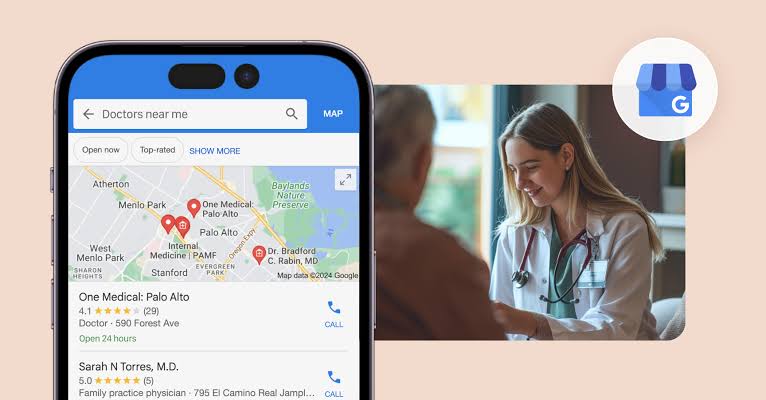
Google Business Profile stands out because it offers:
- Local search results that prioritize doctors based on your location.
- Google Maps integration for directions, office hours, contact details, and nearby options.
- Recent patient reviews, allowing you to see the latest experiences instead of relying on outdated feedback.
While Google reviews may not provide detailed physician credentials, they’re an excellent starting point for comparing nearby practices and getting a quick snapshot of patient satisfaction before exploring other review platforms.
Best for Comparing Specialists
If you’re choosing between specialists rather than searching for the closest doctor, Healthgrades is one of the most useful platforms. It focuses on professional qualifications alongside patient feedback, helping you compare providers based on expertise instead of location alone.

Healthgrades is especially valuable because it includes:
- Detailed credentials, including board certifications, education, and years of experience.
- Procedure information, showing the conditions and treatments a physician commonly performs.
- Specialty-focused profiles, making it easier to compare doctors within the same field, such as cardiology, orthopedics, dermatology, or oncology.
For patients seeking specialized care, Healthgrades provides more clinical context than a typical local review platform, making it easier to evaluate whether a doctor’s experience matches your healthcare needs.
Best for Booking Appointments
If you want to find a doctor and book an appointment in one place, Zocdoc is a strong choice. The platform combines physician reviews with online scheduling, making the booking process fast and convenient.
Zocdoc stands out for:
- Real-time availability, allowing you to see open appointment slots without calling the office.
- Online scheduling, so you can book visits directly through the platform at any time.
- Verified visit reviews, which are written by patients who booked and attended appointments through Zocdoc, adding an extra layer of credibility.
For patients who value convenience, Zocdoc simplifies the entire process from finding a doctor to securing an appointment in just a few clicks.
Best for Reading Detailed Patient Experiences
If you’re looking beyond star ratings, Vitals and RateMDs are good options for reading detailed patient experiences. Both platforms encourage users to share written feedback that provides more context about what it’s actually like to visit a doctor.

These sites are useful because they often include:
- In-depth patient reviews describing communication, bedside manner, wait times, and overall care.
- Multiple perspectives, helping you identify consistent strengths or recurring concerns across different patients.
- Large collections of reviews for many physicians, making it easier to compare experiences before choosing a provider.
While patient stories can offer valuable insights, it’s best to read multiple reviews and consider them alongside a doctor’s credentials and professional background for a more balanced evaluation.
Best for Cosmetic Doctors
If you’re researching cosmetic or aesthetic treatments, RealSelf is one of the most specialized review platforms available. Instead of focusing on general healthcare, it helps patients evaluate providers who perform elective cosmetic procedures.
RealSelf is particularly useful for:
- Procedure-specific reviews covering treatments such as Botox, fillers, rhinoplasty, liposuction, and laser procedures.
- Before-and-after photos shared by patients and providers to showcase real treatment results.
- Specialized cosmetic expertise, making it easier to compare doctors based on the procedures you’re considering.
For anyone planning a cosmetic treatment, RealSelf offers more relevant information than a general doctor review website because its content is tailored specifically to aesthetic care.
Best for Researching Hospital-Affiliated Doctors
If you want to learn more about a doctor’s professional background and hospital affiliations, WebMD and U.S. News Doctor Finder are excellent resources. Both platforms focus on helping patients evaluate physicians beyond patient ratings alone.
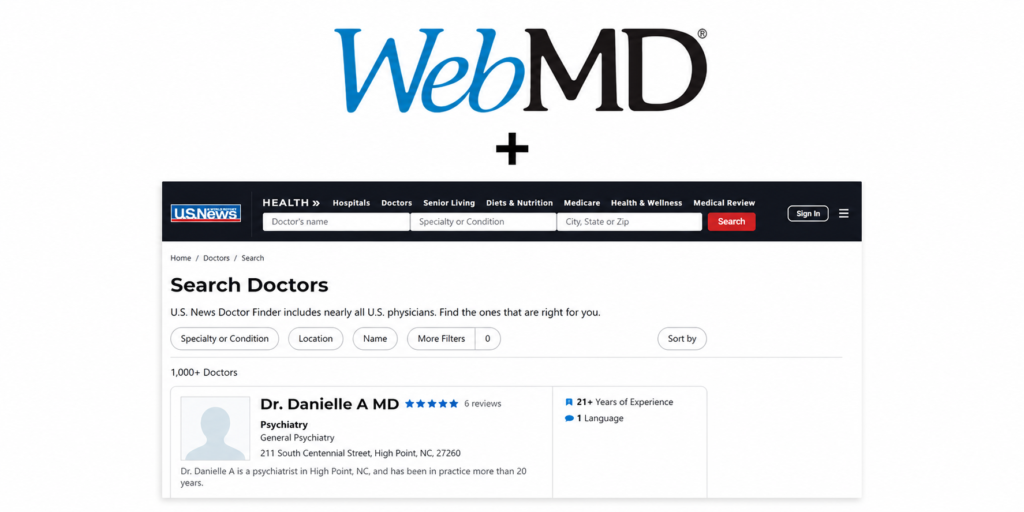
These sites are especially useful for:
- Hospital affiliations, showing where a doctor practices or holds privileges.
- Professional credentials, including education, board certifications, and areas of expertise.
- Comprehensive physician profiles that provide reliable background information before scheduling an appointment.
For patients who want to verify a doctor’s qualifications and healthcare network, these platforms offer valuable information that complements patient review websites.
Learn more: Best Review Sites in 2026 for Businesses and Brands
Side-by-Side Comparison of the Best Doctor Review Sites
Each doctor review platform serves a different purpose. Some are designed to help patients find nearby physicians, while others focus on specialist research, appointment scheduling, or detailed patient experiences. The comparison below highlights the strengths of each platform so you can choose the one that best fits your needs.
| Website | Best For | Verified Doctor Profiles | Appointment Booking | Patient Reviews | Best Choice |
|---|---|---|---|---|---|
| Google Business Profile | Finding local doctors | Basic | No | Extensive, frequently updated | Finding doctors nearby |
| Healthgrades | Comparing specialists | Yes | Limited | Yes | Evaluating physician credentials |
| Zocdoc | Booking appointments | Yes | Yes | Verified visit reviews | Scheduling appointments online |
| Vitals | Reading patient experiences | Yes | No | Detailed reviews | Understanding patient feedback |
| RateMDs | Comparing patient opinions | Basic | No | Detailed reviews | Reading multiple patient perspectives |
| RealSelf | Cosmetic doctors | Yes | Limited | Procedure-specific reviews | Cosmetic and aesthetic treatments |
| WebMD Doctor Finder | Researching hospital-affiliated doctors | Yes | No | Limited | Reviewing professional backgrounds |
| U.S. News Doctor Finder | Hospital and physician research | Yes | No | Limited | Finding doctors within leading hospital networks |
No single website is the best for every situation. Many patients use two or more platforms for example, starting with Google Business Profile to find local doctors, reviewing credentials on Healthgrades or WebMD, and booking an appointment through Zocdoc when available.
FAQs
Can doctors remove negative reviews from review websites?
Not simply because a review is negative. Most doctor review platforms allow patients to share honest opinions, even if those opinions are critical. Reviews are typically removed only if they violate the platform’s policies, such as containing false information, hate speech, harassment, spam, or personal health information that shouldn’t be publicly disclosed. A negative review alone is usually not enough to justify removal.
Are verified patient reviews more trustworthy than anonymous reviews?
In general, yes. Verified visit or verified patient reviews come from individuals whose appointments were confirmed through the platform, making them less likely to be fake. Anonymous reviews can still provide useful insights, but they may be harder to verify. When comparing doctors, give greater weight to verified reviews while also looking for consistent themes across all patient feedback.
How many doctor reviews are enough to judge a physician?
There isn’t a magic number. Instead of focusing on review count alone, consider:
- Whether reviews are consistent over time.
- How recent the reviews are.
- Whether there is a reasonable sample of patient experiences.
- The quality and detail of the comments rather than just the overall rating.
A doctor with fewer thoughtful, recent reviews may provide a clearer picture than one with hundreds of brief or outdated ratings.
Why do the same doctors have different ratings on different websites?
It’s common for the same physician to have different ratings across review platforms. This happens because each website collects reviews from different groups of patients, follows its own moderation policies, and may use different rating systems. Some platforms also verify patient visits, while others allow anyone to submit feedback. Comparing information from multiple trusted sources provides a more balanced view.
Should I trust a doctor with only a few reviews?
Not necessarily. A limited number of reviews doesn’t automatically indicate that a doctor is good or bad. Many excellent physicians have a small online presence, especially if they’re new to a practice or don’t actively encourage reviews. In addition to patient feedback, consider the doctor’s credentials, board certification, hospital affiliations, years of experience, and the overall quality of the reviews that are available.
Do doctor review websites verify every patient review?
No. Verification depends on the platform. Some websites verify reviews only when patients book and complete appointments through their system. Others rely primarily on user-submitted content without confirming whether the reviewer actually visited the physician. Understanding how a platform collects reviews can help you judge the reliability of its ratings.
Can online doctor reviews predict the quality of medical care?
Not by themselves. Online reviews are valuable for understanding the patient experience, including communication, bedside manner, office staff, and wait times. However, they cannot fully measure a doctor’s clinical expertise, professional qualifications, or treatment outcomes. The best approach is to combine patient reviews with information about credentials, board certification, hospital affiliations, and other trusted professional sources before making a healthcare decision.