



Zenoti’s 2026 benchmark report says that, for the first time in its history, no salon segment grew new-client acquisition in 2025. The company also estimates that about two-thirds of first-time salon visitors never come back. That’s vendor data, and other sources put first-visit retention nearer 45–55%, but every estimate says the same thing: a first appointment is only half the job.
Advertising beauty salon services works best as a two-part system. Win first visits with your Google profile, reviews, ads, and portfolio posts, then turn those visitors into regulars by rebooking before they leave. Below are 15 plays mapped to the client journey, a seasonal calendar, retention-first budget math, and a 90-day plan.
Why Salons Can’t Lean on Acquisition Alone
Zenoti’s 2025 benchmark data showed new guest visits fell 10% industry-wide in 2024. When new clients get harder to find, every client you already have becomes more valuable.
Zenoti also reports that clients who rebook within seven days of a first visit return at 81% over the following six months. And among salons where clients rebooked once, 72% of those first rebooks were later cancelled (Zenoti 2026 benchmark, as reported on its blog). In short, the second appointment is where growth is won, and it’s fragile.
Salons carry an extra risk too: a stylist’s regulars can follow them out the door. Owning your Google profile, social accounts, and client list protects the business. For the wider picture, read our salon marketing strategies guide.
Four Channels, Ranked by the Job They Do
The order below follows how close each channel sits to a client ready to book. It’s a reasoned default, so let your own booking data overrule it.
Wins “salon near me” searches and proves quality. Costs mostly time.
Buys the client who searched “balayage [city]” today. Fast and trackable.
Lower intent, but beauty is visual. Your work is the ad, so portfolio posts earn their place.
Cheapest tool for second visits, open slots, and lapsed clients. It can’t reach strangers.
15 Plays Across the Client Journey
Scripts and captions below are illustrative templates, not results from real salons.
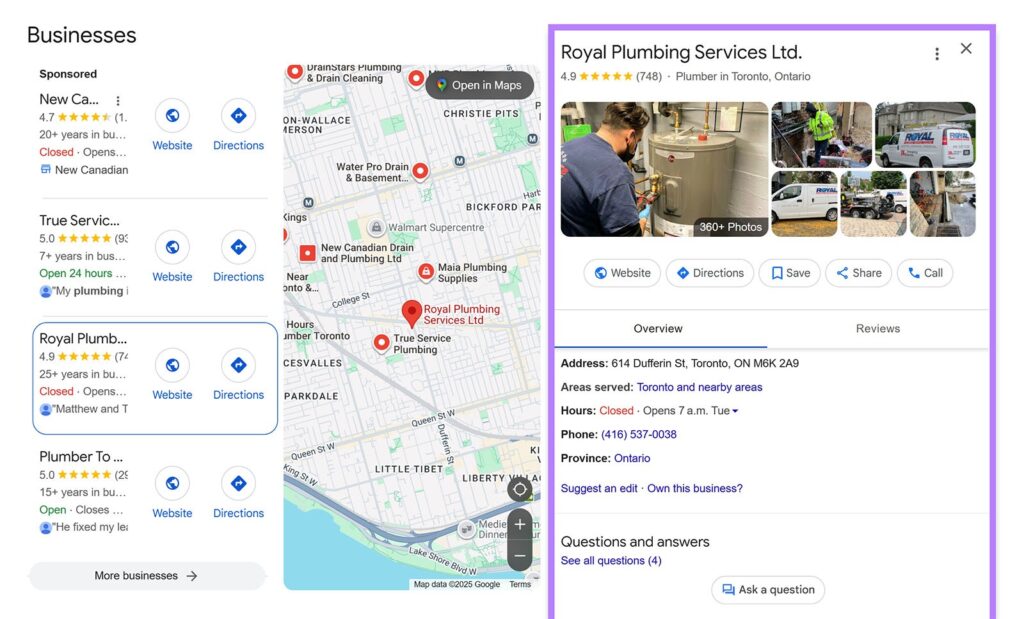
1. Build out your Google Business Profile
The move: Choose the categories that match your services, list each one with a price or range, and add stylist bios and real photos. Make sure your booking link lets clients book. Google added a “direct action completion” rule to its link policy in 2025, and forum members reported booking links removed when they only led to a contact page. Google is also expanding its Book button into Search and Performance Max ads (reported August 28, 2026), so a working link may matter more.
Say it: “Balayage, from $[price]. Includes consultation, toner, and style.”
2. Create a page for each money service
The move: Build one page each for services like balayage, bridal hair, or lash extensions. Add your city, price range, stylist names, FAQs, and a booking button. This is the core of local SEO for service businesses.
Say it: A page titled “Bridal Hair and Makeup in [City]” with a trial-appointment explainer.
3. Run search ads for specific services
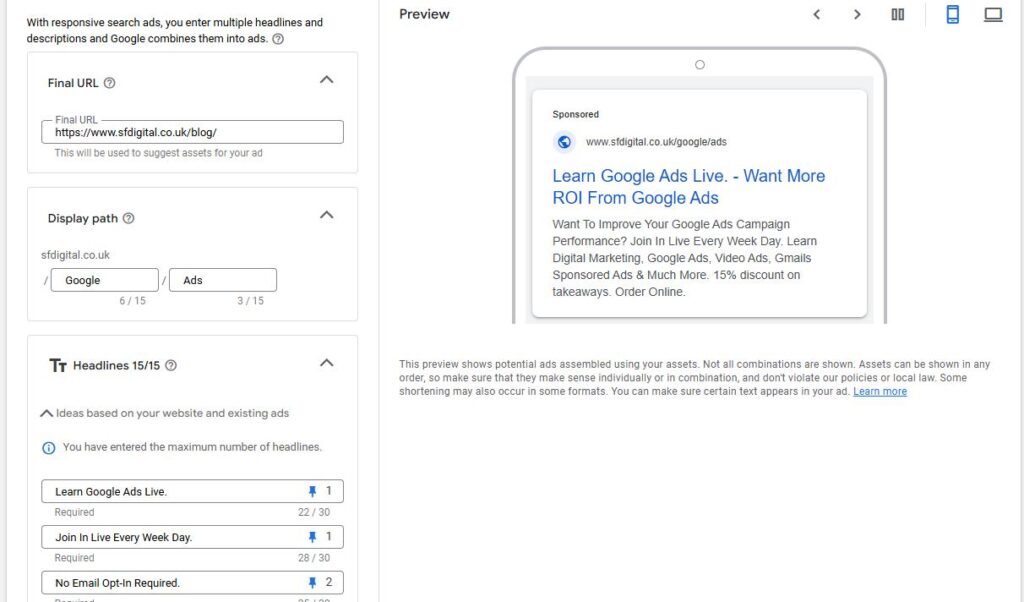
The move: Bid on “balayage [city]” and “eyebrow threading near me.” Add negative keywords such as “jobs,” “school,” “supplies,” and “DIY,” and send clicks to the matching service page.
Say it: “Balayage in [City] · Book Online · Consultations Available.”
4. Ask every client for a review
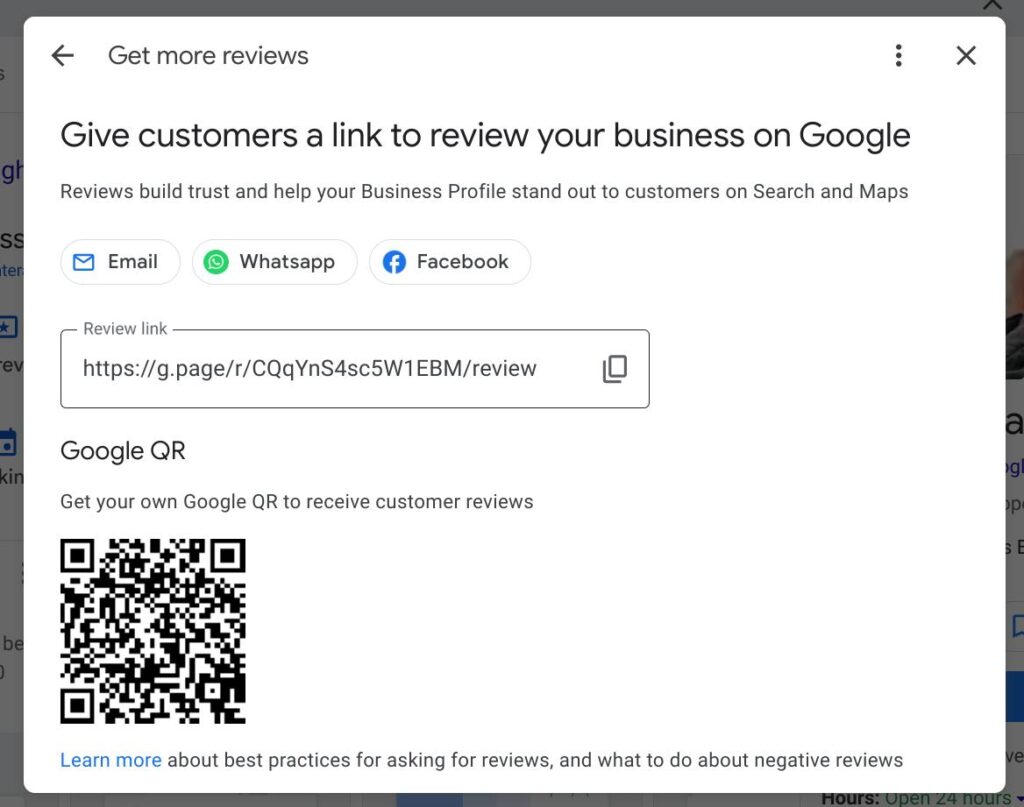
The move: Text your direct review link at checkout, to every client. Offer no discounts and don’t screen for happy clients. Our guide to getting more Google reviews the compliant way covers the process.
Say it: “Thanks for visiting [Salon] today. An honest Google review helps others find us: [link].”
5. Reply to reviews by naming the service
The move: Thank people and mention the service, which helps relevance. Answer complaints calmly and move details to a call or email.
Say it: “Thank you! We’re glad you love your new color. We can’t wait to see you for your next visit.”
6. Post stylist portfolios on Instagram and Reels
The move: Give each stylist a steady rhythm of finished looks and short process clips. Use a caption formula: service, result, who did it, and booking link.
Say it: “Soft balayage by [Stylist]. Book your consultation: [link in bio].”
7. Put a tagged booking link everywhere
The move: Add your booking link to your Google profile, bios, ads, and receipts, and tag each one so you can see which source produces bookings.
Say it: Your Instagram link goes to yoursalon.com/book?utm_source=instagram.
8. Make a new-client offer that adds value
The move: State exactly what’s included and who qualifies. Add a service instead of cutting your price, so new clients don’t learn to wait for deals.
Say it: “New clients get a free conditioning treatment with any color service. One per person.”
9. Test Meta ads, and handle before/after photos carefully
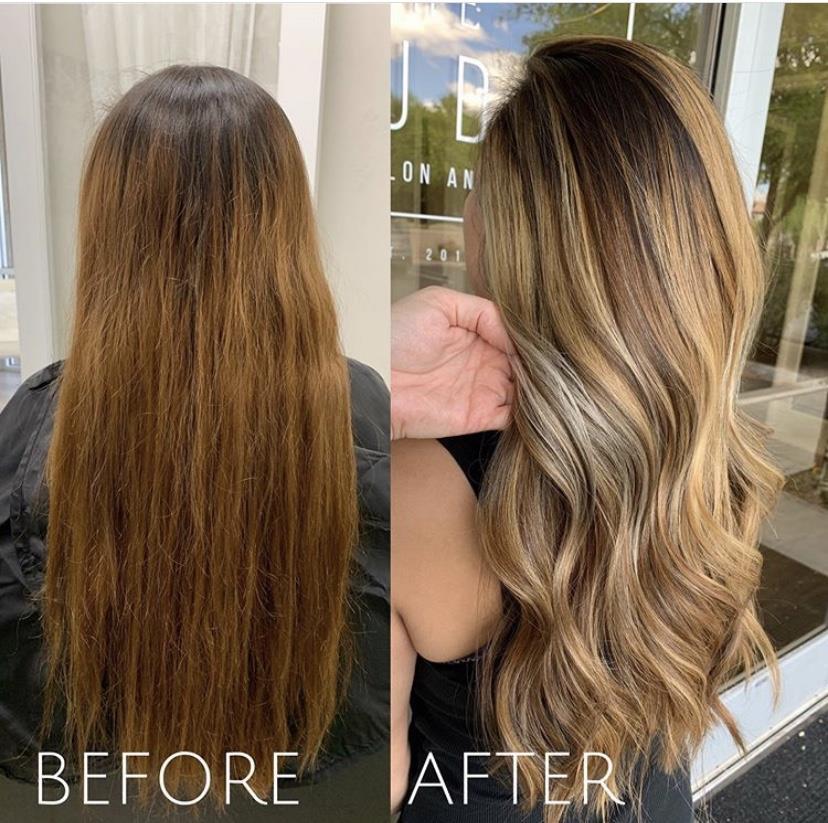
The move: Target a local radius with a real Reel of finished work. Get a signed photo release before using any client photo. Meta and Google restrict some before/after imagery and language that implies negative self-image in ads, so check current policies.
Say it: A 15-second Reel of a finished haircut, with “New clients: book your first visit online.”
10. Rebook before the client leaves
The move: Ask every client to book the next visit at checkout, especially first-timers. See how rebooking fits into hair salon marketing. The seven-day window after a first visit matters most.
Say it: “Most clients come back in six weeks. Want me to hold a time for you now?”
11. Protect the first rebook
The move: Since many first rebooks get cancelled, send a confirmation and a reminder text, and state your cancellation policy clearly at booking.
Say it: “Hi [first name], you’re booked with [Stylist] on [date]. Need to change it? Reply or use this link: [link].”
12. Text open slots and lapsed clients
The move: Keep a waitlist of clients who’d take a cancellation. Message lapsed clients too. Marketing texts need consent and an opt-out under TCPA, and email follows CAN-SPAM.
Say it: “We had a cancellation tomorrow at 2 p.m. Want it? Book here: [link]. Reply STOP to opt out.”
13. Add a loyalty plan or membership
The move: Offer points, a punch card, or a monthly membership for services clients repeat, such as brows, lashes, or blowouts. Check your state’s rules on gift cards and automatic renewals, and make cancelling easy. If your menu includes massage, see our massage advertising guide for membership and ad-policy tips.
Say it: “Brow & Lash Club: one visit a month at [price]. Cancel any time.”
14. Start a referral program
The move: Give both the referrer and the new client a credit after the new client’s first visit. Keep it separate from reviews, since rewarding reviews breaks Google’s policy.
Say it: “Bring a friend. After her first visit, you both get a credit toward your next service.”
15. Run seasonal and wedding campaigns
The move: Use the calendar below, start four to six weeks early, and promote gift cards ahead of gifting dates. Cross-promote with bridal shops and photographers for wedding season.
Say it: “Prom is [date]. Updo slots are limited. Book your look: [link].”
A Simple Seasonal Calendar
| Season | Hook | Start promoting |
|---|---|---|
| Jan–Feb | New-year refresh, Valentine’s gift cards | Late December |
| Mar–May | Prom, Mother’s Day, wedding trials | 4–6 weeks before each event |
| Jun–Aug | Weddings, summer color upkeep, back-to-school cuts | Early July |
| Sep–Oct | Fall refresh, holiday-party bookings | Early October |
| Nov–Dec | Gift cards, party looks | Early November |
A Retention-First Budget
Judge ad spend by what it costs to win a client who returns, not a client who books once.
That’s why Stage 4 plays come first. They cost mostly time, and they improve every ad dollar you spend later. After that, build the foundation (Stage 1 and 2), and add paid ads and Meta last. Give each paid channel four to six weeks of data before you cut or scale it.
Your 90 Days, in Three Months
KPIs, and What to Do When They’re Low
Second visits ÷ new clients.
If low: fix rebooking and follow-up.
New clients who book a return within seven days ÷ new clients.
If low: text them on day three.
Clients with a next visit booked ÷ clients seen.
If low: coach the script, stylist by stylist.
Cancelled first rebooks ÷ first rebooks.
If high: add reminders and clearer policies.
Spend ÷ new clients, and ÷ clients who return.
If high: check offer, page, and follow-up before cutting ads.
Booked hours ÷ available hours.
If low: use open-slot texts.
Calls, directions, booking clicks, new reviews per month.
If flat: audit your profile and review process.
Mistakes to Avoid and Rules to Know
Mistakes
- Spending on ads while first-time clients never come back.
- Discounting all the time, which trains clients to wait.
- Letting a stylist own the salon’s Google profile, social accounts, or client list.
- Slow replies to messages and calls.
- Buying or screening reviews. Google bans incentivized reviews, and the FTC’s 2024 rule bans fake reviews and incentives conditioned on sentiment.
Rules (general information, not legal advice)
- Photo consent: get a written release before using any client’s photo, name, or story.
- Claims: avoid unsupported promises like “damage-free” or “guaranteed results.”
- Ad platforms: before/after imagery and appearance-shaming language face limits in ads. Check current Meta and Google policies.
- State rules: your cosmetology board may regulate license display and ad content.
- Texts and emails: consent and opt-outs under TCPA and CAN-SPAM.
Regulated professions face stricter versions of the same rules. Our dental advertising guide shows how a licensed practice handles claims and client privacy.
FAQ: Beauty Salon Advertising
What’s the quickest way to fill empty appointment slots?
Text a waitlist of existing clients with the open time and a booking link. Then make sure your Google profile and booking link are current.
Do I need permission to post before-and-after photos?
Yes. Get a signed photo release first, and check each platform’s rules, since ads are stricter than organic posts.
Is Instagram or Google better for a salon?
They do different jobs. Google captures clients actively searching, and Instagram shows your work. Most salons need both.
Can I give clients a discount for leaving a review?
No. Google prohibits reviews in exchange for incentives, and the FTC bans incentives conditioned on sentiment.
How do I protect my client list if a stylist leaves?
Keep the Google profile, social accounts, and client records under the salon’s ownership. Talk to an attorney about agreements, since rules vary by state.
When should I ask a new client to rebook?
At checkout, and follow up within a few days. Zenoti reports that clients who rebook within seven days of a first visit return at a much higher rate.
Do salon ads need a license number?
It depends on your state board, so check its advertising rules.
Win the Second Visit First
This week, write your rebooking script, fix your booking link, and set up reminder texts. Then add reviews, pages, and ads on top. If you want a partner to run it all, explore our full-service marketing for local businesses.
Sources: Zenoti, hidden revenue leaks (2025 benchmark) · Zenoti, guest data playbook (2026 benchmark) · JeriCommerce retention statistics (2026, vendor) · Local Search Forum, booking URL removals (2025) · Relevant Audience, Google Ads Book button (Aug 2026) · Google Maps user-contributed content policy · FTC 16 CFR Part 465. Benchmarks come from software vendors and may differ from independent data. Examples are illustrative templates, not client results. Confirm policies and state rules before acting.