



How to get to top of Google Search is a challenge for many websites competing for organic visibility. Higher rankings require more than adding keywords to pages; businesses need to optimize content quality, technical SEO, user experience, and website authority. In this guide, Good Review Service shares 12 SEO tricks that many websites overlook to help you identify ranking opportunities, improve search performance, and build a stronger foundation for long-term growth on Google.
Find hidden ranking opportunities
Before creating new content, look for pages that already have ranking potential. Websites often have pages that appear on Google Search results but need small improvements to reach higher positions. Identifying these opportunities helps you focus your SEO efforts on pages that can generate results faster.
Find page two keywords
Pages ranking in positions 11–20 are often the easiest SEO opportunities to improve. These pages are already recognized by Google for related queries but need additional optimization to move onto the first page.
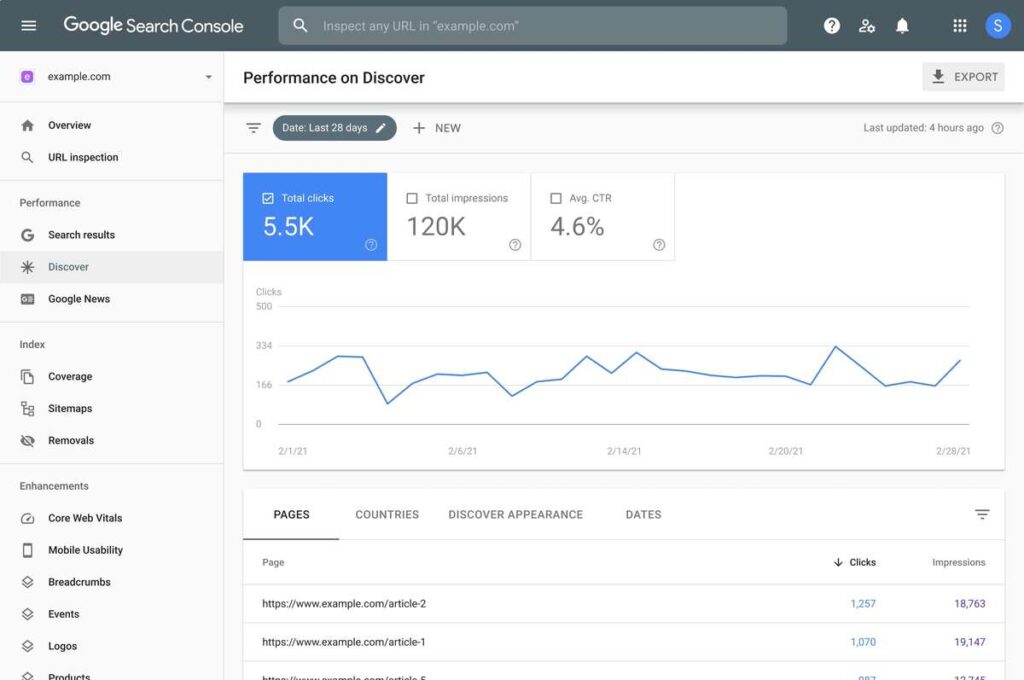
To find these pages:
- Open Google Search Console.
- Go to the Performance report.
- Filter queries with average positions between 11 and 20.
- Review which pages receive impressions but have limited clicks.
Google Search Console shows the search queries that trigger your pages, along with impressions, clicks, click-through rate, and average position. Use this data to identify pages that can be improved through content updates, better keyword targeting, stronger internal links, or improved title tags.
Improving existing pages that already have ranking signals is often more efficient than creating new content from scratch.
Discover untapped keywords
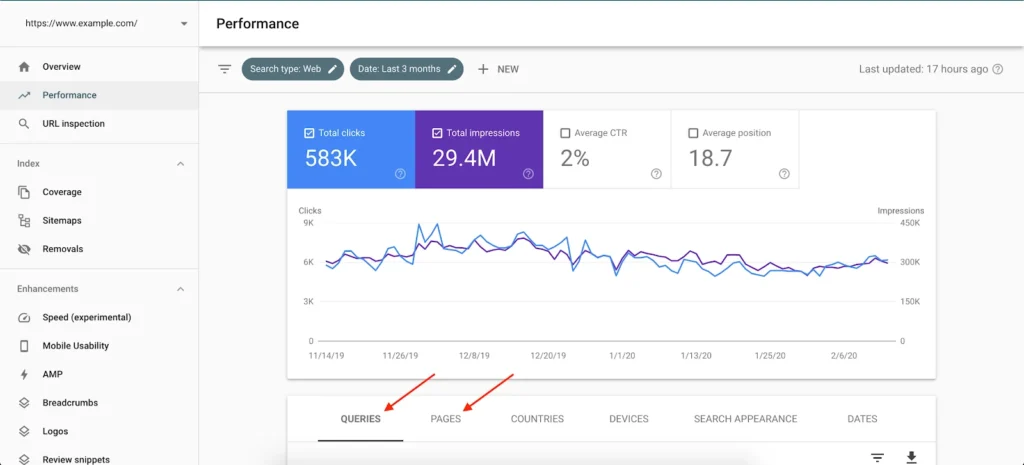
Google may already rank your page for keywords you never intended to target. These queries appear because Google considers your content relevant to related search topics.
Open Google Search Console and review the queries for each page. Look for unexpected keywords that receive impressions or clicks. These queries reveal topics Google already associates with your page and may highlight gaps in your topical coverage.
Improve low CTR pages
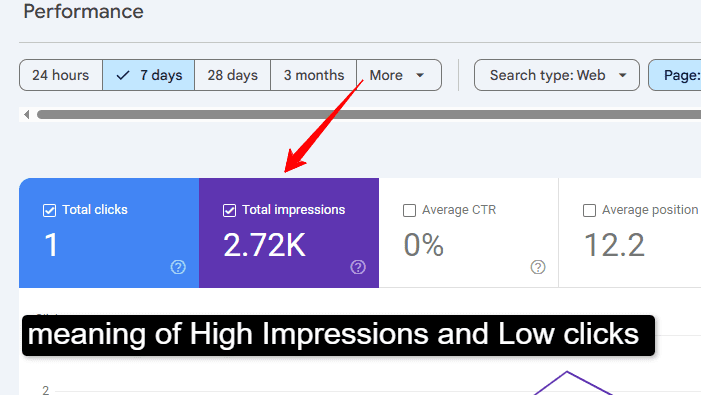
Pages with high impressions but a low click-through rate (CTR) are another hidden ranking opportunity. These pages already appear frequently in Google Search results, but users choose other listings instead.
Use Google Search Console to identify pages with a large number of impressions and a below-average CTR. These pages indicate that Google considers the content relevant, but the search result is not attracting enough clicks.
How to get to top of Google Search
Improving your Google rankings does not always require publishing more content. In many cases, updating pages that already have rankings, impressions, or backlinks produces faster results than starting from scratch.
Update existing content
Update existing pages before investing time in new ones. Pages that have lost rankings or traffic often need refreshed information rather than a complete rewrite.
To update existing content:
- Find pages with declining clicks or rankings in Google Search Console.
- Compare your page with the current top-ranking competitors.
- Add missing information, answer additional search intent, and replace outdated content.
Cover content gaps
Top-ranking pages often cover topics that lower-ranking pages miss. Compare the first-page results for your target keyword and identify the subtopics that appear across multiple pages.
Look for:
- Common topics covered by most top-ranking pages.
- Questions your page does not answer.
- Areas where competitor content provides more complete explanations.
These gaps can reveal why competing pages rank higher for the same search intent.
Strengthen internal links
Internal links help Google discover and understand the importance of your pages. Instead of linking randomly, direct internal links to pages you want to rank higher.
To do this:
- Identify your most important pages.
- Add contextual internal links from pages that already have authority or organic traffic.
- Use descriptive anchor text that accurately reflects the destination page instead of generic phrases like “click here” or “learn more.”
Increase your CTR
You do not always need a higher ranking to get more traffic. For example, a page in position #5 with a low CTR may gain more clicks by making its search result more appealing.
Test improvements such as:
- A stronger, more compelling title tag.
- A clearer benefit that matches search intent.
- A better SERP snippet with a more informative meta description.
Refresh instead of rewrite
Updating an existing page is often more effective than replacing it with entirely new content. Pages that already rank in Google have built ranking signals over time, including indexed content, backlinks, internal links, and historical performance. Rewriting everything can remove valuable information that already contributes to those rankings.
A better approach is to improve the page while preserving its existing strengths:
- Keep sections that still answer search intent and perform well.
- Rewrite or expand weak sections that lack depth or no longer match current search results.
- Replace outdated statistics, screenshots, examples, or references with current information.
Merge similar pages
Avoid having multiple pages target the same primary keyword. When two or more pages rank for the same query, Google may split rankings, impressions, and backlinks between them. As a result, none of the pages performs as well as a single, stronger page could.
If multiple pages cover nearly identical topics:
- Merge overlapping content into the most comprehensive page.
- Redirect weaker or outdated pages to the primary page using a 301 redirect.
- Add any valuable information from the removed pages to strengthen the main page.
Pass authority internally
Ranking on the first page does not guarantee business results. If a page attracts organic traffic but generates few inquiries or sales, the issue is likely with the page itself rather than its Google rankings.
Review the page from a visitor’s perspective and identify where users stop before taking action. Focus on improving:
- CTA: Make the next step clear and easy to find. Every important page should guide visitors toward a specific action, such as requesting a quote, booking a service, or contacting your business.
- User flow: Remove unnecessary steps and make key information easy to access. Visitors should not have to search for pricing, contact details, or service options.
- Service information: Explain what you offer, who the service is for, what customers can expect, and why they should choose your business. Missing or vague information often reduces conversions even when the page ranks well.
Improve high-traffic pages
Do not rely only on keyword research tools for content ideas. Google Search Console shows the queries your website is already receiving impressions for, making it a valuable source for finding topics with proven search demand.
Review your Performance report to identify:
- Queries that already generate impressions but have little or no dedicated content.
- Related searches that users associate with your existing pages.
- Content gaps where a new page or supporting article could target additional search intent.
Expand winning keywords
Focus on pages that already perform well instead of spreading your efforts across your entire website. Pages with strong rankings, consistent traffic, or quality backlinks have already earned Google’s trust and often provide the best opportunity for additional growth.
To strengthen these pages:
- Update your top-performing URLs with fresh information and new insights.
- Add supporting content that covers related topics and answers additional search intent.
- Improve internal links between related pages to reinforce topical relevance and help Google understand the relationship between your content.
Avoid these SEO mistakes
Many websites struggle to rank because they focus on creating more content instead of improving what already exists. Avoiding the following mistakes can help you make better use of your current SEO efforts.
Chasing New Keywords
Publishing new articles is not always the fastest way to increase rankings. Existing pages may already have impressions, backlinks, and ranking history. Updating those pages often delivers better results than creating similar content from scratch.
Ignoring search intent
Ranking becomes difficult when your content does not match what users expect to find. Before targeting a keyword, review the current top-ranking pages to understand whether Google favors guides, product pages, local services, comparisons, or another content type.
Ignoring pages already close to ranking
Pages ranking between positions 11 and 20 often require only a few improvements to reach the first page. Ignoring these opportunities while focusing only on new content can slow your SEO progress.
Neglecting Internal Links
Even well-written content can struggle to rank if it has few or no internal links. Internal links help Google discover pages, understand their importance, and connect related topics across your website. Adding relevant contextual links gives important pages stronger support and improves site structure.
FAQs
What is the fastest way to improve Google rankings?
There is no guaranteed fast method, but updating pages that already rank in positions 11–20 often produces quicker results than creating new content. Focus on improving search intent, content quality, internal links, and on-page SEO.
Should I update old content or create new articles?
If an existing page already has rankings, impressions, or backlinks, updating it is usually the better choice. Create new articles only when you want to target a different search intent or keyword that is not covered by your current content.
How do I find keywords my website can rank for?
Use Google Search Console to review the queries already generating impressions for your pages. These keywords show where Google considers your website relevant and can reveal opportunities for improving existing pages or creating supporting content.
Why is my page ranking but not getting clicks?
A page may rank well but still receive few clicks if the title tag, meta description, or search snippet is not compelling enough. A low click-through rate can also indicate that your content does not match what users expect from that search query.
Can small websites reach the top of Google?
Yes. Small websites can rank well by targeting realistic keywords, publishing content that matches search intent, building a clear internal linking structure, and consistently improving pages based on performance data. Google ranks individual pages by relevance and quality, not simply by website size.
Ready to Get to the Top of Google Search?
Learning how to get to top of Google Search is only the first step. Consistent SEO improvements, technical optimization, and content updates are what drive long-term rankings and organic traffic.
If you want to grow your website faster, Good Review Service offers professional SEO services to help improve your search visibility, optimize existing content, and build a strategy that attracts more qualified traffic from Google.