



Small businesses often run Facebook Ads without knowing what to promote, who to target, or why people click without becoming customers. A campaign may get attention but still produce few inquiries, bookings, or sales when the ad does not connect clearly with what the customer needs next.
Effective Facebook Advertising for Small Businesses starts with practical campaign choices: the right offer, local targeting, useful creative, retargeting, social proof, and a simple path from the ad to the next action. Good Review Service shares eight proven ways to put these pieces together, so small businesses can focus their ad spend on generating real customer opportunities instead of chasing clicks alone.
Facebook Advertising for Small Businesses: 8 Proven Ways
Use Instant Forms to Capture Leads
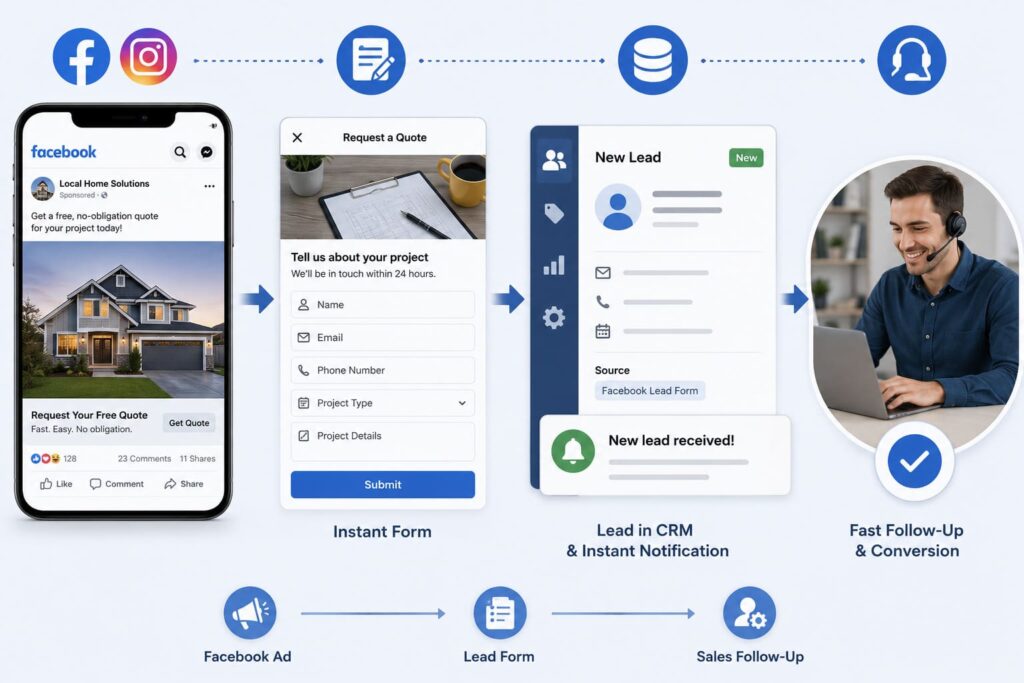
A Facebook ad can generate plenty of attention but still lose potential customers if the next step takes too much effort. Instant Forms shorten that path by letting prospects submit their information directly on Facebook or Instagram.
This approach works especially well for businesses where the next step is a quote, consultation, booking, or callback. A local contractor can collect quote requests, a consultant can capture consultation inquiries, and an appointment-based business can use the form to collect booking details. The ad is therefore built around a specific customer action rather than simply generating clicks.
The key is to connect the form to a CRM or follow-up system so new leads are handled quickly. For a small business, this makes the advertising process more practical: Facebook ad → lead form → sales follow-up, rather than paying for traffic without a clear path to a potential customer.
Use Click-to-Message Ads
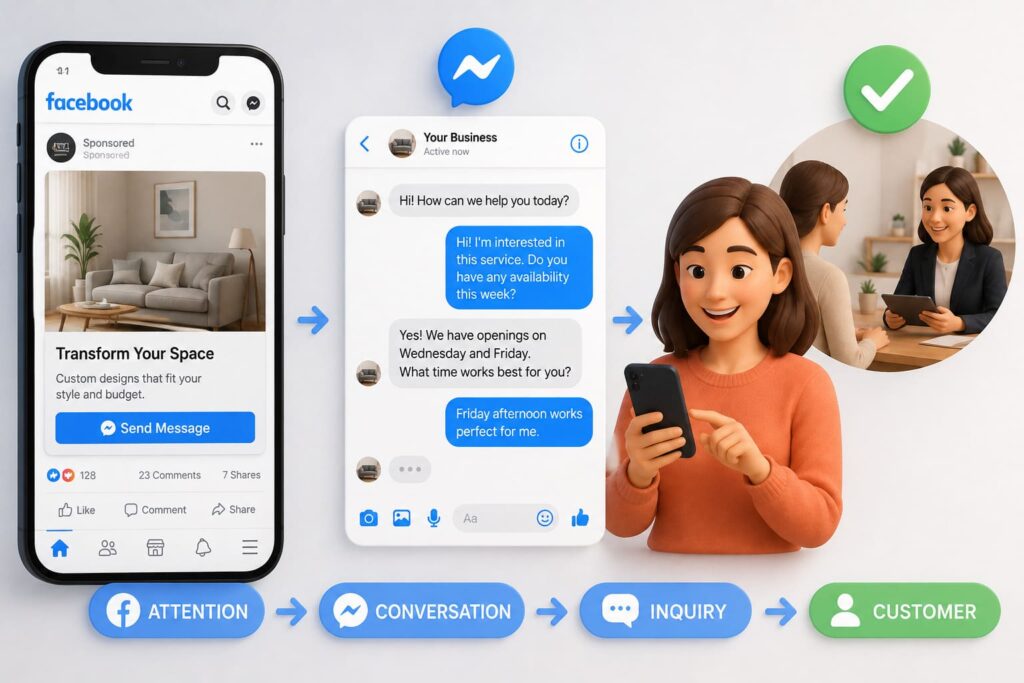
Some prospects are interested but still have questions before they are ready to book or buy. Click-to-Message Ads let them start a conversation directly through Messenger, Instagram Direct, or WhatsApp instead of sending them through a longer website path.
This works particularly well for service businesses, consultants, and appointment-based businesses where price, availability, service options, or other details may need to be discussed first. Instead of sending a prospect to a website and asking them to find a contact page, the ad gives them a direct way to start the conversation.
The goal is to turn Facebook attention → conversation → inquiry → customer.
Use Local Offers to Drive Customers
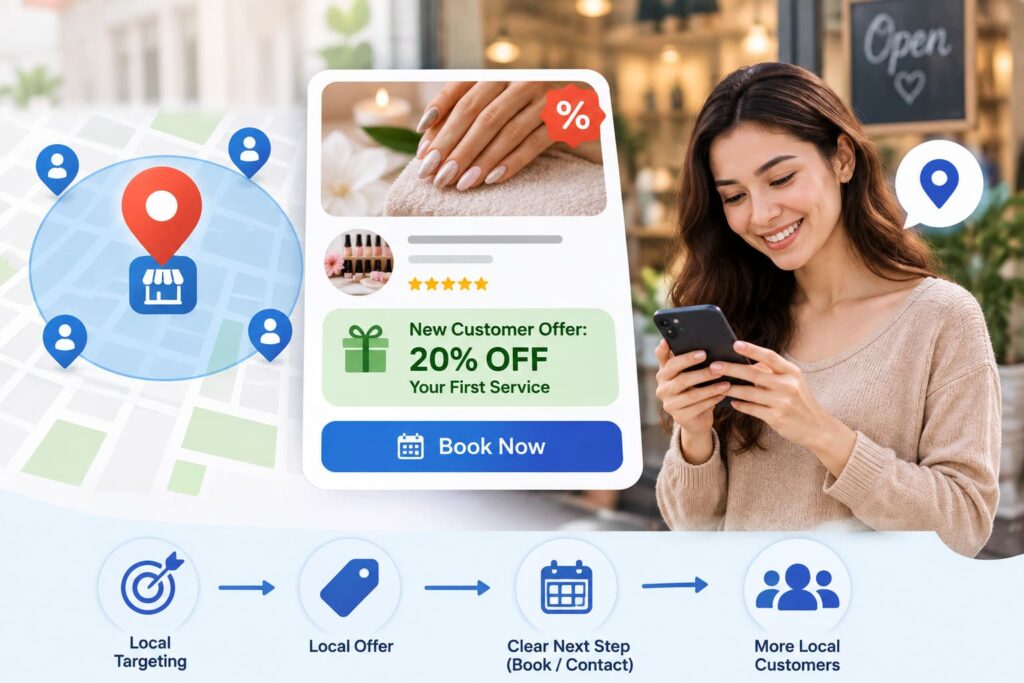
Location alone is rarely a strong enough reason for someone to act. Pair local targeting with a specific offer and clear next step to give nearby prospects a practical reason to contact or visit the business.
The offer can be a new customer offer, free estimate, first appointment, or seasonal promotion, depending on the business model. The key is to connect the offer with something the local customer can act on now, such as booking an appointment, requesting a quote, or visiting the business.
Retarget People Who Know Your Business
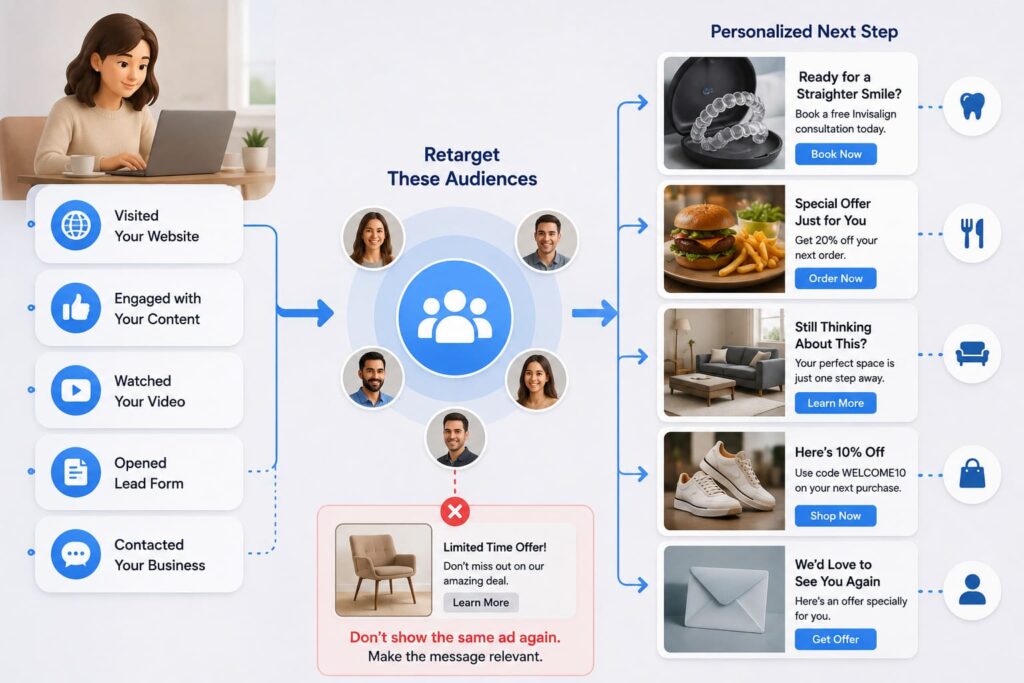
Not every prospect converts after seeing an ad once. People who have visited the website, watched a video, engaged with social content, opened a lead form, or contacted the business already have some familiarity with the brand and can be approached differently from cold audiences.
Facebook retargeting can bring these audiences back, including website visitors, Facebook and Instagram engagers, video viewers, lead form openers, and previous contacts. The important part is not treating them as one large audience.
A person who viewed an Invisalign page may need a consultation offer. Someone who watched a restaurant video may respond better to a current promotion. An old lead may need a completely different reason to reconsider the business.
The mistake is simply showing the same cold-traffic ad again. Retargeting works better when the message reflects what the person has already done and gives them a logical next step.
Send Better Customer Data to Meta
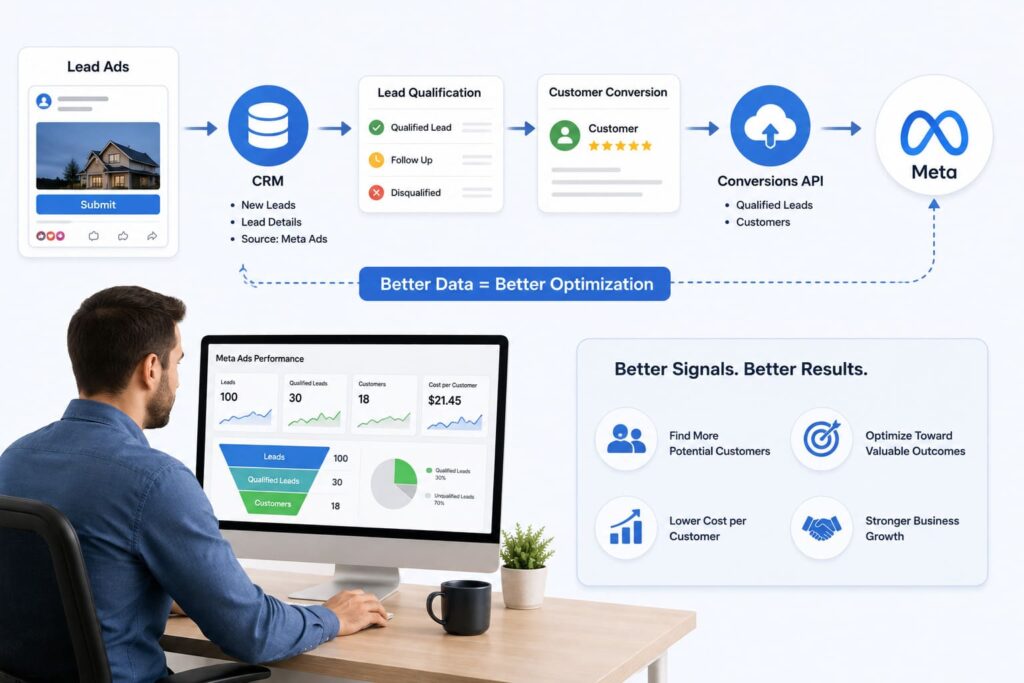
Lead volume can be misleading. A campaign producing 100 inquiries is not necessarily better than one producing 30 if most of those 100 leads never become customers. Feeding Meta information about qualified leads and actual customers gives the campaign a better signal for optimization.
Connect the CRM with Meta to track which leads become qualified and which eventually become customers. Using Conversions API and qualified-lead data gives Meta stronger signals about what a valuable conversion looks like.
The goal is simple: help Facebook find more potential customers, not simply more people who submit a form. This makes lead-generation campaigns more closely aligned with the actual business outcome.
Use Advantage+ for Campaign Automation
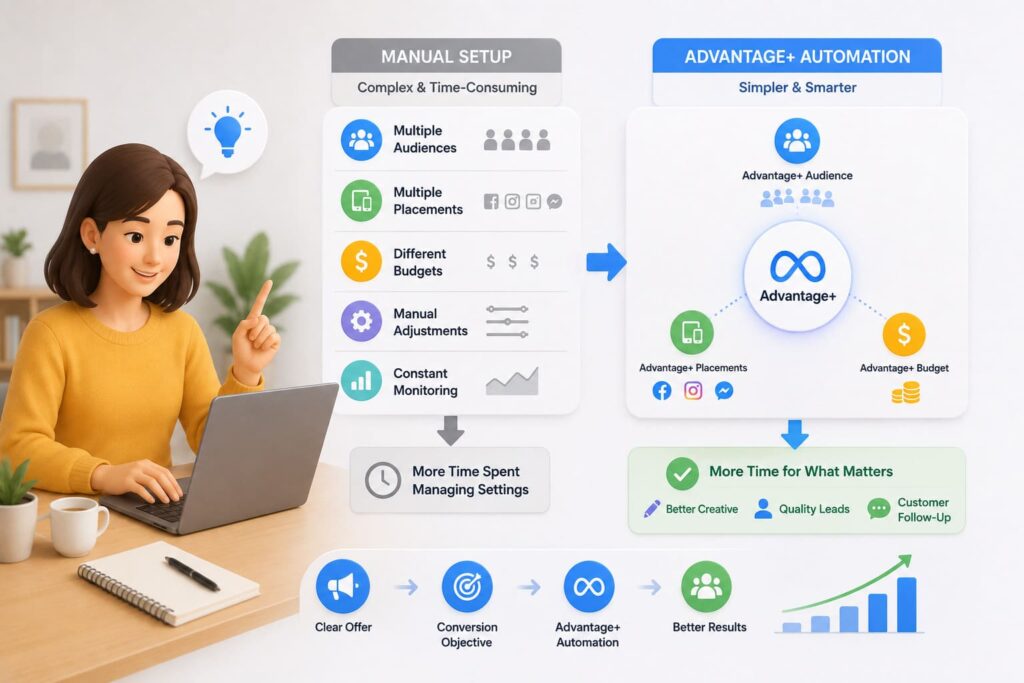
Managing separate ad sets for every audience, placement, and budget can quickly make a campaign unnecessarily complicated. Advantage+ allows Meta to automate more of these decisions, reducing the amount of manual campaign management required.
Use Advantage+ audience, placements, and budget where they fit the campaign goal, while keeping the offer and conversion objective clear. This gives the team more time to focus on creative, lead quality, and customer follow-up rather than constantly adjusting ad-set settings.
For Facebook Advertising for Small Businesses, this approach is most useful when the team wants to keep campaign structures simpler without manually controlling every delivery variable.
Use Real Customer Content
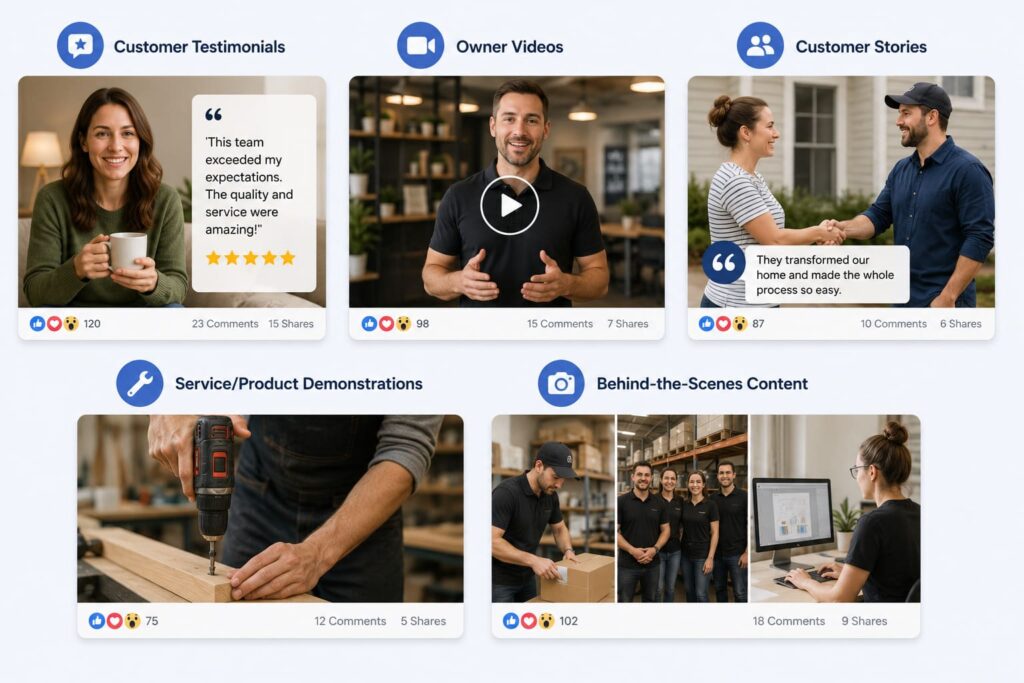
Generic promotional graphics are easy to ignore in a crowded Facebook feed. Real content gives the audience something more specific to see and relate to.
- Customer testimonials: Turn genuine customer feedback into ad creatives.
- Owner videos: Let the owner introduce the business, offer, or service.
- Customer stories: Highlight a real experience or outcome.
- Service/product demonstrations: Show how the product works or how the service is delivered.
- Behind-the-scenes content: Give prospects a look at the people and process behind the business.
Using these formats can make Facebook advertising for small businesses feel more authentic while giving prospects a clearer picture of what they are actually considering.
Combine Instant Forms and Website Forms
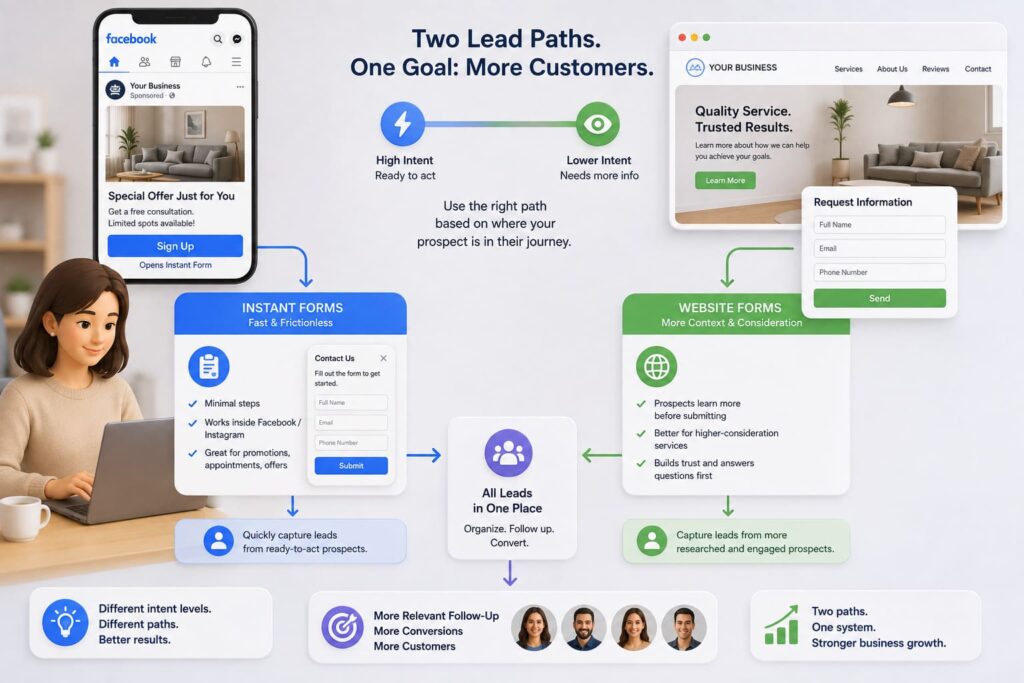
There is no need to rely on only one lead-generation path. Instant Forms work well for prospects who are ready to submit their information with minimal friction, while website forms give more interested prospects a chance to learn about the business before making an inquiry.
Use both based on the customer’s level of intent:
- Instant Forms: Capture leads quickly from Facebook or Instagram.
- Website Forms: Provide more context before asking visitors to submit their details.
- Different intent levels: Give ready-to-act prospects a shorter path while allowing other prospects more time to consider the offer.
This gives Facebook Advertising for Small Businesses two conversion paths instead of forcing every prospect through the same process.
Facebook Advertising Mistakes Small Businesses Should Avoid
Boosting Posts Without a Conversion Goal
Boosting a post can increase reach and engagement, but those numbers do not necessarily translate into customers. Before spending money, define what the campaign should generate: leads, calls, bookings, messages, or sales. The objective should match the action you want people to take.
Sending Every User to the Homepage
A Facebook ad should lead people toward the action promised in the ad. Sending someone who clicked an Invisalign offer, free estimate, or specific product ad to the homepage adds unnecessary steps. A relevant landing page or form usually creates a clearer path to conversion.
Optimizing for Cheap Leads
A low cost per lead can look impressive while hiding poor lead quality. If most inquiries are unqualified or never become customers, reducing CPL does not necessarily improve the business. Track qualified leads and customers so Facebook advertising is measured by business results, not lead volume alone.
Overbuilding Manual Audiences
Creating separate ad sets for every interest, demographic, placement, and location can make campaigns harder to manage without necessarily improving results. Advantage+ audience and automated placements can handle more of the targeting and delivery, allowing the campaign structure to stay simpler.
Using Generic Stock Ads
Stock images and generic promotional graphics often give prospects little reason to choose one business over another. Use real customer content, owner videos, testimonials, product demonstrations, and service footage to make the ad more specific to the business.
Ignoring Leads After Submission
Getting the lead is only the first step. If someone submits an Instant Form or starts a conversation and nobody follows up promptly, the advertising spend can go to waste. Connect leads to a CRM or follow-up process and make sure new inquiries are contacted while their interest is still fresh.
FAQs
Is Facebook Advertising Worth It for Small Businesses?
Yes, if the campaign has a clear conversion goal. Facebook Ads can help small businesses generate leads, bookings, calls, messages, and sales when targeting, offers, and follow-up are aligned.
What Is the Most Effective Facebook Ad for a Small Business?
There is no single best format. Instant Forms, Click-to-Message Ads, local offers, retargeting, and real customer content can all work well depending on the business and conversion goal.
Should Small Businesses Use Lead Ads or Website Forms?
Both can work. Instant Forms reduce friction, while website forms give prospects more information before they submit. Using both can cover different levels of customer intent.
Are Facebook Ads Effective for Local Businesses?
Yes. Local targeting combined with a relevant offer and clear next step can help businesses reach nearby customers and generate inquiries, bookings, or visits.
How Can Small Businesses Get Better Leads From Facebook Ads?
Optimize for qualified leads, not cheap leads. Track which inquiries become customers, then use CRM data, Conversions API, and qualified-lead data to give Meta better signals for optimization.
How Much Should a Small Business Spend on Facebook Ads?
There is no fixed budget for every business. Start with an amount you can sustain while collecting conversion data, then adjust based on cost per qualified lead and customer acquisition cost.
Make Facebook Advertising Work for Your Small Business
Effective Facebook Advertising for Small Businesses is less about running more ads and more about creating a clear path from attention to inquiry and customer. The right offer, audience, creative, conversion path, and follow-up can make a campaign much more useful for a small business.
If you need help turning Facebook traffic into qualified leads and customers, Good Review Service also offers Facebook Ads services to help plan, launch, and manage campaigns around your business goals.