



Growing a salon takes more than offering great services it requires a marketing strategy that consistently attracts new clients and keeps existing ones coming back. From local SEO and social media to referral programs and customer retention, the right tactics can help your business stand out in a competitive market. In this guide, Good Review Service shares proven salon marketing strategies to increase bookings, build customer loyalty, and drive long-term business growth.
What are salon marketing strategies?
Salon marketing strategies are long-term plans that help a salon attract new clients, increase bookings, and retain existing customers. They combine different marketing channels, customer insights, and business goals to create a consistent way of growing the salon.
While these terms are often used interchangeably, they have different meanings:
- Marketing ideas are individual concepts or opportunities, such as offering a referral reward, creating a holiday promotion, or posting before-and-after photos.
- Marketing tactics are the specific actions used to execute an idea, such as running a Facebook ad, sending an SMS offer, or creating a Google Business Profile post.
- Marketing strategy is the bigger plan that determines which ideas and tactics to use, who to target, what goals to achieve, and how to measure success.
Salon marketing strategies that drive consistent growth
Get found by local clients
Most salon clients don’t search for a salon, they search for the service they want. Queries like balayage near me, gel manicure in Dallas, or bridal makeup artist are often more specific than a generic salon search.
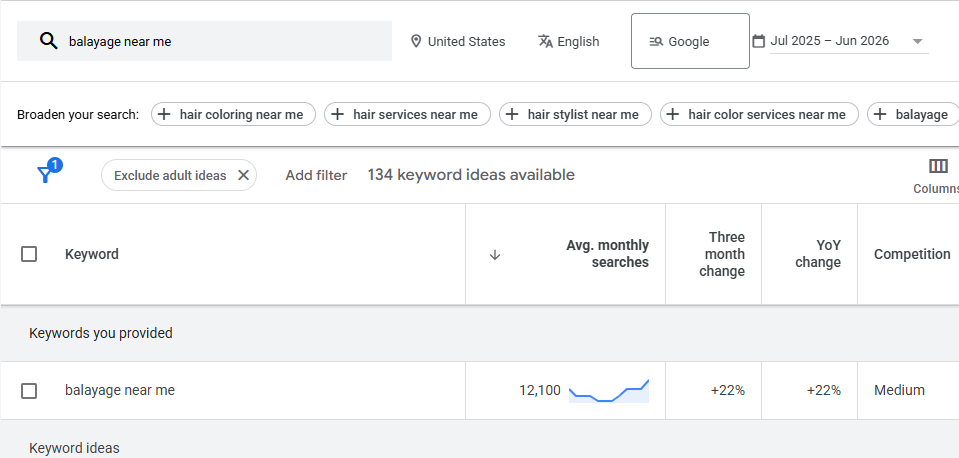
To attract more local bookings:
- Create a dedicated page for each service, such as hair coloring, balayage, gel nails, lash extensions, or facials.
- Add real before-and-after photos to your website and Google Business Profile so clients can evaluate your work before booking.
- Use location-based keywords throughout your service pages, such as “hair salon in Austin” or “nail salon in Miami.”
- Ask clients to mention the specific service they received when leaving a Google review, making your reviews more relevant for local searches.
- Showcase your latest work consistently on Google Business Profile and social media to keep your salon looking active and up to date.
When potential clients can quickly see the exact service they want and the results you’ve delivered for others, they’re far more likely to book an appointment.
Build trust before booking
Most clients decide whether to book before they ever contact your salon. They compare reviews, browse photos, and look for proof that your team can deliver the style they want.
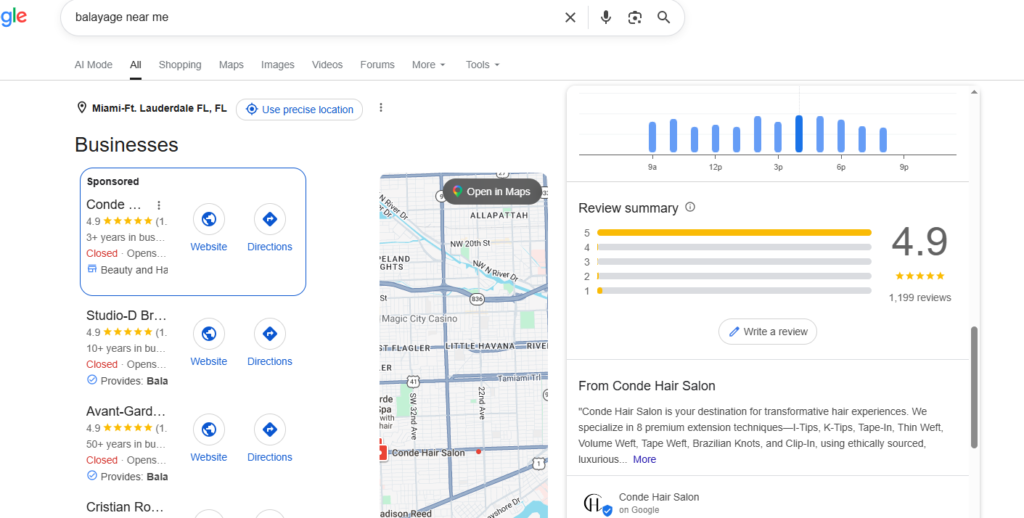
Build trust by focusing on the content clients care about most.
- Show real before-and-after photos instead of relying on stock images.
- Collect reviews for specific services, such as balayage, acrylic nails, lash extensions, or facials.
- Introduce your stylists or technicians with their specialties, experience, and certifications.
- Display your work consistently on Google Business Profile, Instagram, and your website.
- Answer common questions about pricing, appointment time, aftercare, and maintenance to reduce booking hesitation.
The more proof you provide before a client books, the easier it becomes for them to choose your salon over another one.
Turn visitors into appointments
Getting traffic is only half the job. Your website should make booking an appointment effortless.. Every page should guide visitors toward taking the next step instead of leaving to compare another salon.
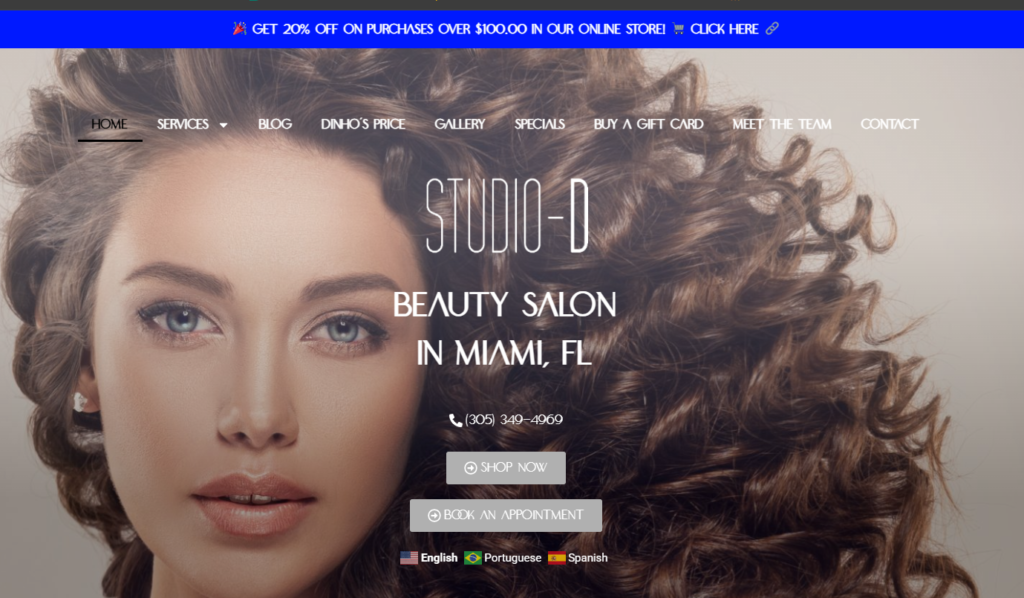
Improve your booking conversion by:
- Adding a prominent “Book Now” button on every service page.
- Displaying starting prices so clients know what to expect before booking.
- Offering online booking that lets clients choose a service, stylist, date, and time in just a few clicks.
- Featuring your most popular services and seasonal promotions near the top of the page.
- Keeping contact options visible, including phone, text, and online booking for clients who prefer different ways to schedule.
The fewer steps between finding your salon and confirming an appointment, the more website visitors you’ll convert into paying clients.
Invest in paid ads strategically
Paid ads often work best when they’re used to promote high-demand services, not just your salon as a whole. Clients are more likely to book after seeing an offer for a specific service than a generic salon advertisement.
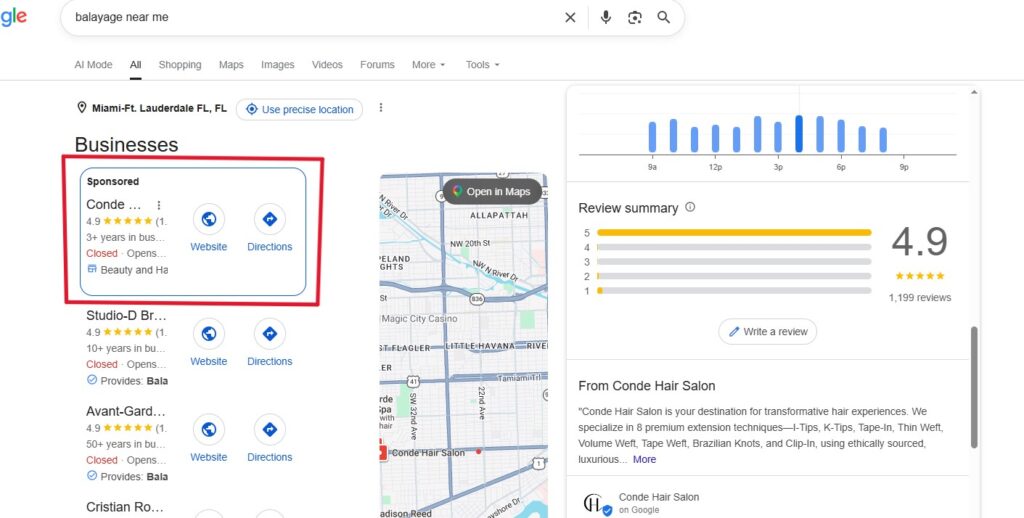
Focus your budget on campaigns such as the following:
- Google Ads for high-intent searches like hair salon near me, bridal makeup, or keratin treatment.
- Instagram and Facebook ads featuring short videos or before-and-after transformations.
- Seasonal promotions for services such as holiday nails, prom hairstyles, or wedding packages.
- Retargeting ads that remind website visitors to complete their booking after leaving your site.
Start with your best-performing services and measure bookings not just clicks to see which campaigns generate the highest return on your advertising budget.
Increase repeat bookings
Winning a new client is valuable, but turning them into a regular client is even more profitable. Create a follow-up system that encourages clients to rebook before they start looking for another salon.
Effective strategies include:
- Recommend the next appointment before the client leaves the salon.
- Send automated reminders when it’s time for a fill, color touch-up, haircut, or maintenance service.
- Offer loyalty rewards after a certain number of visits or spending milestones.
- Share personalized promotions based on the services each client has previously booked.
- Follow up after appointments with aftercare tips and a link to leave a review.
Clients who return regularly can generate more consistent revenue than relying only on new customer acquisition, making repeat bookings one of the most important salon marketing strategies.
Create a loyalty program
A loyalty program gives clients a reason to keep choosing your salon instead of trying a competitor. The best programs are simple, easy to understand, and reward behaviors you want to encourage, such as repeat visits or higher-value services.
Consider offering:
- Points for every appointment that can be redeemed for future services or retail products.
- Birthday rewards such as a free treatment or service upgrade.
- Referral bonuses when an existing client brings in a new customer.
- VIP tiers with exclusive perks for your most loyal clients.
- Bonus rewards for pre-booking the next appointment before leaving the salon.
Focus on rewards that encourage another visit rather than one-time discounts. This helps increase client retention while protecting your profit margins.
Generate more referrals
Referrals are one of the most effective ways to attract new salon clients because they come with built-in trust. Make it easy and worthwhile for happy clients to recommend your salon to friends and family.
A referral program can include:
- A reward for both clients, such as $10 off the next appointment or bonus loyalty points.
- Personal referral codes or links that are easy to share.
- Extra rewards for multiple successful referrals to encourage ongoing participation.
- Limited-time referral campaigns to create urgency and increase participation.
Promote your referral program after every appointment, in follow-up emails, and through your loyalty program so clients always know how they can earn rewards by sharing your salon.
Track what matters
The best salon marketing strategies are driven by data, not assumptions. Instead of tracking every metric, focus on the numbers that directly impact bookings and revenue.
Monitor key performance indicators such as the following:
- New client bookings each month.
- Repeat booking rate and client retention.
- Average ticket value per appointment.
- Booking conversion rate from your website or ads.
- Google review growth and average rating.
- Revenue generated from each marketing channel.
Review these metrics regularly to identify what’s working, where clients are dropping off, and which marketing activities deserve more investment.
Optimize your marketing system
A salon marketing system should improve over time, not stay the same. Regularly review your results and refine the strategies that generate the most bookings.
Look for opportunities to optimize by:
- Updating your service pages with recent before-and-after photos and new treatments.
- Testing different promotions to see which offers drive the most appointments.
- Refreshing ad creatives every few weeks to prevent audience fatigue.
- Improving your booking process if clients are abandoning appointments.
- Collecting client feedback to identify areas where the customer experience can be improved.
Small, consistent improvements across your website, advertising, and client experience often deliver better long-term results than constantly chasing new marketing tactics.
Prioritize your marketing budget
A salon marketing budget should focus on channels that directly generate new appointments, repeat clients, and measurable revenue. Instead of spreading money across every platform, invest more in strategies that match how clients actually choose a salon.
Prioritize your budget in these areas:
- Local search visibility: Invest in Google Business Profile optimization, local SEO, and review management because many salon clients search before booking.
- Content and portfolio creation: Allocate resources for professional photos, videos, and before-and-after transformations that showcase your actual work.
- Paid advertising: Use Google Ads and social media ads to promote high-value services such as balayage, extensions, bridal packages, or premium treatments.
- Client retention: Invest in loyalty programs, email/SMS reminders, and rebooking systems to increase repeat appointments.
- Reputation building: Encourage and manage client reviews because trust often determines which salon receives the booking.
The goal is not to spend more; it is to spend where your ideal clients are most likely to discover, trust, and book your salon.
Common marketing mistakes
Many salons struggle with marketing not because they lack effort, but because they invest time and money in the wrong areas. Avoiding these common mistakes can help you attract better clients, improve bookings, and build more sustainable growth.
Relying only on social media
Instagram and TikTok are powerful channels for showcasing salon work, but they should not be your only source of clients. Social media reach can change, and not every follower will become a customer. Combine social content with local SEO, reviews, and a strong booking system to create a more reliable client pipeline.
Posting without a clear strategy
Beautiful photos alone do not always generate appointments. Every post should have a purpose whether it’s showing a transformation, promoting a service, answering a client question, or building trust in your expertise.
Discounting too often
Frequent discounts may attract price-sensitive clients who do not become loyal customers. Instead of constantly lowering prices, focus on showing your value through expertise, results, customer experience, and exclusive offers.
Ignoring online reviews
Reviews are often a key factor before a client books a salon appointment. A lack of recent reviews or unanswered negative feedback can reduce trust. Encourage happy clients to share their experiences and respond professionally to all feedback.
Making booking difficult
Even interested clients will leave if scheduling requires too many steps. Make sure your booking link is easy to find, mobile-friendly, and available directly from your website, Google profile, and social media pages.
Not tracking marketing results
Without tracking, salons cannot know which strategies bring profitable clients. Monitor bookings, repeat visits, customer acquisition costs, and revenue from each marketing channel to make better decisions.
Effective salon marketing strategies help your business attract new clients, build trust, and increase repeat bookings. By combining local visibility, strong customer reviews, engaging content, and retention campaigns, your salon can create sustainable growth. Good Review Service helps salons improve their online reputation and marketing performance to reach more customers and grow their brand.