



Struggling to get your dining spot noticed on Google Maps when hungry diners search for nearby food options? In today’s highly competitive culinary landscape, generic marketing won’t cut it-you need a dominant digital presence. Masterful local seo for restaurants is the ultimate key to outranking nearby competitors and capturing ready-to-eat customers. In this guide, Good Review Service will reveal 15 proven local search tactics designed to skyrocket your rankings, fill your tables, and drive consistent foot traffic to your restaurant immediately.
What Is Local SEO for Restaurants?
Local SEO for restaurants is the strategic process of optimizing your eatery’s online presence to rank higher in geographically relevant search results. When hungry customers nearby search for terms like “best steakhouse near me,” “places to eat in [city],” or “Italian dining tonight,” local search engine optimization ensures your business appears at the very top of Google Maps and the Google Local Pack.
Unlike traditional search optimization that targets broad global traffic, this hyper-targeted digital marketing strategy focuses entirely on capturing high-intent local foodies within your immediate driving radius. By optimizing critical touchpoints-such as your Google Business Profile, mobile menu accessibility, localized keyword content, and online review signals-you transform your digital footprint into an automated engine that drives consistent, high-value foot traffic straight to your restaurant’s physical tables.
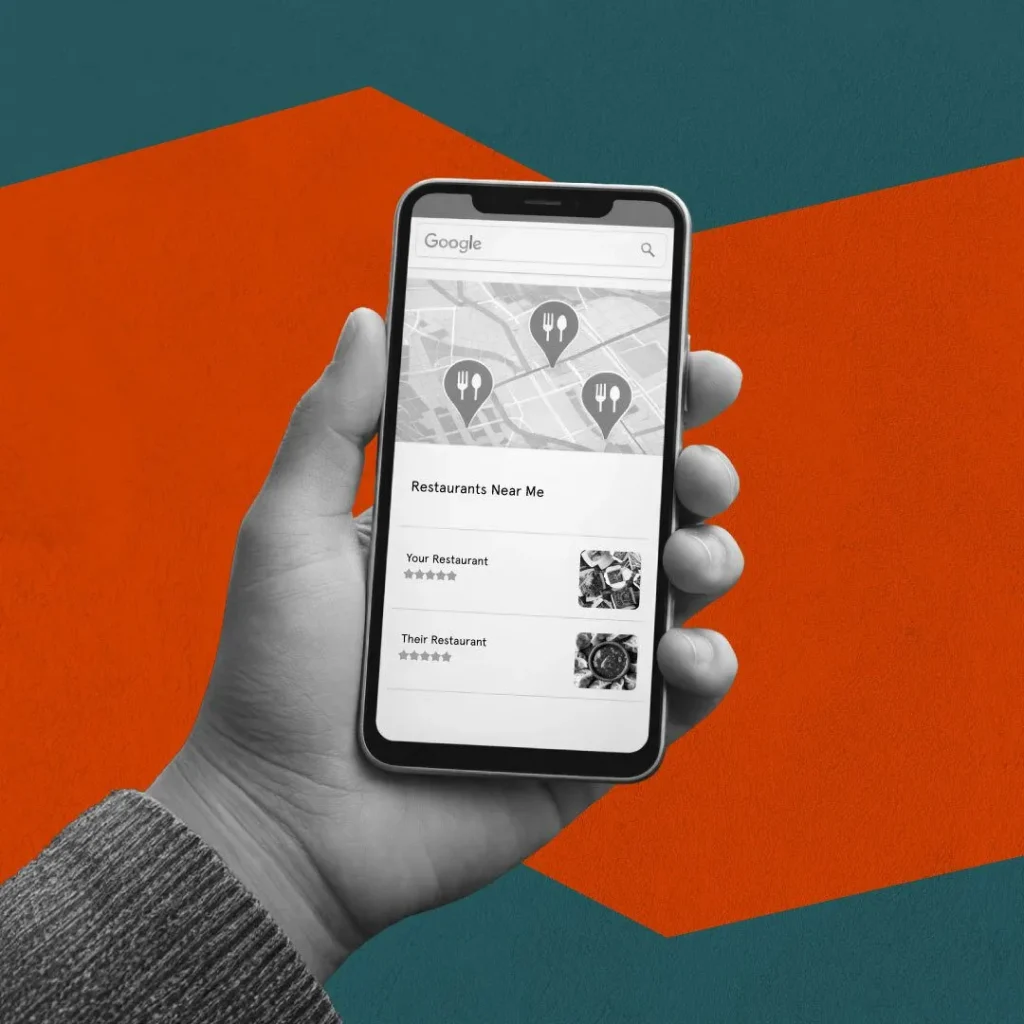
Why Outranking Nearby Competitors Matters
With most dining decisions made on mobile devices by consumers looking to eat immediately, high local visibility is essential to protect your market share.
Dominating neighborhood search results delivers three immediate business advantages:
-
Captures High-Intent Patrons: Most local culinary queries have immediate transactional intent. Being visible means winning the customer exactly when they are ready to order.
-
Streamlines Mobile Discovery: Proper optimization puts your operational hours, exact address, and direct click-to-call phone number right in front of users on the go.
-
Cuts Out Middlemen Fees: Ranking organically at the top allows you to capture direct table bookings and online orders, bypassing costly third-party delivery commissions.
15 Local SEO Strategies for Restaurants
To turn your digital presence into a steady stream of physical foot traffic, phone inquiries, and online orders, your restaurant needs practical, high-impact search optimization. Below are actionable tactics to dominate neighborhood search results and maximize conversions.
1. Optimize Your Google Business Profile
Your Google Business Profile (GBP) acts as your restaurant’s digital storefront. Because 46% of all Google searches have local intent, fully completing this profile directly impacts your daily reservation volumes and map visibility.
-
Fill out core operational data including your restaurant’s name, street address, local phone number, and operating hours. Data shows consumers are 70% more likely to visit businesses with a complete Google Business Profile, making accurate links for your menu, reservation system, and online ordering platform essential.
-
Highlight Service Options: Activate attributes that define your operational model, such as dine-in, takeout, delivery, catering, or outdoor seating, to match specific user filters.
-
Upload High-Quality Visuals: Build an active gallery of 30 to 100+ high-resolution images. Showcase your storefront exterior for easy recognition, your interior dining atmosphere, and well-lit close-ups of your best-selling dishes and cocktails.
-
Publish Weekly Updates: Use Google Posts regularly to highlight seasonal menu items, limited-time promotions, weekend events, or authentic behind-the-scenes clips.
-
Track Conversions with UTM Links: Append custom UTM tracking parameters to your website and ordering URLs within your profile to measure exactly how many bookings and orders originate from your Google listing.
2. Choose the Right Restaurant Categories
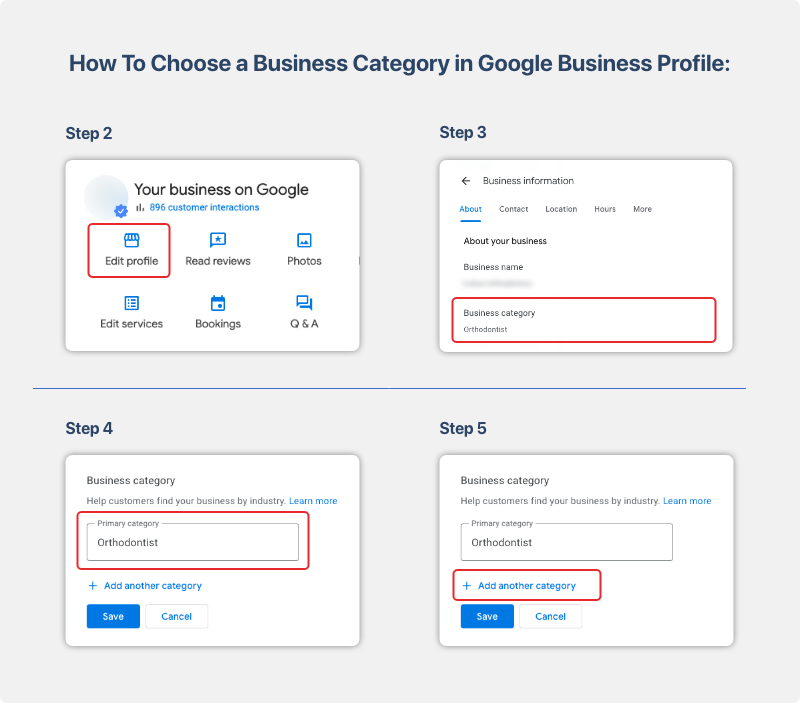
Google’s local algorithm relies heavily on business categories to match your establishment with specific culinary cravings. Selecting accurate classifications expands your reach to high-intent patrons.
-
Select a Precise Primary Category: Avoid broad labels like “Restaurant” if you can be more specific. Choose a primary category that defines your core culinary concept (e.g., “Italian restaurant”, “Sushi restaurant”, or “Pho restaurant”).
-
Layer Relevant Secondary Categories: Add 3 to 5 secondary classifications to capture broader search intents without diluting your focus (e.g., supplement with “Pizza restaurant”, “Wine bar”, or “Brunch restaurant” if applicable).
-
Analyze the Local Competition: Review the category setups of the top 3 ranking competitors in your neighborhood to see what configurations are working for them.
-
Maintain Platform Consistency: Ensure your chosen categories match the menu descriptions and branding displayed on your official website and third-party listings.
3. Keep Your NAP Information Consistent
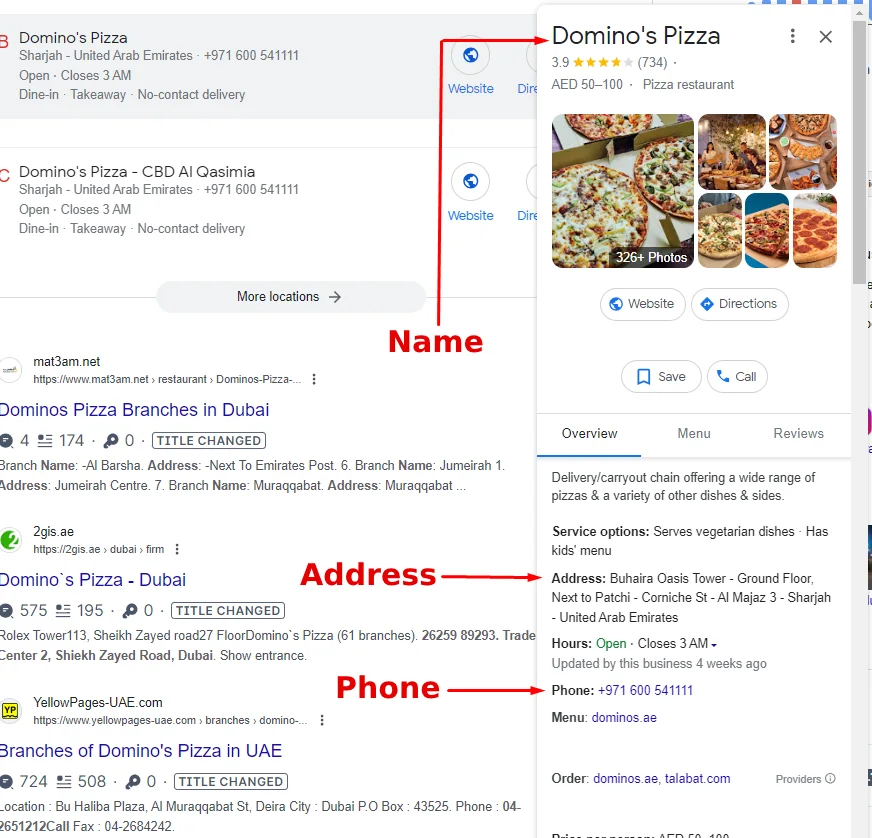
NAP uniformity (Name, Address, Phone Number) across the web is a primary ranking factor. Consistent data proves your legitimacy to search engine crawlers, which rewards your restaurant with higher map pack visibility.
-
Enforce Direct Formatting Uniformity: Ensure your NAP details are identical down to the character across Google, Yelp, TripAdvisor, Facebook, and Apple Maps. If you use “123 Main St” on Google, do not write it as “123 Main Street” elsewhere, as 62% of consumers will avoid a business if they find incorrect information online.
-
Keep Contact Formats Identical: Display your phone number in the exact same format across every single business index.
-
Avoid Keyword Stuffing: Keep your business name natural and clean. Never add spammy geo-keywords or descriptors to your official name (e.g., write “Tony’s Pizza” instead of “Best Pizza in NYC – Tony’s”).
-
Audit Major Directories: Run bi-annual checks on high-traffic review platforms and navigation ecosystems to identify, claim, and fix any fragmented or outdated contact data.
4. Collect More Google Reviews
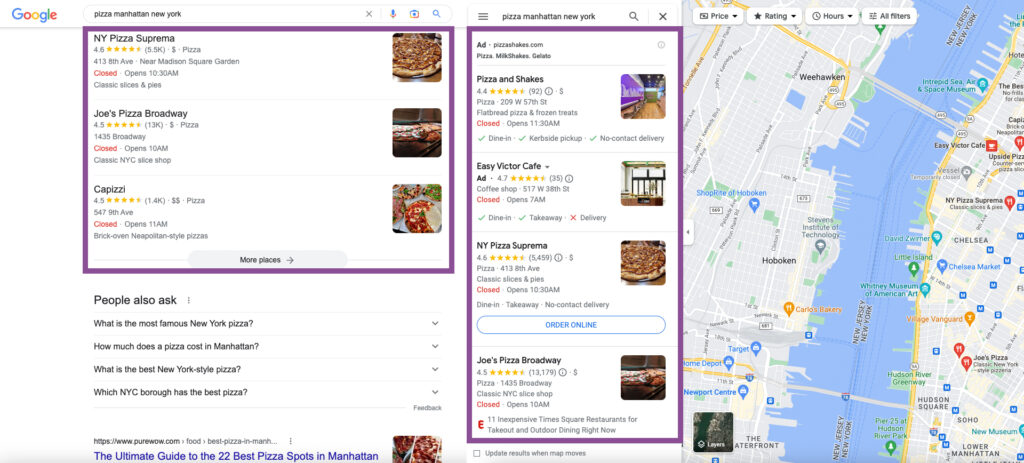
Authentic customer feedback is a massive driver of neighborhood visibility, as reviews now account for 20% of Local Pack ranking influence. Generating a steady stream of fresh, positive evaluations directly builds trust and increases your reservation volumes.
-
Send automated text messages or email follow-ups within 24 hours of a meal with a direct link to your business review form.
-
Train your front-of-house staff to naturally ask for a quick Google rating at the end of an excellent dining experience.
-
Encourage guests to upload real-time food photography and venue imagery alongside their written feedback to maximize impact.
-
Avoid buying fake reviews or offering direct cash incentives to protect your profile from search engine penalties.
-
Track your review acquisition rates monthly to ensure a consistent volume of fresh social proof.
5. Respond to Customer Reviews
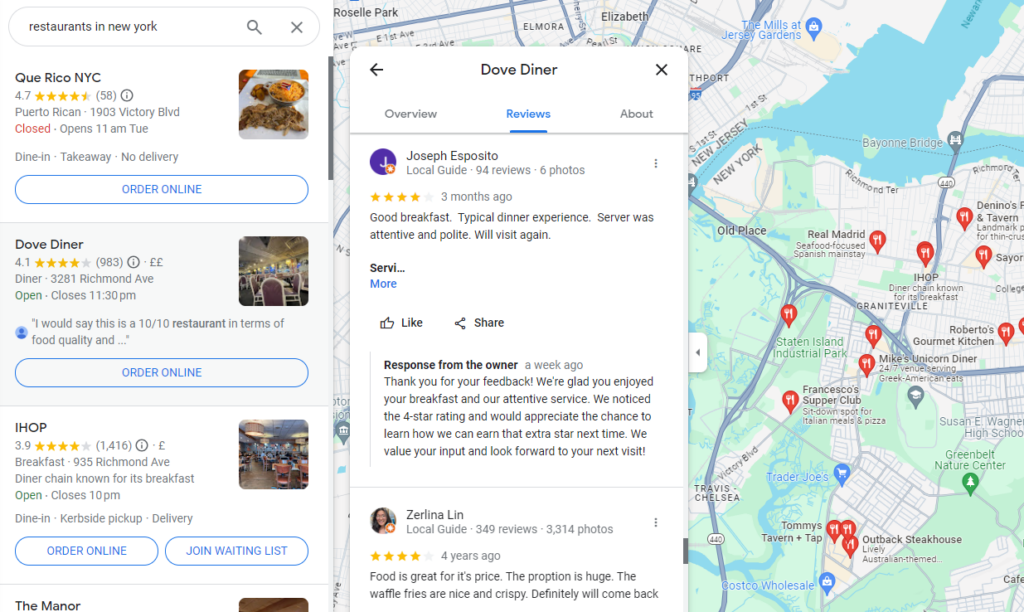
Actively engaging with your feedback signals to both search algorithms and prospective diners that your establishment values guest experiences and operational quality.
-
Reply to every single review within 48 to 72 hours to maintain an active and attentive online presence.
-
Thank positive reviewers warmly while mentioning specific menu items they praised to reinforce your signature dishes.
-
Handle negative ratings calmly by apologizing for shortcomings and offering a direct management contact to resolve the issue privately.
-
Subtly weave in relevant food terms and location modifiers like neighborhood names where they naturally fit the conversation.
-
Sign off with the actual name or title of the owner or general manager to humanize your culinary brand.
>>> Learn more: How to respond to negative reviews
6. Add High-Quality Food and Venue Photos
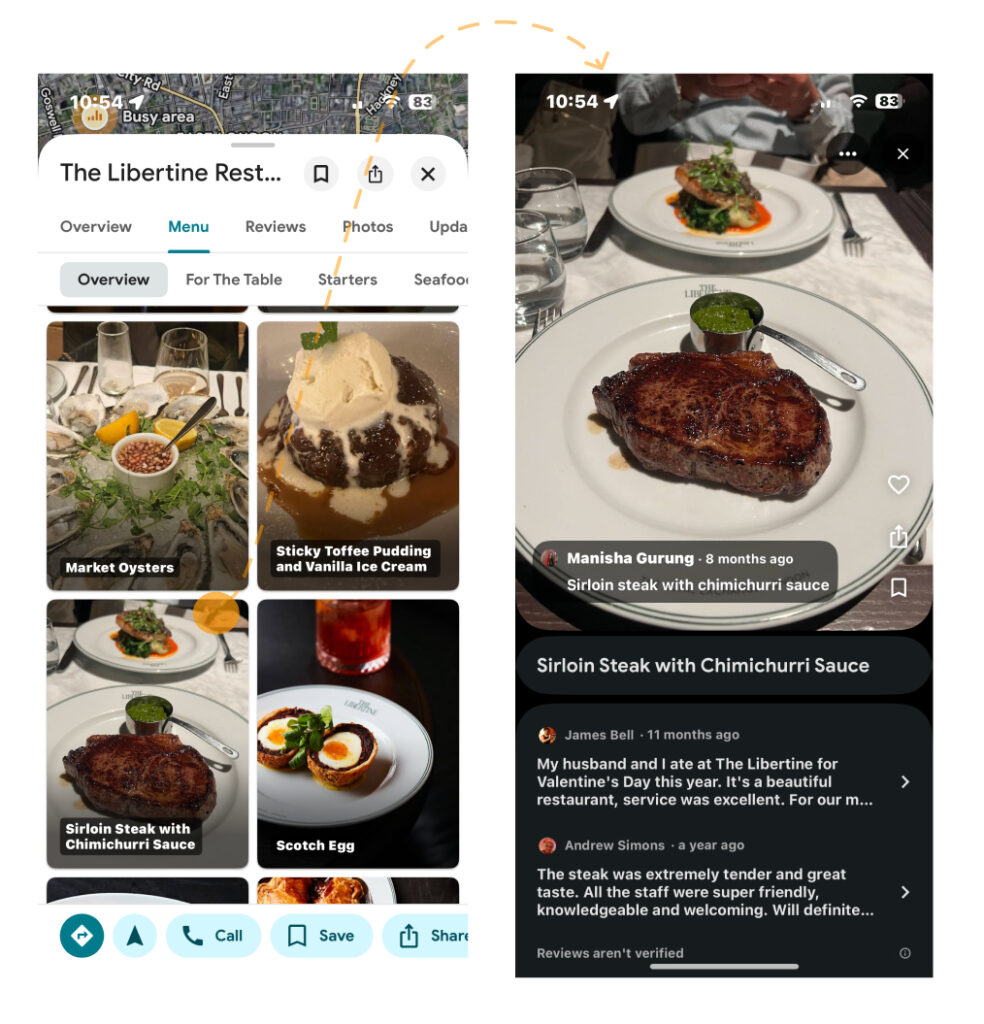
Vibrant, real-time photography acts as a powerful conversion tool, convincing high-intent mobile searchers to choose your menu over nearby dining alternatives.
-
Capture signature menu items using clean, natural lighting and tight macro shots, as menu photos are statistically the most clicked asset type on a restaurant’s local listing.
- Document your complete guest environment by maintaining at least 25 to 30+ high-quality images covering your storefront exterior, main dining room, active bar areas, and outdoor seating options.
-
Feature your culinary team in action to showcase your kitchen’s personality, craftsmanship, and hospitality standards.
-
Rename image files using descriptive, geo-targeted terms like
spicy-tuna-roll-boston-sushi.jpginstead of generic default camera codes before uploading. -
Refresh your visual galleries routinely across all local maps and directories to reflect seasonal dishes and holiday updates.
>>> Learn more: 25 Restaurant Logo Ideas to Create a Memorable and High-Impact Brand Identity
7. Use Restaurant Local SEO Keywords
Targeting geo-specific phrases is essential to connect with hungry searchers looking for local dining spots right in your neighborhood.
-
Conduct thorough keyword research focusing on high-volume phrases like “best sushi in [city]” or “top brunch spots in [neighborhood]” to capture local search intent. Geographic keyword relevance within your content is ranked as the #2 factor for local organic rankings.
-
Build separate menu or category pages for your core offerings so each specific dish type can rank for its own high-volume terms.
-
Embed your specific city and neighborhood names naturally into your page titles, H1 tags, and meta descriptions to signal your exact location to search engines.
-
Launch a localized business blog featuring neighborhood dining roundups and community food guides to capture broader discovery traffic.
-
Inject relevant geo-modifiers and exact menu terms into your image alt text to improve your visibility across image search results.
-
Track your keyword ranking performance strictly on a local, zip-code level rather than relying on misleading nationwide averages.
8. Optimize Your Restaurant Website
Your website should act as a high-converting extension of your dining room, built specifically to turn mobile visitors into immediate table reservations or digital orders.
-
Design a clean homepage that instantly communicates your culinary concept and features clear, prominent buttons for online ordering and reservations.
-
Create a dedicated, fully responsive digital menu page that is easily scannable on smartphones without requiring users to download clunky PDF files.
-
Embed an interactive Google Map alongside your exact NAP data and current operational hours within both your website footer and dedicated contact page.
-
Add structured LocalBusiness and Restaurant schema markup to your site’s code to help search engines accurately display your menu prices, reviews, and hours.
-
Keep your digital booking forms short and friction-free, requesting only essential details like guest count, date, time, and basic contact info.
-
Deploy web analytics tools and custom tracking parameters to monitor exactly which traffic sources drive your online orders and table bookings.
9. Create Location-Specific Landing Pages
If your brand operates multiple storefronts, you must give each physical venue its own dedicated web page. Local SEO experts rank a dedicated page for each service or location as the #1 local organic ranking factor.
-
Build unique URLs for every individual branch to house location-specific operating hours, local phone numbers, and direct interactive maps.
-
Tailor the content on each landing page to showcase the specific interior atmosphere, local team, and exclusive menu items unique to that branch.
-
Structure your title tags and main page headings to feature the specific neighborhood or city name of that exact storefront.
-
Verify that the NAP data listed on each location page matches its corresponding Google Business Profile down to the individual digit.
-
Feature authentic guest reviews and testimonials that directly praise the specific service and staff at that particular location.
-
Use strategic internal linking from your primary homepage to guide search engines and web traffic directly to your individual branch pages.
10. Build Local Citations
Securing slots on authoritative directory sites establishes your culinary brand’s presence across the web and validates your physical address to search crawlers.
-
Claim your restaurant profiles on essential platforms like Yelp, TripAdvisor, Bing Places, Apple Maps, and industry-specific networks such as OpenTable or Resy.
-
Fill out every available field on these listings, including your business description, accurate operational hours, digital menu links, and direct reservation URLs.
-
Maintain identical NAP formatting across every third-party platform to ensure search engines can easily cross-reference and verify your data.
-
Select highly specific business classifications on each directory to ensure you appear in narrowed culinary category searches.
-
Perform routine six-month database audits to update your listings for seasonal menu changes, holiday hours, or adjusted price points.
11. Earn Local Backlinks
Securing link placements from reputable local web platforms builds domain authority and signals your deep connection to your immediate geographical community.
-
Connect with neighborhood news sites, regional lifestyle magazines, and area food bloggers to pitch features or tasting invitations.
-
Sponsor community sports teams, charitable events, or public school fundraisers to secure high-authority links from trusted local domains.
-
Secure guest blogging spots on regional travel guides to publish insightful neighborhood dining tips that point back to your primary URL.
-
Create shareable, asset-rich digital content on your site, such as an insider’s culinary guide to your neighborhood, which naturally attracts organic references.
-
Partner with influential local foodies and digital creators to generate organic brand mentions, reviews, and referral traffic.
12. Add Restaurant Schema Markup
Implementing structured data within your website code allows search engines to read and display your restaurant’s details directly on search engine results pages.
-
Implement dedicated Restaurant, LocalBusiness, Menu, and Review structured data directly into your site’s code using the preferred JSON-LD format.
-
Outline your core credentials within the code, including your physical address, primary phone number, operating hours, accepted price range, and specific cuisine type.
-
Incorporate aggregate review stars into your schema to increase the likelihood of eye-catching rich snippets showing up on search feeds.
-
Validate your code execution using the official Google Rich Results Test to verify there are no formatting errors or missing required data fields.
-
Update your schema markup instantly whenever you adjust your restaurant’s physical operational hours, pricing structure, or core menu URLs.
13. Optimize Your Online Menu
An accessible digital menu is the foundation of a successful restaurant website, turning casual browsers into immediate paying guests.
-
Build your menu directly on a dedicated web page using crawlable HTML text instead of relying on slow-loading, non-SEO-friendly PDF files. Text-based menus allow Google to index individual dish names, prices, and high-value keywords like “vegan” or “gluten-free.”
-
Organize your culinary offerings into clear, structured sections such as Starters, Mains, Desserts, and Drinks to ensure a seamless browsing experience.
-
Pair your signature dishes with high-quality imagery, transparent pricing, and concise ingredient descriptions to set clear expectations.
-
Weave relevant culinary terms and regional keywords naturally into item titles and descriptions to boost your organic search footprint.
-
Test your menu design extensively on mobile screens to guarantee fonts are easily readable, buttons are thumb-friendly, and pages scroll fluidly.
-
Feature prominent, high-contrast links to your online reservation or delivery software at both the top and bottom of your menu page.
14. Improve Mobile Page Speed
Since the vast majority of local restaurant searches happen on mobile devices on the move, your website must load almost instantly to prevent potential diners from bouncing.
-
Aim for a mobile load time of under three seconds by routinely checking performance indicators via Google PageSpeed Insights.
-
Compress all high-resolution food and interior photographs to under 150–200KB per file before publishing them to your site.
-
Implement lazy loading scripts so your media elements only render as the user scrolls down the page, saving initial bandwidth.
-
Clean up your website backend by removing redundant plugins, tracking scripts, and outdated code that slow down server response times.
-
Leverage browser caching mechanisms and a content delivery network (CDN) to serve your website assets rapidly to users in your immediate area.
-
Minify your site’s core CSS, JavaScript, and HTML files to streamline site architecture and maximize mobile processing efficiency.
15. Track Local SEO Performance
Consistently measuring your analytics data allows you to see exactly which optimization efforts are successfully filling seats and driving digital sales.
-
Connect reliable monitoring dashboards like Google Search Console, Google Analytics 4, and your Google Business Profile performance panel.
-
Measure critical local conversion KPIs including direct phone calls, map direction requests, website clicks, and completed table reservations.
-
Monitor your keyword rankings specifically on a localized, zip-code level monthly to see how you stack up against nearby competitors.
-
Review your customer feedback trends closely by evaluating monthly review volume growth, average star ratings, and internal review response times.
-
Analyze mobile traffic patterns and landing page engagement metrics to understand how on-the-go diners interact with your digital assets.
-
Review your data monthly to adjust your content schedule, update targeting parameters, and refine your broader digital marketing budget.
Frequently Asked Questions
How Can Restaurants Rank Higher on Google Maps?
Fully completing your Google Business Profile and selecting the exact primary category is the fastest way to rank higher on Google Maps. You can then sustain and improve this position by maintaining matching contact details across all web platforms, generating fresh guest reviews, and uploading high-resolution food photos.
What Is the Most Important Local SEO Factor for Restaurants?
An active and fully optimized Google Business Profile is the single most important local SEO factor. Google’s algorithm prioritizes listings with a precise primary category match and strong review signals, meaning your visibility depends heavily on keeping this profile updated with accurate operating hours and consistent guest feedback.
How Many Google Reviews Does a Restaurant Need?
You need more reviews than the top three ranking competitors in your specific neighborhood and culinary niche to beat them on maps. Instead of chasing a fixed target, focus on review velocity by building a steady, weekly stream of fresh ratings with guest photos, which matters more to search algorithms than total historical volume.
Is Local SEO Better Than Paid Ads for Restaurants?
Local SEO is better for long-term profit margins because it builds sustainable, compounding organic traffic and community trust without a recurring cost-per-click fee. However, paid search ads remain better for instant, top-of-page exposure when you need to fill tables immediately during a grand opening or a slow seasonal shift.
Final Thoughts
Dominating your neighborhood market requires more than just serving great food – it demands an optimized digital presence that captures hungry diners the exact moment they search for nearby options. Implementing a robust strategy for local seo for restaurants is the most sustainable way to outrank nearby competitors, secure high-margin direct bookings, and keep your tables consistently filled.
If you are ready to claim the top spot on Google Maps and accelerate your daily reservation volume, let the experts handle the heavy lifting. Partner with Good Review Service today to deploy a tailored, conversion-driven campaign designed specifically to maximize your storefront’s local visibility and drive reliable foot traffic to your doors.