



For modern dental practices, relying on traditional word-of-mouth or expensive print advertising is no longer enough to keep chairs filled. When patients experience sudden tooth pain or search for a new family dentist, their first move is opening Google and typing “dentist near me.” If your clinic isn’t appearing in the top local search results, you are actively losing high-value patient bookings to competing practices down the street. To help you secure your local market, Good Review Service has created this comprehensive execution guide to dental search engine optimization (SEO).
What Is Dental SEO?
Dental SEO (Search Engine Optimization) is the strategic process of optimizing a dental practice’s online presence to increase its visibility in organic search engine results when local patients search for oral healthcare services. Unlike generalized digital marketing, dental SEO focuses heavily on geo-targeted intent, technical website health, and local search algorithms-primarily Google’s Local Map Pack and organic search results.
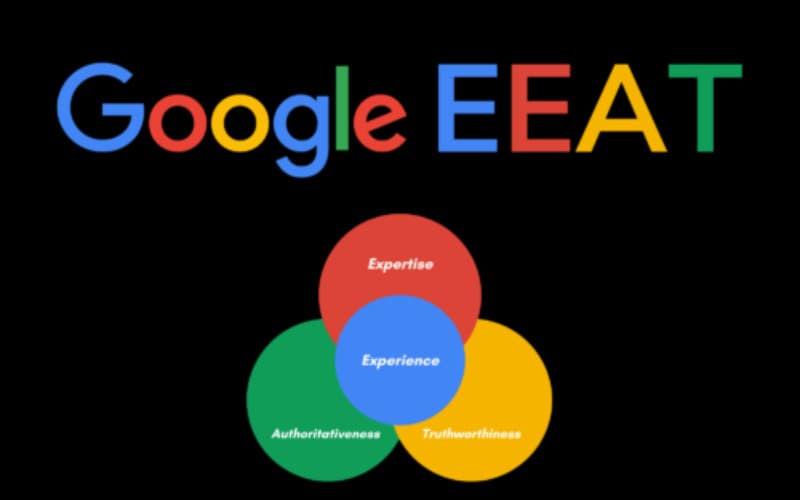
In marketing, dental SEO serves as the primary system for capturing high-intent patient acquisition without recurring pay-per-click ad costs. By optimizing structural website elements, creating clinically accurate content that meets Google’s strict E-E-A-T (Experience, Expertise, Authoritativeness, Trustworthiness) criteria, and building local prominence, a practice secures top-tier rankings for highly competitive keywords like “cosmetic dentist near me” or “emergency root canal [City]”. Ultimately, it converts passive online searchers into booked, high-value clinical appointments.

10 Dental SEO Strategies That Actually Work in 2026
A strategic approach involves not only implementing these tactics but also regularly monitoring their performance. With a focus on local relevance, user engagement, and technical excellence, these strategies will help your practice establish authority and attract new patients consistently.
1. Optimize Your Google Business Profile
Optimizing your Google Business Profile (GBP) is the fastest and most critical strategy to secure top rankings within Google’s Local 3-Pack, where the vast majority of local mobile clicks occur. For a dental practice, a properly optimized profile acts as your primary digital storefront, directly capturing patients searching for immediate care in your specific zip code.
To achieve maximum visibility in 2026, you must focus on the core optimization factors that directly influence Google’s local ranking algorithm:
-
NAP Consistency: Your practice Name, Address, and Phone number must be 100% identical across your website, GBP dashboard, and all external medical directories to build algorithmic trust.
-
Primary and Secondary Categories: Select “Dentist” or “Dental Clinic” as your core category, and utilize specific secondary categories like “Cosmetic Dentist”, “Pediatric Dentist”, or “Emergency Dental Service” to match precise search intents.
-
Business Description & Services: Craft a keyword-optimized business description detailing your specialized treatments, and map out your service menu with clear descriptions and pricing structures where applicable.
-
Geomarker-Enabled Media: Regularly upload high-resolution, geo-tagged photos of your clinical environment, specialized equipment, and dental team to signal real-world local activity to search crawlers.
-
Local Review Velocity: The frequency, volume, and keyword relevance of patient reviews, along with your response rate, directly signal trust and prominence to Google’s map algorithms.
2. Win the Google Maps Pack with Local SEO for Dental Clinics
Winning a spot in the Google Maps Pack (the Local 3-Pack) is the single highest-ROI outcome for a dental clinic, as it places your practice above the traditional organic search results on both desktop and mobile devices. Because patients looking for dental care value proximity and immediate accessibility, securing a position in this map layout directly correlates with a surge in high-intent phone calls and booking requests.
To successfully outrank competing practices and dominate the Maps Pack in 2026, you must optimize for Google’s core localized ranking variables:
-
Proximity and Geo-Targeted Landing Pages: While you cannot change a patient’s physical distance from your clinic, you can build hyper-localized service pages (e.g., “Invisalign in [Neighborhood Name]”) to help Google establish your relevance within distinct local zones.
-
Localized Link Equity: Securing backlinks from prominent community organizations, local business associations, regional chambers of commerce, and nearby school districts signals to the map algorithm that your practice is an established local fixture.
-
Structured Local Schema Markup: Implementing advanced LocalBusiness structured data (Schema JSON-LD) into your website’s header code explicitly feeds search crawlers your exact coordinates, operating hours, and accepted medical insurance plans.
-
Citational Authority and Consistency: Publishing your clinic’s business listings on trusted healthcare directories (such as Healthgrades, WebMD, and Zocdoc) provides the algorithmic validation Google requires to rank your maps profile higher.
-
Review Management and Real-Time Sentiment: High volumes of positive, keyword-rich patient reviews detailing specific procedures (e.g., “painless root canal”) drastically boost your local prominence scores.
3. Build Google Reviews Systematically
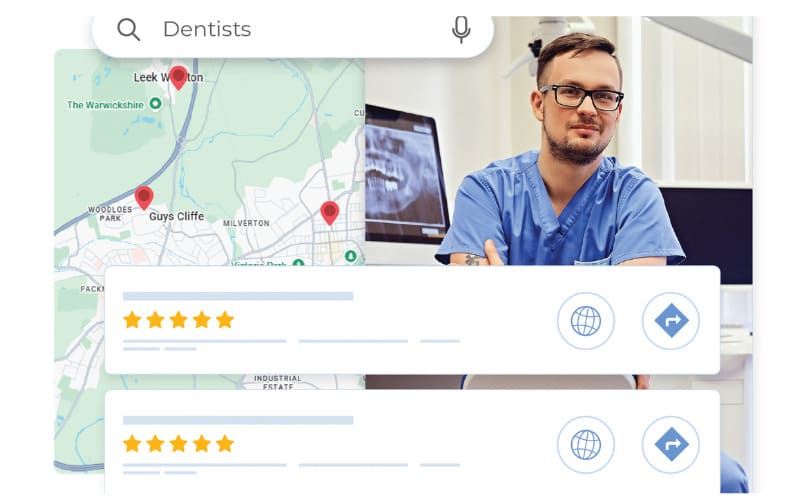
Building a systematic pipeline for acquiring Google Reviews is one of the most powerful ways to influence both your Google Maps Pack rankings and a patient’s ultimate decision to book an appointment. Google’s local algorithm heavily weighs review volume, rating score, freshness, and the specific keywords included in user text. For a dental practice, a steady stream of authentic feedback signals clinical prominence, active patient care, and community trust.
To establish a highly effective, automated feedback system in 2026, your practice must focus on these critical operational pillars:
-
Automated Review Request Workflows: Integrate your practice management software with an automated platform to instantly dispatch SMS or email review links within 1 to 2 hours of a patient completing their appointment. Timing is critical; asking for feedback while the positive, painless experience is top-of-mind yields the highest response rates.
-
Keyword-Rich Patient Sentiment: Encourage patients to mention specific treatments or dental technologies in their reviews (e.g., “Invisalign,” “dental implants,” or “painless root canal”). When Google’s algorithm detects these specific phrases, it strengthens your practice’s relevance scores for matching long-tail localized searches.
-
Strategic QR Code Placement: Print branded physical signage with scannable QR codes linking directly to your Google Business Profile review page. Place these strategically at the checkout desk and in recovery lounges, allowing front-desk staff to verbally invite satisfied patients to scan and leave feedback before leaving the building.
-
100% Review Response Velocity: Respond to every single review—both positive and negative-within 24 to 48 hours. Crafting unique, professional responses that maintain strict HIPAA compliance (never confirming specific medical details or patient conditions publicly) proves to both Google and prospective patients that your clinic actively values patient care.
-
Mitigation and Resolution Protocols: Establish an internal workflow to immediately flag and address any negative feedback privately. Proactively reaching out to resolve a patient’s administrative or billing misunderstanding often results in them voluntarily updating or removing a low-star rating before it impacts your local search standing.
4. Target the Right Keywords
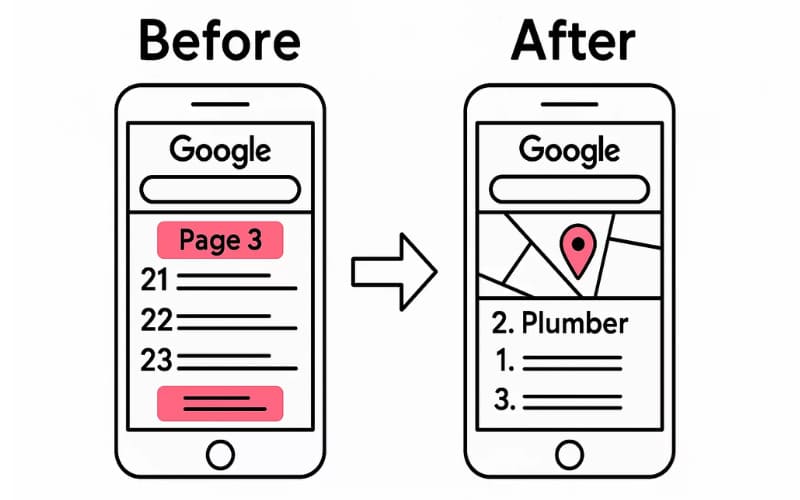
Targeting the right keywords is the foundation of any successful dental SEO campaign. Instead of trying to rank for broad, highly competitive terms like “dentist” or “teeth,” your practice must focus on localized, high-intent phrases that potential patients actually search for when they are ready to book an appointment. Grouping your keywords into distinct categories ensures your website covers the entire patient journey, from initial symptom research to final service selection.
To build a high-converting keyword strategy, you should focus on these essential keyword classifications:
-
Geo-Targeted Intent Keywords: These are your primary revenue drivers, combining your core services with your specific location (e.g., “Invisalign dentist in [City Name]” or “dental implants [Neighborhood Name]”).
-
High-Urgency Emergency Keywords: Patients facing a dental crisis search with immediate intent. Targeting terms like “emergency dentist open now” or “urgent tooth extraction near me” allows you to capture patients who need to book an appointment the exact same day.
-
Informational & Symptom-Based Keywords: Potential patients often research symptoms before choosing a treatment. Creating blog content around long-tail queries like “why do my gums bleed when brushing” or “how long do dental veneers last” establishes your practice’s clinical authority early in the decision-making process.
5. Optimize Every Service Page with On-Page SEO
Optimizing every individual service page with on-page SEO ensures that your dental clinic ranks for specific, high-value treatments rather than just general search terms. Potential patients looking for specialized care like “porcelain veneers” or “wisdom teeth removal” rarely land on a homepage; they look for detailed service pages that answer their questions directly. Properly structured on-page elements help search engine crawlers understand the clinical relevance of your page while providing a clear path for users to book a consultation.
To maximize your organic reach and improve search rankings, each service page must be built using these critical on-page optimization steps:
-
Keyword-Optimized H1 and Title Tags: Include your primary target keyword and location naturally at the beginning of your Page Title and Main Heading (e.g.,
<h1/>Cosmetic Dentistry in [City Name]<h1/>). Keep your title tags under 60 characters to prevent truncation on the SERP. -
Semantic Heading Hierarchy (H2-H3): Organize your treatment information using logical subheadings to answer secondary patient questions. For example, under a Dental Implants H1, use H2s for “Benefits of Dental Implants” and “The Implant Procedure Step-by-Step.”
-
Unique Content Matching E-E-A-T Standards: Avoid thin, cookie-cutter descriptions copied from medical manufacturer sites. Write unique, patient-friendly copy that explains the treatment process, recovery times, and candidacy requirements, establishing your team’s clinical expertise.
-
Strategic Internal Linking: Connect your service pages naturally to your doctor bio pages, relevant symptom blog posts, and your online booking landing page to distribute link equity smoothly throughout your site architecture.
-
Engaging Schema Markup: Inject specific
ProductorServicestructured data into the page code, allowing search engines to pull rich snippets—such as pricing ranges or FAQ dropdowns—directly into the organic search listings.
6. Add Schema Markup to Your Dental Website
Schema markup is a technical SEO strategy that uses a specific vocabulary of structured data code to help search engine crawlers understand the exact context of your dental website’s content. By injecting this code into your pages, you explicitly tell Google your clinic’s operational details, rather than relying on the algorithm to guess them. In 2026, implementing advanced schemas is a prerequisite for winning rich snippets in organic search results and gaining citations in AI-driven search overviews.
To maximize your technical search visibility, your website should deploy these specific schema types:
-
LocalBusiness (or Dentist) Schema: This foundational code block contains your verified NAP data, precise geo-coordinates, operating hours, accepted medical insurance providers, and links to your active social profiles. It bridges the data gap between your website and your Google Business Profile.
-
MedicalWebPage Schema: Applying this markup to your treatment landing pages explicitly states the medical specialty, target demographic, and clinical purpose of the content, reinforcing your E-E-A-T score within Google’s healthcare quality algorithms.
-
FAQPage Schema: If your service pages contain a Frequently Asked Questions section, structuring it with FAQ schema enables search engines to display interactive dropdown menus directly beneath your organic search listing, increasing your visual footprint and click-through rate.
-
Review or AggregateRating Schema: This structures your internal patient testimonial data, allowing star ratings (e.g., “4.9 stars out of 120 reviews”) to render directly on traditional search engine results pages, driving immediate consumer trust before a user even clicks your link.
7. Demonstrate E-E-A-T Through Your Content
Demonstrating E-E-A-T (Experience, Expertise, Authoritativeness, and Trustworthiness) is a critical requirement for dental websites because Google classifies medical and health-related content as Your Money or Your Life (YMYL). Since dental advice directly impacts a reader’s physical and financial well-being, Google’s quality rater guidelines apply the highest level of scrutiny to these pages. If your content appears generic, unverified, or written by an unqualified source, your search visibility will drop across both traditional rankings and generative AI search summaries.
To satisfy Google’s strict YMYL quality standards and build real-world patient trust, your content strategy should execute these verification methods:
-
Verified Doctor Byline and Bio Links: Every clinical blog post or treatment explanation must be explicitly attributed to a real practitioner (e.g., “Written by Dr. [Name], DDS”). Link these bylines directly to a comprehensive team bio page that showcases their formal dental degrees, board certifications, medical field experience, and professional associations like the ADA or AACD.
-
Clinical Accuracy and Medical Review Workflows: Ensure all medical claims, treatment timelines, and recovery protocols are scientifically accurate. Incorporate a “Medically Reviewed By” protocol if the content is drafted by a staff writer, alongside clear citations or outbound links to authoritative peer-reviewed journals, dental research databases, or university medical centers.
-
First-Hand Clinical Experience (The Missing “E”): Infuse your content with unique case studies, anonymized patient success stories, and real-life treatment observations. Discussing actual clinical nuances—such as how your specific practice manages dental anxiety during a root canal or matches porcelain veneer shades to natural teeth—proves to search bots that your content is born from real-world clinical experience rather than generic software generation.
-
Transparent Trust Signals: Display critical operational trust metrics directly on your site, including transparent pricing ranges, clear patient privacy policies, HIPAA-compliant communication forms, and verifiable safety certifications for your diagnostic equipment.
8. Build a Multi-Profile Strategy Around Each Doctor
For multi-practitioner clinics, building a localized search footprint around individual doctors—rather than just the main brand—is a highly effective way to dominate local search results. Patients frequently search for specific dental specialists or look up a doctor’s name to verify credentials and peer reviews before committing to a major procedure. By structuring independent digital entities for each practitioner on your team, you capture high-intent branded search queries and expand your overall real estate within Google Maps and organic listings.
To execute a successful multi-profile strategy without causing internal keyword cannibalization or algorithmic data conflicts, you should implement these core structural steps:
-
Individual Practitioner Google Business Profiles: Create separate “Individual” Google Business Profiles for each full-time partner or specialist (e.g., “Dr. [Doctor Name], DDS”). Ensure their primary category reflects their specific medical focus (such as “Orthodontist” or “Periodontist”) while keeping the primary clinic name included in the naming structure to maintain brand association.
-
Dedicated Doctor Bio Landing Pages: Build a unique, crawlable URL for each practitioner on your main website. This page must house their specific professional headshot, educational background, professional certifications, and direct patient reviews, serving as the official landing page link inside their individual Google Business Profile.
-
Distinct NPI and Medical Directory Listings: Ensure each doctor’s National Provider Identifier (NPI) profile and independent medical directory listings (e.g., Healthgrades, Zocdoc, WebMD) point directly to their specific bio page on your site, signaling unique professional authority to Google’s healthcare validation algorithms.
-
Physician-Specific Schema Markup: Inject precise
PersonandDentiststructured data code into each bio page header. This code should map out their specific medical license numbers, alumni universities, languages spoken, and professional affiliations to explicitly reinforce individual E-E-A-T values.
9. List Your Practice in Reputable Dental Directories
Listing your clinic in reputable medical and local directories is a powerful way to build citational authority and secure high-quality backlinks. In the healthcare sector, search engine web crawlers cross-reference directory profiles to verify that a business is real, active, and properly licensed. Consistent information across these trusted platforms reinforces your foundational local SEO signals, helping you rank higher in both organic search results and Google Maps listings.
To build an authoritative citation profile that strengthens your site’s search credibility, your directory strategy should focus on these critical networks:
-
Top-Tier Medical & Dental Niche Directories: Ensure your practice and individual doctors have fully completed profiles on major healthcare platforms such as Healthgrades, Zocdoc, WebMD, RealSelf, and the American Dental Association (ADA) locator. Backlinks from these highly authoritative medical domains pass valuable link equity directly to your website.
-
Core Local Search Aggregators: Maintain updated listings on foundational business networks like Yelp, YellowPages, Bing Places, and the Better Business Bureau (BBB). These major platforms serve as the baseline data sources that search engines audit to verify local business legitimacy.
-
Hyper-Local Industry Networks: Submit your business data to regional chambers of commerce, neighborhood business associations, and city-specific medical groups. These local connections help tie your website to a specific geographic target area.
-
Meticulous NAP Consistency: The Name, Address, and Phone number listed on every single external directory profile must be identical to the information published on your website footer and Google Business Profile. Even minor discrepancies—like writing “Suite 100” on one platform and “#100” on another—can dilute your local authority and confuse search algorithms.
10. Build Backlinks from High-Quality Local Sources
Building backlinks from high-quality local sources is the final strategy required to solidify your dental practice’s domain authority and outrank neighborhood competitors. While traditional SEO focuses on getting links from massive global websites, local SEO thrives on geographic relevance. A backlink from a trusted business, school, or organization within your immediate city signals to Google that your clinic is a legitimate, highly regarded fixture of that community.
To build a strong local link profile that drives search engine rankings, you should target these specific regional opportunities:
-
Local Event and Charity Sponsorships: Sponsor youth sports teams, local charity runs, or community food drives. These organizations almost always feature their sponsors on their websites, providing you with high-trust
.orgor local business backlinks. -
Chamber of Commerce and B2B Networks: Join your city and state Chambers of Commerce, as well as local business networking groups (like BNI chapters). Getting listed in their member directories secures authoritative local links that pass strong geo-relevance signals to your site.
-
Partnerships with Non-Competing Health Providers: Collaborating with nearby pediatricians, physical therapists, or local pharmacies to co-author health wellness articles allows you to naturally exchange highly relevant medical niche backlinks.
-
Local News and Media Outlets (PR): Reach out to local journalists or neighborhood blogs when your clinic launches a community initiative, such as a free dental care day for veterans or the installation of advanced, eco-friendly diagnostic technology. A single mention from a regional news site provides immense ranking authority.
11. Track Your SEO Metrics and Adjust Monthly
Deploying dental SEO strategies without tracking their performance is like performing a clinical procedure without diagnostic X-rays. SEO is not a static setup; it is a continuous optimization cycle. To ensure your marketing budget yields a high return on investment, your practice must systematically audit search performance data every month, allowing you to double down on winning keywords and fix technical regressions before they harm your patient acquisition pipeline.
To accurately gauge your digital growth and adapt your strategy, you should monitor these key performance areas:
-
Google Search Console (GSC) Health: Review GSC monthly to track your total impressions, organic clicks, and average positioning for core treatment keywords. Look out for unexpected drops in rankings, which usually indicate technical crawl errors, broken internal links, or algorithmic adjustments.
-
Google Analytics 4 (GA4) Conversion Actions: Raw traffic numbers mean very little if they do not convert into active patients. Set up explicit conversion tracking in GA4 to measure high-intent user interactions, such as clicks on your phone number, completions of your online appointment request forms, and views on your contact page.
-
Google Business Profile Interactions: Monitor your GBP insights dashboard to evaluate your map-based performance. Track the monthly volume of direct phone calls initiated from your profile, requests for driving directions to your clinic, and total website clicks originating from the Local 3-Pack.
-
Local Keyword Rank Tracking: Utilize dedicated local tracking software to monitor your visibility down to the specific zip codes or neighborhoods surrounding your clinic. A keyword ranking first in the immediate block where your office resides might drop to position five just two miles away; tracking these geographic variances informs localized content expansion.
Learn more: 25 Best Dental Website Design Examples in the US for 2026
FAQ
How long does dental SEO take to show results?
From 3 to 6 months. Initial technical fixes and Google Business Profile optimizations can yield local Map Pack improvements within weeks, but ranking for highly competitive, high-value treatments (like dental implants or Invisalign) takes consistent optimization and authority building over several months.
How much does dental SEO cost per month?
Yes, heavily. Google’s local algorithm directly factors in review volume, average star ratings, text freshness, and the specific keywords included in patient feedback. Practices that consistently collect positive reviews containing procedural terms naturally secure higher rankings in the Local 3-Pack.
Do Google reviews really affect dental SEO ranking?
Yes, reviews significantly influence local SEO rankings, reputation, and patient conversion rates. A strong collection of positive reviews improves trustworthiness and local prominence, directly impacting dental search engine optimisation strategies. Regular review management and encouragement are vital components of a successful SEO plan.
What is the most important ranking factor for dentists on Google Maps?
Proximity, Relevance, and Prominence. While you cannot alter a patient’s physical distance from your clinic (Proximity), you can completely control your category accuracy and on-page optimization (Relevance), alongside your local link profile and review generation velocity (Prominence).
Should I hire a dental SEO expert or do it myself?
Hire an expert if you want to scale. Basic setup like updating your Google Business Profile can be done yourself. However, scaling organic patient acquisition requires continuous technical SEO audits, specialized medical schema configuration, HIPAA-compliant content workflows, and advanced local link building that demands professional execution.
What is local SEO for dental clinics, and why does it matter?
It is the process of optimizing your digital footprint to target geographically relevant patients. It matters because dental care is a proximity-based service; patients rarely travel far for routine or urgent treatments. If your clinic does not appear in the Local Map Pack or localized organic results, you completely cede those high-intent patient inquiries to nearby competitors.
Ready to Transform Your Practice’s Digital Authority?
Don’t let your clinic get lost in the noise when a strategic approach to Seo for dental practices can place you right in front of high-intent patients. Implementing these expert tactics is the first step, but building lasting trust is what closes the deal. Let Good Review Service simplify your path to success by automating your patient testimonials and fortifying the local credibility your practice needs to thrive.